CNB RB 1/2026
This brief shows that geopolitical shocks transmit through a spatial exposure channel linked to countries’ geographic distance from conflict zones. Using monthly data for 40 advanced and emerging economies over 1995–2024 and local-projection methods, we document a clear distance gradient. Equity flows reallocate rapidly toward economies farther from the conflict, while debt flows adjust more gradually. Exchange rates respond immediately: proximate currencies depreciate and distant currencies appreciate. Geographic proximity thus independently shapes international spillovers, influencing both anticipatory exchange-rate movements and the subsequent redistribution of global capital.
Cross-border capital flows are central to macro-financial stability. A large literature shows that these flows can reverse abruptly during crises, generating “sudden stops” and retrenchments that amplify downturns and transmit stress across borders (Calvo et al., 2004; Broner et al., 2013; Forbes and Warnock, 2012). Such reversals matter because they tighten external financing conditions, destabilize exchange rates, and often force painful macroeconomic adjustments.
Existing research emphasizes global financial drivers as the main cause of such swings. A large body of work links sudden stops and surges in capital flows to shifts in global financial conditions, particularly changes in U.S. monetary policy, global liquidity, or investor risk appetite (Rey, 2015; Fratzscher, 2012). These factors can synchronize capital movements across many economies and often dominate domestic fundamentals. However, capital-flow reversals are not confined to financial disturbances alone. Other types of shocks, which similarly heighten uncertainty and trigger rapid reassessments of risk, can also set off abrupt reallocations of international portfolios.
Major geopolitical shocks, wars, terrorist attacks, and acute international crises, can also trigger large reallocation of international portfolios. From an asset-pricing perspective, these events resemble the rare disasters studied by Rietz (1988) and Barro (2006): low-probability but high-impact episodes that sharply increase perceived volatility and tail risk. Yet these shocks do not raise risk uniformly across countries. They could operate through a distinct spatial exposure channel: investors perceive economies in close geographic proximity to the conflict as facing elevated disaster risk, whether through direct exposure, spillovers, or heightened uncertainty, while more distant markets appear relatively insulated or even safe. This mechanism implies that geopolitical shocks are inherently localized, and our central hypothesis follows directly: geographic distance systematically conditions the severity of capital-flow responses to geopolitical shocks.
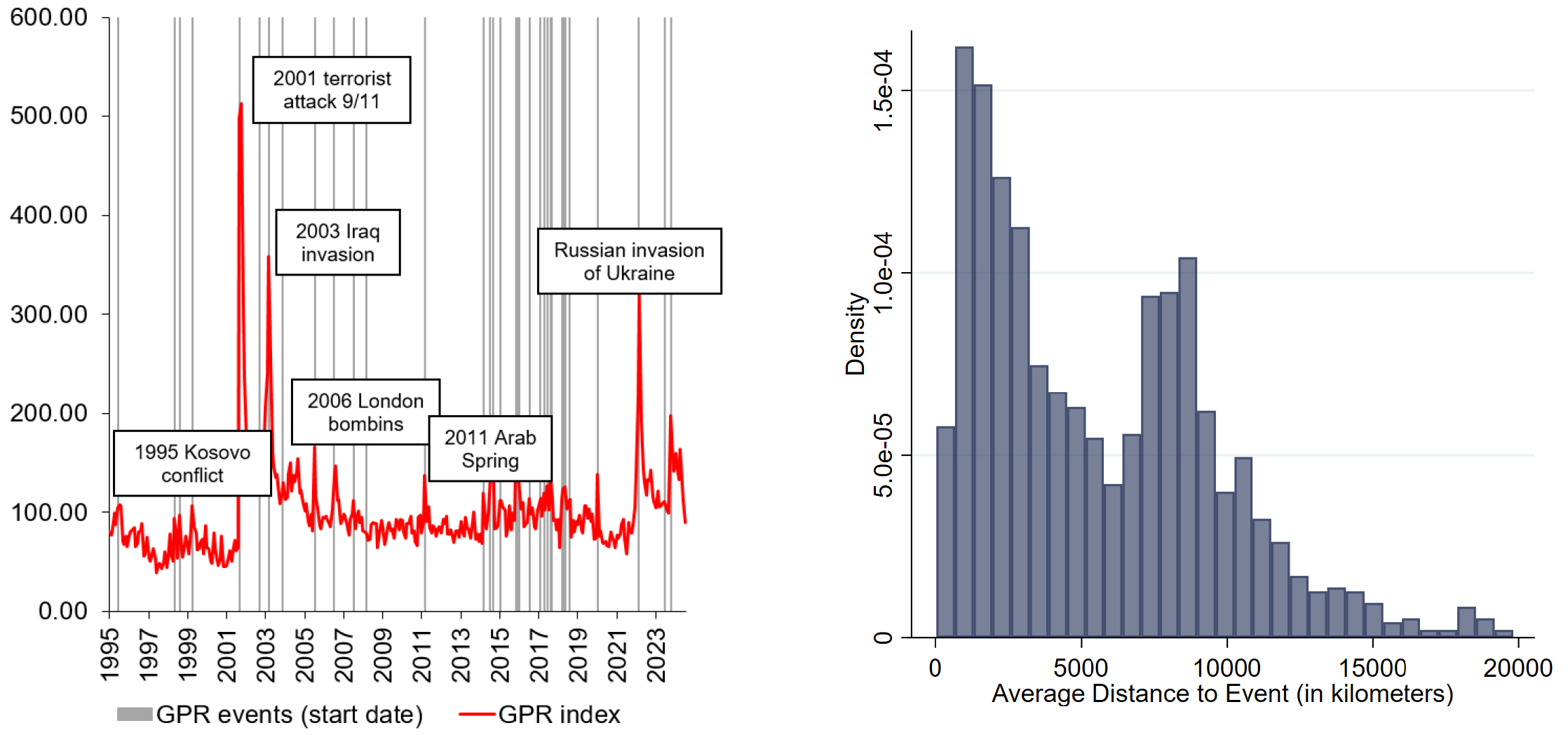
Chart 1 – Geopolitical Risk Events: Timing, Magnitude, and Geographic Exposure
(data for 01/1995–12/2024; monthly frequency)
Sources: Caldara and Iacoviello (2022), CNB calculations
Notes: Left-hand graph shows the monthly global GPR index of Caldara and Iacoviello (2022), with major event months highlighted. Events are identified through a two-step procedure: a quantitative threshold applied to the global GPR index, followed by verification using contemporaneous sources. We retain only episodes that materially affected countries in our sample or generated broad geopolitical uncertainty, excluding highly localized conflicts. Right-hand graph plots great-circle distances (km) from each country’s capital to the conflict epicenter.
Chart 1 illustrates the empirical setting that underpins our analysis. Panel A shows the timing and magnitude of major geopolitical risk (GPR) events since 1995. Our two-step identification procedure yields 34 major shocks of global or regional significance—including interstate wars (e.g., Russia–Ukraine 2014 and 2022), large-scale terrorist attacks (e.g., 9/11, Paris 2015), military interventions (e.g., Iraq 2003, Libya 2011), and acute diplomatic crises (e.g. North Korea escalations). Panel B highlights the wide dispersion of geographic exposure across these events: while many country–event observations lie several thousand kilometers from the conflict epicenter, a sizeable share fall within 1,000–2,000 kilometers. This variation forms the backbone of our empirical strategy.
Proximity to Conflict Drives Capital Reallocation
We estimate dynamic responses using local projections a la Jorda (2005), capturing geographic exposure through distance-based groups. Our baseline specification regresses the 12-month cumulative change (year-over-year) in net equity and net debt flows, constructed as the annual change in twelve-month rolling sums of balance-of-payments flows, on a geopolitical event-start dummy interacted with countries’ distance to the conflict epicenter. To allow for non-linear effects in a transparent way, we classify countries into four groups according to the distribution of their log-scaled average capital-to-epicenter distance: very close (0–10th percentile), semi-close (0–20th), median (40–60th), and far (80–100th). The first two categories are cumulative by construction, allowing us to examine increasingly broader definitions of geographic exposure near the conflict epicenter. This grouping highlights systematic differences between proximate and distant economies, while still tracing month-by-month dynamics after each event. All regressions include country fixed effects and standard macro-financial controls, and standard errors are adjusted to allow for cross-country correlation.
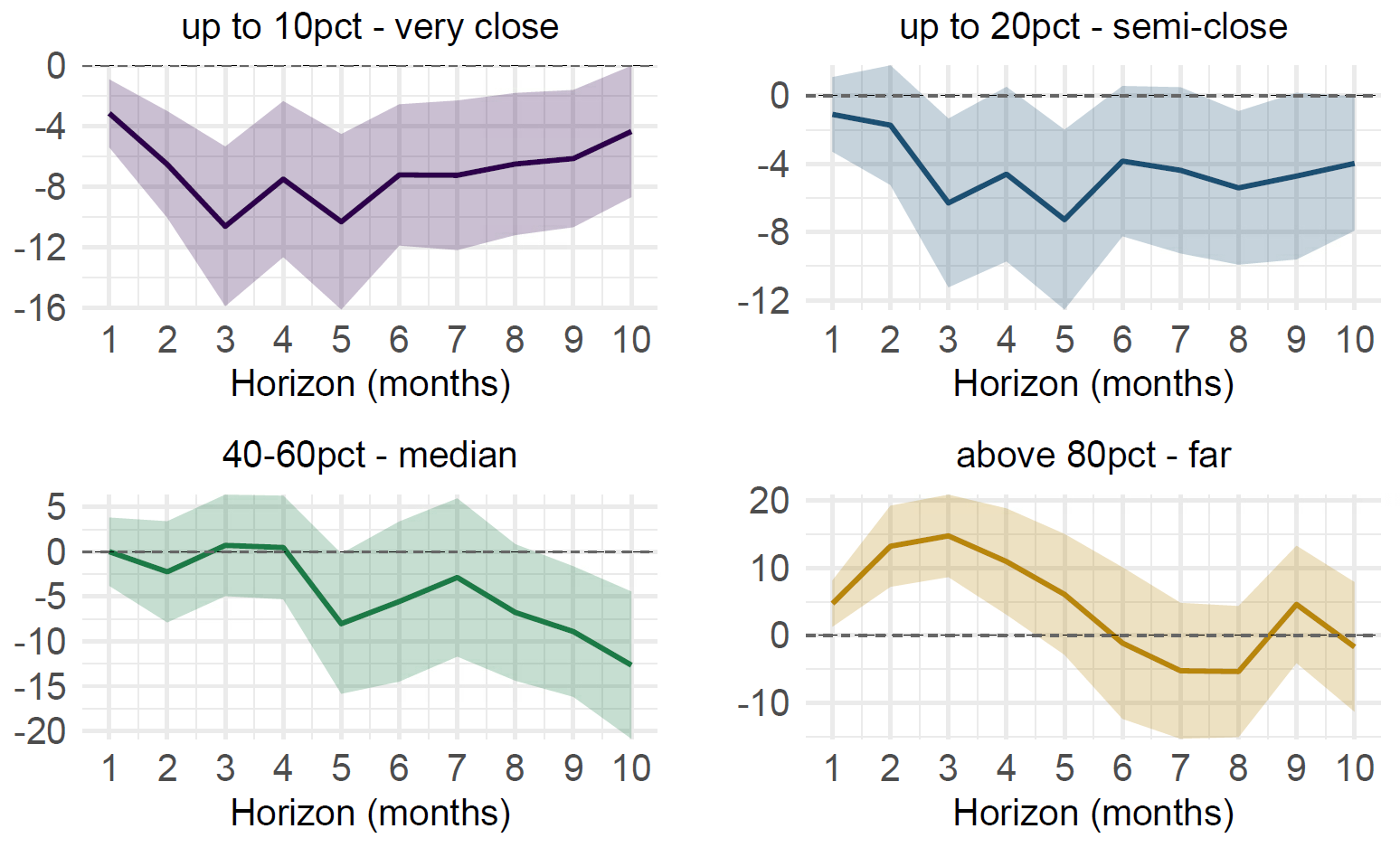
Chart 2 – Response of Net Equity Flows to GPR Events
(data for 01/1995–12/2024; monthly frequency)
Sources: CNB calculations
Notes: Impulse responses are obtained from local-projection regressions of the 12-month cumulative change in net equity flows (12m YoY) on a unit shock to the conflict dummy, interacted with distance bins. Shaded areas denote 68% confidence bands; all specifications include country fixed effects and Driscoll–Kraay standard errors.
Baseline estimates show a strong distance gradient in equity flows. Chart 2 plots the response of net equity flows to geopolitical risk (GPR) events across distance groups. Countries very close to the conflict epicenter experience quick and sustained outflows, while distant economies receive sizable inflows. In quantitative terms, the 12-month cumulative change in net equity flows of proximate countries fall by roughly USD 8–10 billion within the first few months after conflict onset, while distant economies record offsetting inflows of about USD 10–15 billion. This pattern is consistent with a classic flight-to-safety dynamic: investors quickly withdraw from proximate markets perceived as risky and reallocate into more remote markets regarded as safer.
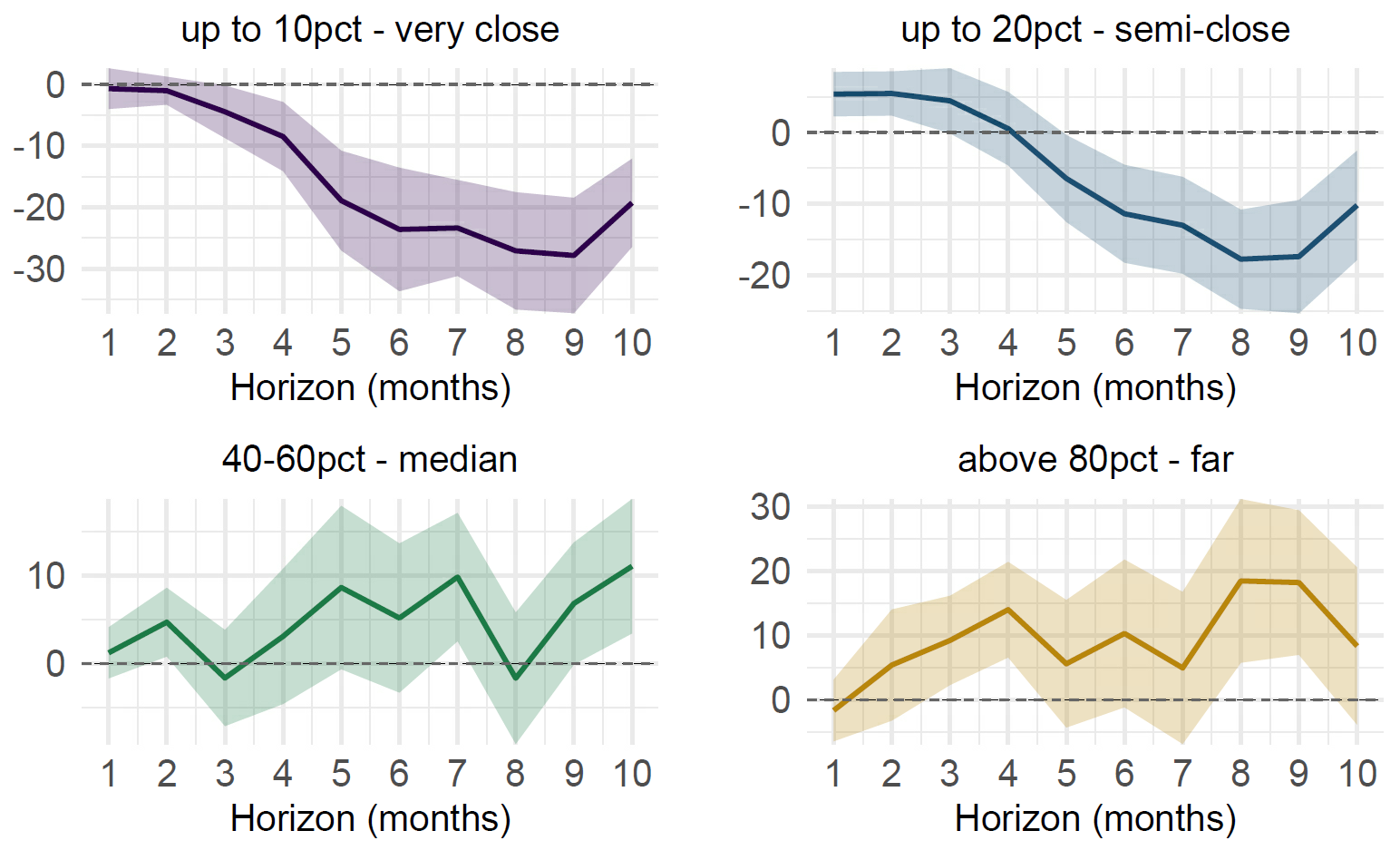
Debt flows exhibit the same gradient but adjust more slowly. Chart 3 shows that countries near conflict zones see little immediate reaction in debt flows, but after several months experience pronounced contractions. By contrast, distant economies gradually record rising debt inflows. The delayed, hump-shaped adjustment reflects the structure of debt markets: rollover dynamics, slower repricing, and longer maturities make debt less reactive in the short run, but ultimately just as exposed to proximity-related risk perceptions.
Foreign and domestic investors contribute differently to these reallocations. Decomposing flows reveals that foreign investors account for the sudden stops and surges: they pull out of proximate economies and redirect capital into distant ones, especially through equity markets. Domestic investors, in contrast, adjust mainly through debt. Residents of proximate countries retrench by reducing purchases of foreign assets, while residents of distant countries engage in flight-to-quality by increasing their holdings of safe debt instruments abroad. Together, these behaviors generate the systematic outflows near the epicenter and inflows in more remote economies observed in the aggregate data. Detailed decomposition results are available upon request and will be fully documented in the final working paper.
Chart 3 – Response of Net Debt Flows to GPR Events
(data for 01/1995–12/2024; monthly frequency)
Sources: CNB calculations
Notes: Impulse responses are obtained from local-projection regressions of the 12-month cumulative change in net equity flows (12m YoY) on a unit shock to the conflict dummy, interacted with distance bins. Shaded areas denote 68% confidence bands; all specifications include country fixed effects and Driscoll–Kraay standard errors.
Currency Adjustments Mirror Capital Flows
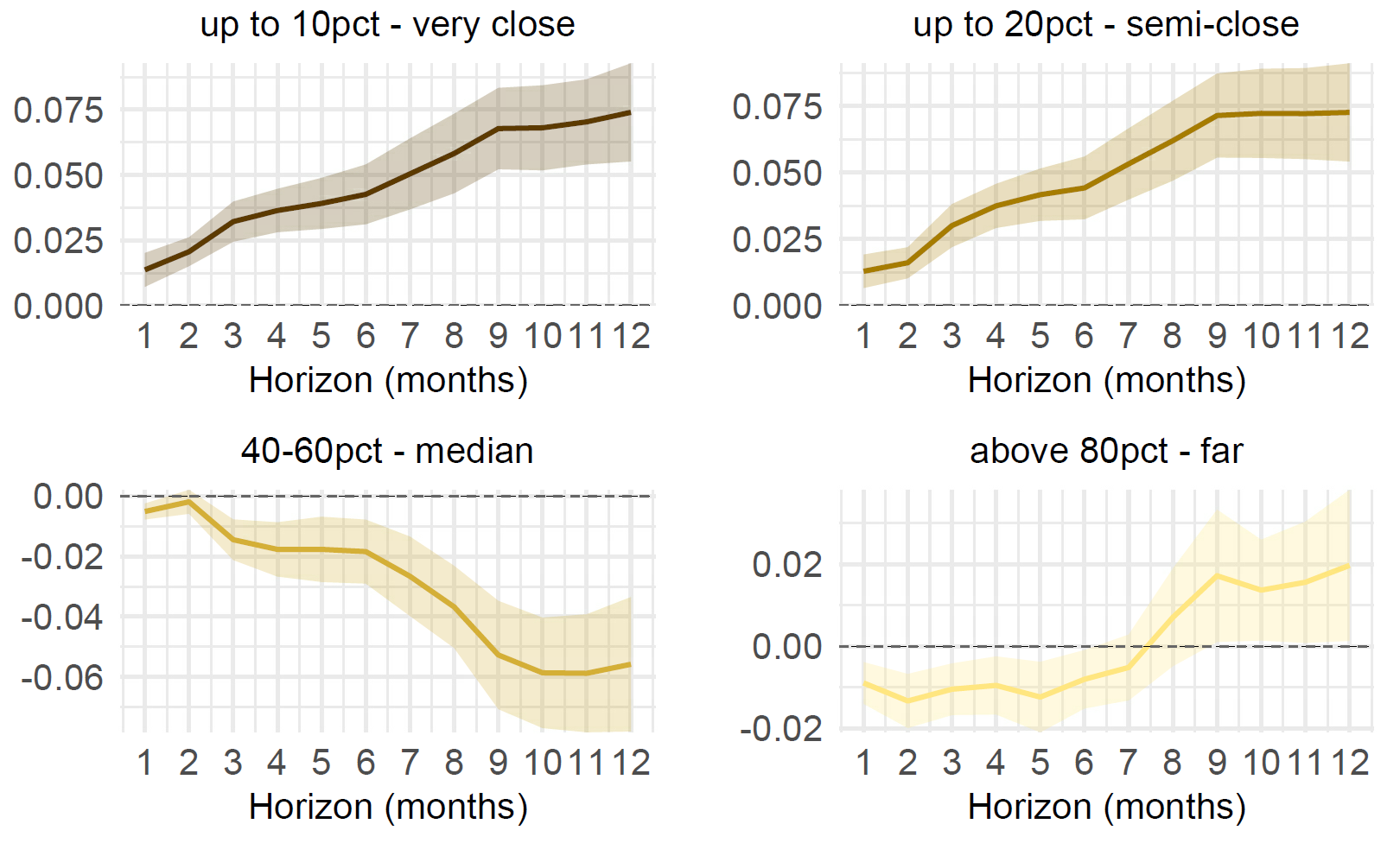
Exchange rates react immediately to geopolitical shocks, pricing in expected portfolio shifts (Chart 4). We measure bilateral exchange rates as the logarithm of the end-of-month nominal rate expressed in domestic currency units per U.S. dollar (LCU/USD). An increase in the exchange rate therefore denotes a depreciation of the domestic currency vis-a-vis the USD. Because exchange rates are forward-looking asset prices, they incorporate new information on impact. Following a geopolitical shock, markets revise beliefs about relative risk: currencies of proximate economies depreciate as investors anticipate outflows, while currencies of distant economies appreciate in line with expected safe-haven inflows. These price movements emerge before the actual reallocation of portfolios documented above.
Average effects reveal a sharp distance gradient. A more granular view across proximity quartiles shows a clear and systematic pattern. Currencies of countries very close to the conflict depreciate persistently, by as much as 7–8% within a year, while semi-close economies follow a similar but milder depreciation path. In contrast, median-distance countries exhibit modest appreciations, and far-away countries experience small but sustained strengthening of their currencies. These gradients underline that the exchange-rate response to geopolitical shocks varies strongly with geographic proximity.
Effective exchange rates confirm that this is a broad, not USD-specific, pattern. Using trade-weighted indices (NEER and REER), we find the same distance gradient across trading partners: proximate economies face effective depreciation, while distant economies record appreciation. This reinforces the interpretation that geography systematically shapes both the anticipatory price adjustments (currencies) and the subsequent quantity adjustments (capital flows) triggered by geopolitical shocks.
Chart 4 – Response of Exchange Rate to Conflict Shock
(data for 01/1995–12/2024; monthly frequency)
Sources: CNB calculations
Notes: Impulse responses from local-projection regressions of monthly changes in the log bilateral exchange rate (domestic currency per USD) on GPR event dummies. All specifications include country fixed effects and Driscoll–Kraay standard errors; the shaded region displays 68% confidence bands.
Conclusion
Our results show that geopolitical shocks trigger systematic capital reallocations shaped by geographic proximity. Countries closer to conflict epicenters tend to face capital outflows and depreciation pressures, while more distant economies attract inflows and see their currencies appreciate. These findings suggest that distance to conflict conditions how international portfolios adjust to geopolitical risk.
Our next steps focus on cross-country heterogeneity beyond geography and improved identification of events. We are extending the analysis to examine how factors such as the safe haven status, differences between advanced and emerging markets, and institutional settings interact with geopolitical shocks. We also aim to distinguish more granularly between armed conflicts and “milder” shocks, such as terrorist attacks and political crises. Future research can further explore the role of similarities in legal systems and political proximity. These extensions will help us to understand whether policy frameworks and structural characteristics can mitigate or amplify the distance gradient documented in our baseline results.
The views expressed in this article are those of the author(s) and do not necessarily represent the views of the Czech National Bank.
References
- Barro, R. J. (2006): “Rare disasters and asset markets in the twentieth century.” The Quarterly Journal of Economics, 121(3):823–866.
- Broner, F., T. Didier, A. Erce, and S. L. Schmukler (2013): “Gross capital flows: Dynamics and crises.” Journal of Monetary Economics, 60(1):113–133.
- Caldara, D. and M. Iacoviello (2022): “Measuring geopolitical risk.” American Economic Review, 112(4):1194–1225.
- Calvo, G. A., A. Izquierdo, and L.-F. Mejia (2004): “On the empirics of sudden stops: the relevance of balance-sheet effects.” NBER Working Paper No. 10520, National Bureau of Economic Research.
- Forbes, K. J. and F. E. Warnock (2012): “Capital flow waves: Surges, stops, flight, and retrenchment.” Journal of International Economics, 88(2):235–251.
- Fratzscher, M. (2012): “Capital flows, push versus pull factors and the global financial crisis.” Journal of International Economics, 88(2):341–356.
- Jorda, O. (2005): “Estimation and inference of impulse responses by local projections.” American Economic Review, 95(1):161–182.
- Rey, H. (2015): “Dilemma not trilemma: the global financial cycle and monetary policy independence.” NBER Working Paper No. 21162, National Bureau of Economic Research.
- Rietz, T. A. (1988): “The equity risk premium a solution.” Journal of Monetary Economics, 22 (1):117–131.