Financial accounts statistics – commentary
for 1Q 2026
The overall situation
The total value of the financial assets in the Czech economy increased by 5.3% in 2026 Q1. In year-on-year terms, it increased by 10.6%. The relatively strong growth in financial assets, accompanied by changes in the financial structure of individual economic sectors, was influenced by the January 2026 listing of a foreign subsidiary of a Czech resident on the Amsterdam stock exchange. For the purposes of consistency with already published data, the transaction was temporarily recorded under the financial instrument unlisted shares. The financial assets were affected by transactions, which totalled CZK 2,158.7 billion. The value of financial assets increased by a further CZK 976.5 billion due to revaluation. Other changes contributed to a further increase in the value of financial assets of CZK 60.2 billion. All economic sectors except general government contributed to varying degrees to the increase in financial assets. The largest increase in volume was recorded by financial corporations, where captive financial institutions and deposit-taking corporations except the central bank dominated. This was followed by the rest of the world and households, and, some way behind, by non-financial corporations. The value of financial assets of general government declined after four consecutive quarters of growth. On the liabilities side, the strongest growth was also recorded by financial corporations, dominated by captive financial institutions. This was followed, with broadly similar increases in volume, by non-financial corporations and the rest of the world. The increase in household liabilities was slightly higher than in the previous quarter and, compared with the other sectors, was of only marginal significance. The value of general government liabilities remained unchanged quarter on quarter.
The shares of the individual financial instruments in total financial assets and liabilities showed larger changes than in the previous quarter. The largest change was recorded by unlisted shares, whose share increased by 2.6 pp quarter on quarter. By contrast, the shares of debt securities, loans and other accounts receivable/payable decreased. Turning to the sector breakdown, the share of captive financial institutions increased on both sides of the balance sheet (by 0.7 pp and 0.8 pp respectively). On the liabilities side, an increase in the share of the rest of the world was observed (0.6 pp). On both the financial assets and liabilities sides, the shares of general government and non-financial corporations declined.
Chart 1 – Breakdown of financial instruments in the economy
(in %)
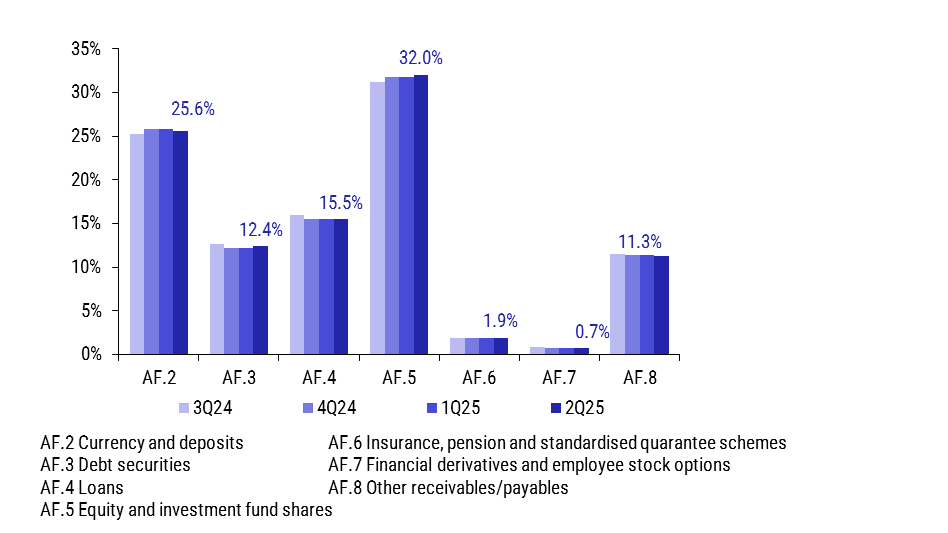
Chart 2 – Breakdown of financial assets and liabilities by sector
(in CZK billions)
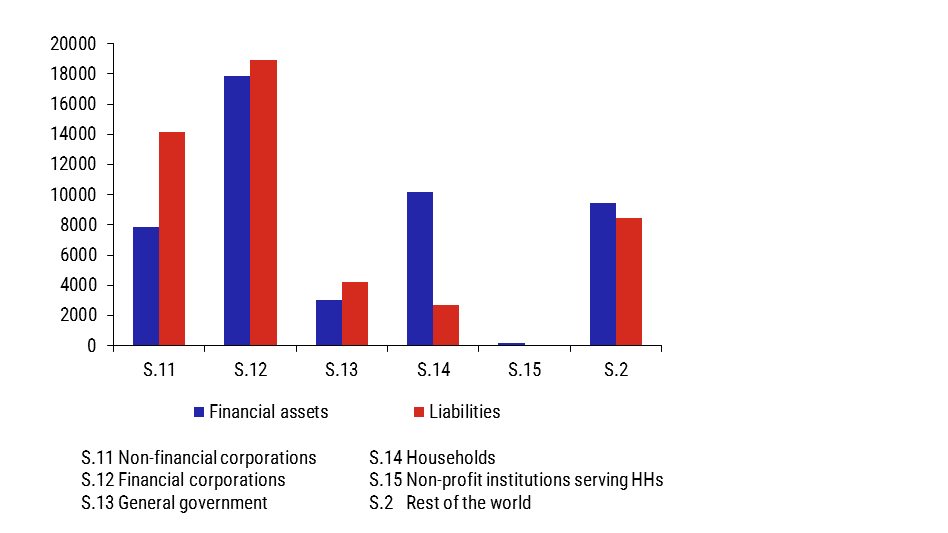
Households again significantly strengthened their net creditor position. The negative net financial assets of financial corporations also declined again, although the rate of this decline was substantially lower than in the previous quarter. The net financial position of the other economic sectors deteriorated. A marked increase in negative net financial assets was again recorded by non-financial corporations. The net financial position of general government weakened for the second consecutive quarter. Following a temporary improvement in the previous quarter, the net creditor position of the rest of the world declined.
Non-financial corporations
The faster growth in liabilities compared to financial assets (5.1% and 3.5% respectively) led to a deterioration in the sector’s net financial position. The increase in negative net financial assets of 7.0% was driven by a substantial negative balance of financial transactions.
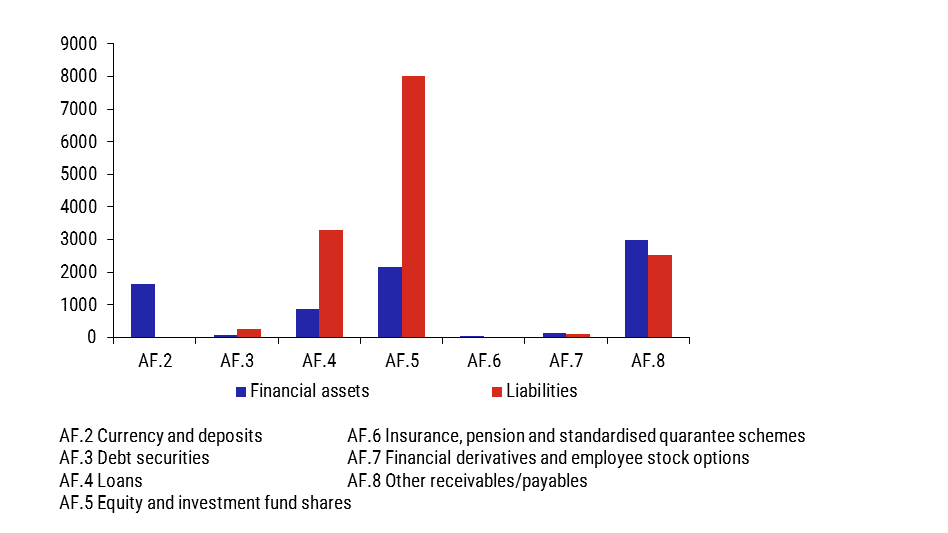
The growth in financial assets was significantly influenced by revaluation of unlisted shares. The value of loans also increased owing to a transaction-driven rise in inter-company loans. A marked increase was also recorded in other deposits held by corporations with commercial banks. The increase in the value of financial derivatives and partly also other equity was due to revaluation. The growth in financial assets was slightly dampened by a decline in transferable deposits. On the liabilities side, a transaction increase in unlisted shares was of key importance. The value of loans increased to a much lesser extent. As on the assets side, these were mainly loans provided within the sector. The rise in the value of financial derivatives was solely due to revaluation. The decline in the value of listed shares reflected their negative market revaluation. Significant other changes led to a decrease in the value of other equity.
Chart 3 – Breakdown of financial assets and liabilities of non-financial corporations
(in CZK billions)
Financial corporations
The greater increase in the value of financial assets than of liabilities (of 6.0% and 5.5% respectively) led to an improvement in the sector’s net financial position. The negative net financial assets declined by 6.4% owing to a positive balance of financial transactions, which largely offset the negative balance of revaluation and other changes.
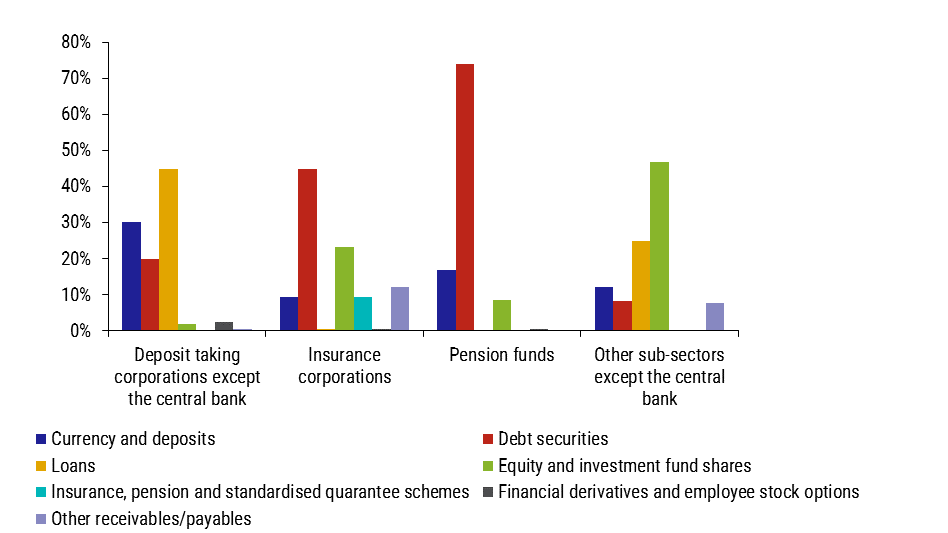
The growth in financial assets was driven mainly by a transaction increase in the value of unlisted shares. The value of transferable and other deposits also increased significantly. The volume of long-term loans continued to rise. The value of long-term debt securities increased exclusively as a result of transactions. The increase in the value of investment fund shares and units was driven primarily by other changes. The liabilities side was affected by growth in the value of unlisted shares, driven by non-transaction effects, in particular revaluation and, to a lesser extent, other changes. Other deposits recorded a significant transaction increase in value. Other changes and transactions contributed to an increase in the value of investment fund shares and units. The growth in liabilities was partly offset by a decline in the value of short-term debt securities.
The faster growth in financial assets than liabilities led to an improvement in the net financial position of the deposit-taking corporations except the central bank, the central bank and financial auxiliaries sub-sectors. The other sub-sectors of the financial corporations sector saw a deterioration in their net financial position quarter on quarter.
Chart 4 – Shares of sub-sectors in financial assets and liabilities of the financial sector
(in %)
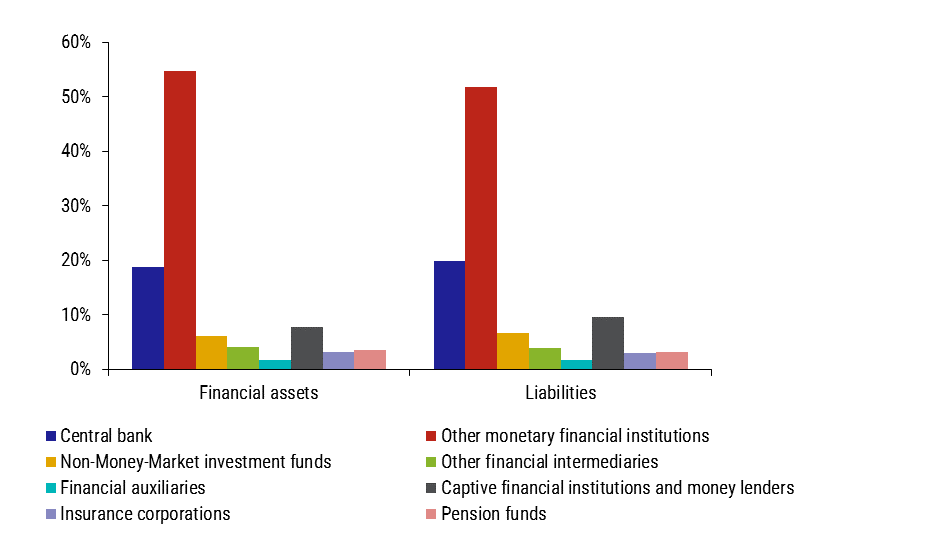
Chart 5 – Breakdown of financial assets in selected sub-sectors of the financial corporations sector
(in %)
General government
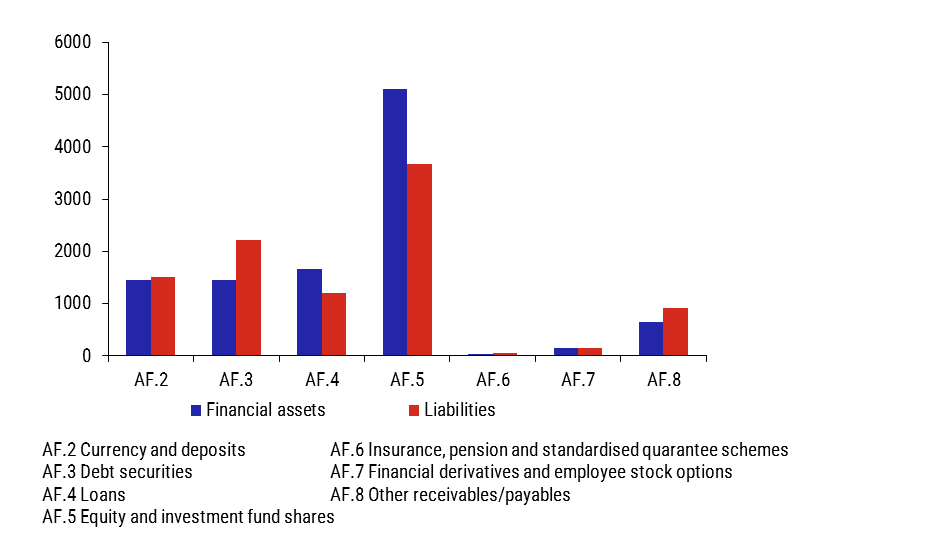
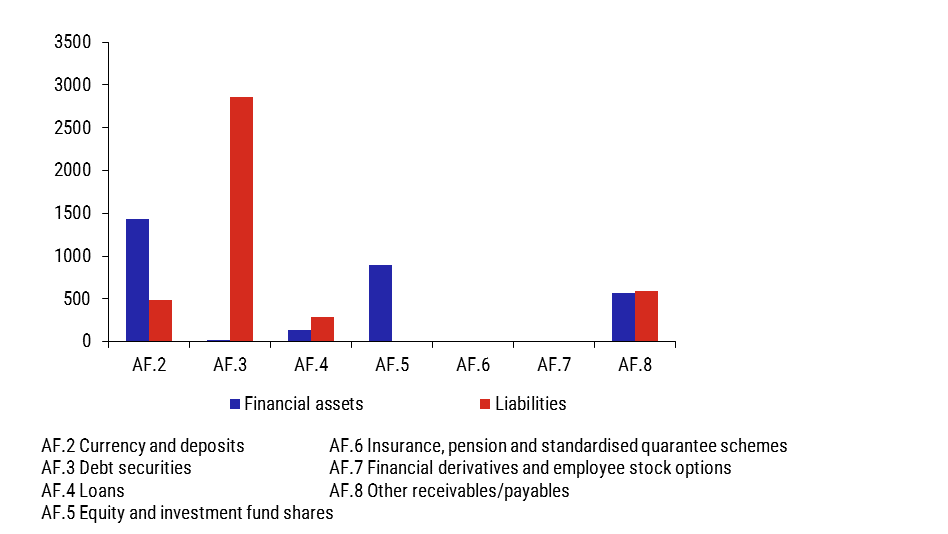
A slight quarter-on-quarter decrease in the value of financial assets (–0.9%), accompanied by unchanged liabilities, led to a deterioration in the sector’s net financial position. Negative net financial assets increased by 2.4% due to a negative balance of financial transactions, which was partly offset by a positive balance of market revaluation. All three sub-sectors recorded a weakening of their net financial position to varying degrees.
The financial assets side was affected by a decline in listed shares due to revaluation. Other accounts receivable and, to a lesser extent, deposits recorded a transaction decrease in value. A significant shift of transferable deposits into other deposits is worth mentioning. However, such movements in the structure of deposits are typical of the first quarter of the year. A slight increase in the value of unlisted shares was also observed. The decline in liabilities was driven by a transaction decrease in the value of loans and transferable deposits provided within the sector. By contrast, debt securities and trade credits recorded a transaction increase in value. As regards holdings of general government bonds, the largest increase was recorded by financial corporations and the rest of the world.
Chart 6 – Breakdown of financial assets and liabilities of general government
(in CZK billions)
Households
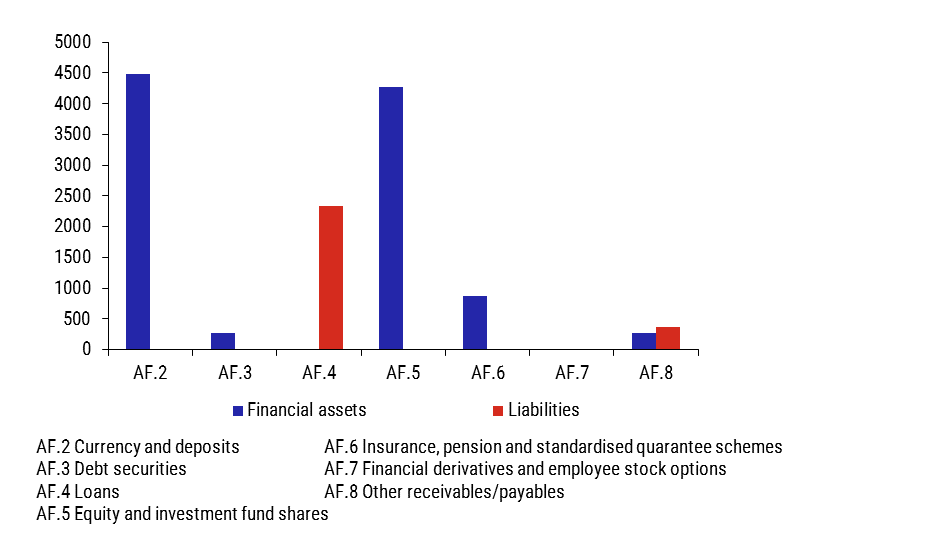
The value of net financial assets increased by 6.9% quarter on quarter, owing to a marked increase in financial assets (5.8%). The growth rate of liabilities remained broadly in line with the previous quarter (2.0% and 1.8% respectively). Net financial assets were affected by a strong positive revaluation balance.
The growth in financial assets was driven mainly by revaluation of unlisted shares. Listed shares recorded a transaction increase in value. Deposits, both transferable and other, continued to grow. The quarter-on-quarter growth rate of investment fund shares and units declined. Weaker transaction growth was observed in both domestic and foreign funds. Growth in financial assets was partly dampened by a decline in other equity, whose value decreased owing to other changes. The liabilities side was affected by an increase in loans (2.2%), which represent their key item (94.5%). Deposit-taking corporations except the central bank have long been the main providers of loans with a share of almost 97%. The breakdown of loans was also unchanged, with long-term loans accounting for the dominant share.
Chart 7 – Breakdown of financial assets and liabilities of households
(in CZK billions)
Rest of the world
Higher quarter-on-quarter growth in liabilities than in financial assets (by 9.0% and 7.2% respectively) led to a decline in the value of the sector’s net financial assets. Their quarter-on-quarter decrease of 23.1% was due to a substantial negative balance of transactions, which was only partly offset by positive revaluation.
The value of financial assets was affected by an exceptional transaction increase in unlisted shares. Movements in the values of the other financial instruments were substantially smaller in volume. The growth in other deposits was driven by an increase in deposits by non-residents with commercial banks and the central bank. A significant positive revaluation increased the value of financial derivatives. The value of trade credits also increased after two quarters of decline. Transaction growth, combined with positive revaluation, increased the value of long-term debt securities, reflecting an increase in holdings of corporate issues and general government bonds. By contrast, short-term debt securities and long-term loans recorded a transaction decrease in value. The value of liabilities was also driven mainly by an increase in unlisted shares. In addition, there was an increase in other deposits held abroad by commercial banks and, to a lesser extent, by the central bank. The increase in long-term debt securities was due to a transaction increase in foreign debt securities held by the central bank. The value of long-term loans was affected by a transaction increase in loans received from commercial banks. The value of trade credits provided to foreign non-financial corporations also increased.
Chart 8 – Breakdown of financial assets and liabilities of the rest of the World
(in CZK billions)