Aleš Michl, CNB Governor
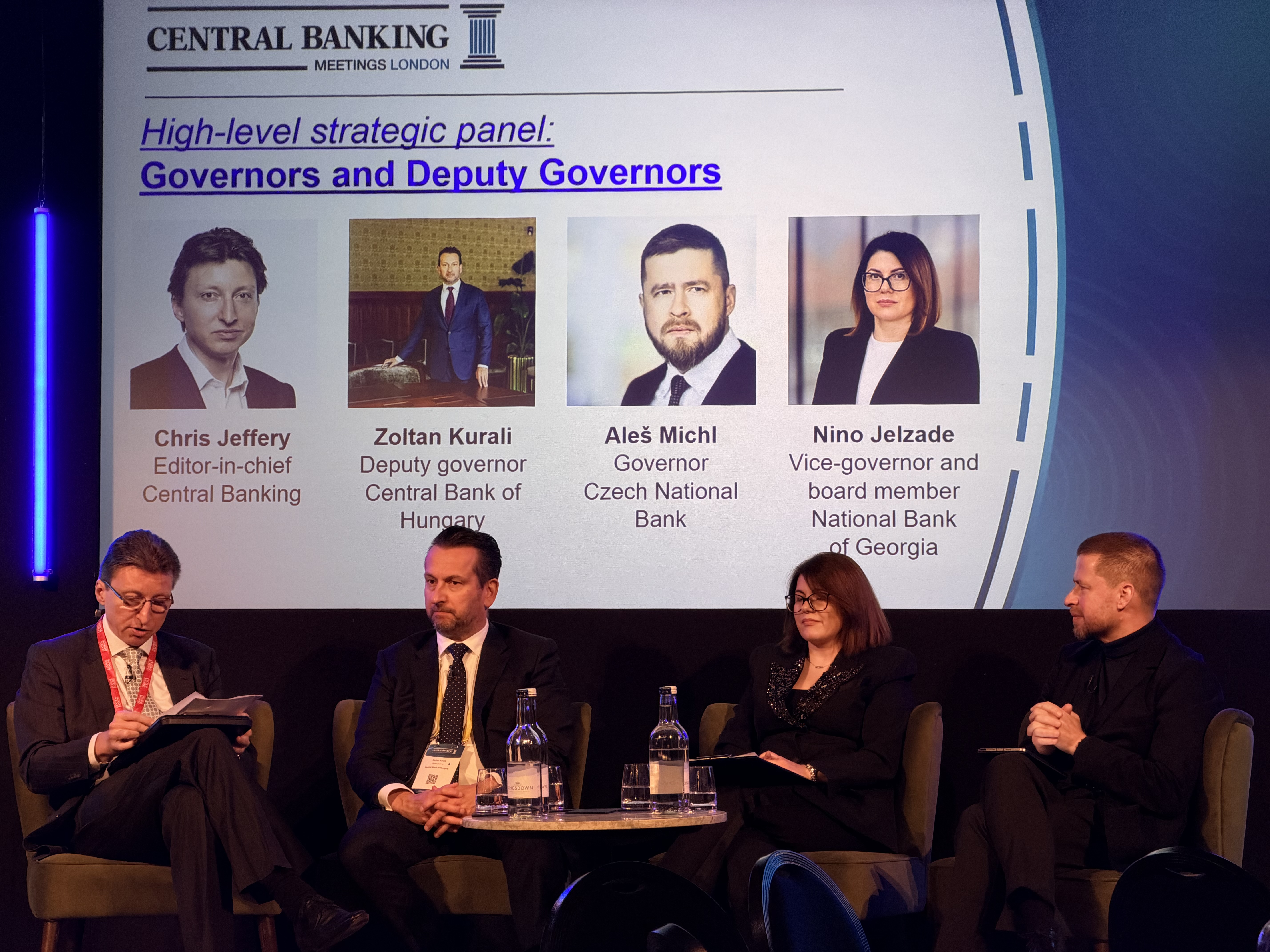
Governor’s notes for the high-level strategic panel: Governors and deputy governors
Central Banking Meetings, London
11 June 2026, London
1)
When I became Governor, inflation was close to 20 per cent. Today, inflation is around 2 per cent. That is not luck. That is discipline. For two and a half years, we have been at the target. Current CPI inflation is 2.1 per cent. Our key rate is 3.5 per cent. So our policy is already tight.
We are not deciding whether to become hawkish. We are hawkish already. And we will stay hawkish.
Core inflation is still too high at 2.9 per cent. The three-month momentum in core inflation is 3.8 per cent. Credit is growing. Fiscal deficits are adding pressure. Money supply growth must slow down. That is why a rate hike in June remains in play.
Forever hawkish is not a slogan. It is a commitment. Low inflation is not given. Low inflation must be defended every day.
2)
Our foreign exchange reserves are around USD 180 billion. That is about 44 per cent of GDP. About half of our reserves are in euros. Around 30 per cent are in US dollars.
Recent events do not change our strategy. We do not react to noise. We build resilience. We made two long-term moves in our portfolio.
We increased our equity allocation from 8 per cent to 26 per cent. We increased our gold allocation from zero to around 6 or 7 per cent. Last year, our return was 10 per cent. That was similar to Warren Buffett’s return. So far, so good. But one year proves nothing. You only know whether a portfolio is strong when markets go down. Last year was not a real stress test.
Warren Buffett built his reputation over more than 50 years. So ask me again in 50 years.
Our investment horizon is infinite. We are not managing money for headlines. We are managing money for generations.
We are not exactly like Warren Buffett in investment style. We do not pick one or two famous stocks. In equities, we are building our own internal ETF. We hold the whole S&P 500 and others. We track major global indices almost perfectly. This is not speculation. This is not market timing. This is disciplined ownership of the economy.
We think in decades. We do not try to guess tomorrow. We build exposure to the future.
Because over time, productivity, innovation and enterprise create value.
We are Buffett in horizon, Bogle in discipline, Lynch in curiosity, and central bank in scale.
3)
A central bank and Bitcoin are two things most people do not put together. I do. In monetary policy, a central bank must be conservative. For me, that means hawkish forever.
It means higher rates for longer. It means no quantitative easing. It means no currency devaluation.
But in operations, a central bank must think ahead. We must understand the future before it arrives.
That is why we created a separate test portfolio of digital assets. This test portfolio includes Bitcoin, stablecoins, tokenised deposits and blockchain technology.
It is a test portfolio. It is not a revolution. It is not a political statement. It is a test. We will run this test for two years. Then we will publish the results. Then we will decide what comes next.
The future will not wait for central banks. So central banks must learn faster.
We must be conservative in money. We must be visionary in technology. That is the central bank of the future.
4)
Crypto may face a hard shakeout. There may be a wave of failures. Many projects may disappear.
But strong companies may survive. Strong technologies may survive. This is creative destruction.
This is how the future is built.
First comes chaos. Then comes consolidation. Then something truly useful remains.
Bitcoin is different. I see only two possible outcomes for Bitcoin. Very high value. Or zero.
5)
I am a liberal, market-oriented economist. I believe in competition. I believe in innovation. I believe in fast payments. Last year, we completed the rollout of instant payments in Czech koruna for everyone in the Czech Republic.
But we were almost 30 years late. As central banks, we should have built a global PayPal long ago. It should have been fast. It should have been simple. It should have been cheap. And it should have been trusted.
Stablecoins appeared because we did not solve this problem ourselves. Build an innovative payment system, and stablecoins are not a threat.
Bitcoin is popular partly because high inflation weakens trust in central banks. The best defence against Bitcoin is not regulation. The best defence is credibility. And credibility starts with low and stable inflation.
The winners will be institutions that protect stability and still dare to innovate.
Our mission is clear. We must defend low inflation. We must protect trust. We must invest for generations. We must understand the future before others do. We must be hawkish forever in monetary policy. And we must be visionary forever in everything else.
In short, we must be conservative in monetary policy. We must be innovative in how we work. This is the future.