Aleš Michl, CNB Governor
A fireside chat: Aleš Michl with José Cerveira, economist at J.P. Morgan, at the J.P. Morgan CEE Macro & Fixed Income Conference
2 June 2026, Vienna
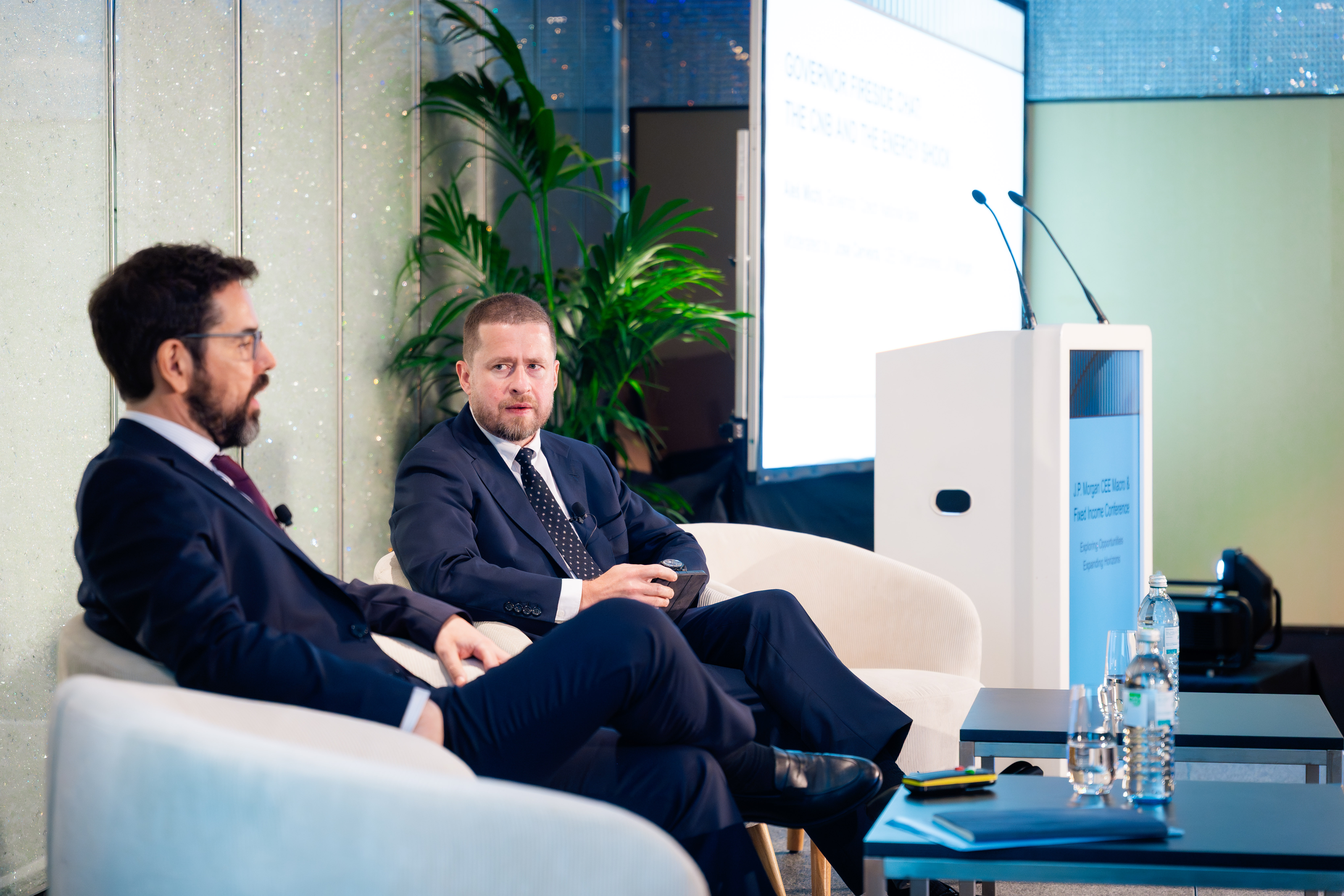
I am happy to be here because this year marks 100 years since a central bank was founded in the former Czechoslovakia.
I am here to support independent central banking in the Czech Republic and the Czech koruna.
When I became Governor in mid-2022, inflation stood at 17.5%. Within a year and a half, we brought it down to 2%. In February 2026, inflation was 1.4% year on year. In April, after the oil shock, it was 2.5%. Fuel prices alone have added around 0.9 percentage point to inflation so far. José and I expect May inflation to be around 2%.
We cannot lower global oil prices. But we can prevent temporary inflation from becoming persistent.
For me, persistence means upward pressure on core inflation.
Core inflation is around 2.9%. We expect it to go a little higher. José, in his reports, which I always read with pleasure, expects the same. In the coming months, it may be around 3%, which is also José’s forecast.
Household consumption is now above its pre-Covid level and is going up. This is very different from 2021, when household consumption was below its pre-Covid level and falling.
So monetary policy needs to be restrictive. And we are ready to tighten monetary policy if our core inflation outlook is revised upwards.
Nobody wants to be reactive. The way to avoid that is discipline, not activism. We take a straightforward, long-term approach: less is more.
We reward saving, not spending. Positive real rates do that in the long term. They cool demand that turns a one-off price rise into persistent inflation.
It is necessary to keep interest rates higher for longer and deliver positive real rates to encourage saving in the long term. In other words, forever hawkish.
Without the energy shock, inflation would be lower. But core inflation is still not fully consistent with long-term price stability. So yes, core inflation is a problem, and there are upside risks for it to rise slightly.
I am currently reading a very good book by Wolfgang Münchau about why the German economy is not performing well. The book is called Kaput.
In English, it means that something is broken. Our story is similar. We are good at manufacturing. But the trend in global trade is now services, IT, cyber risks and AI. And we are not very good at these things.
For example, Škoda is very good at manufacturing cars. But their software feels like an old iPod with a screen. An iPod, not an iPad, – an old iPod with a click wheel.
The main problems are low growth, ageing, high energy prices, too much regulation and high budget deficits.
These problems may result in weak growth for many years. Monetary policy cannot fix all of this. But it can keep inflation low and stable.
The main solution is higher productivity through AI. AI can help us make institutions work better, cut bureaucracy, and help people create more and come up with new ideas.
Long-term price stability requires responsible public finances.