Instant payments – lightning-fast transfers for businesses and individuals

Payments are an essential part of our daily lives, and instant payments allow you to send money without the wait. Instant payments allow individuals and businesses to make one-off transfers in koruna between clients of Czech banks in just a few seconds. You can make them all year round, 24/7, on weekdays, at weekends and on public holidays. They are fast, reliable and secure.
How can individuals use instant payments?
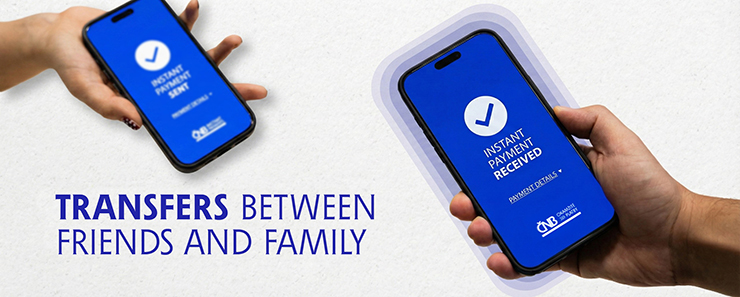
- Transfers between friends and family – when splitting bills or sharing costs, you can send money instantly and avoid the hassle of settling up later. For quick transfers, you can simply use a QR code generated in your banking app.
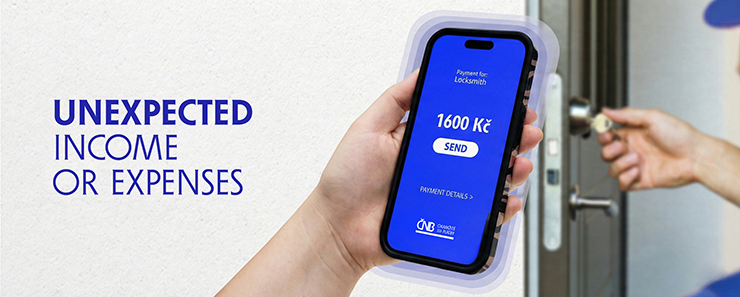
- Unexpected income or expenses – if you find yourself in an unexpected situation, instant payments allow you to send or receive money immediately.
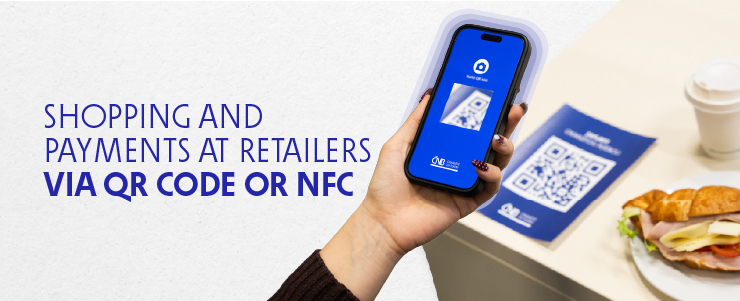
- Shopping and payments at retailers via QR code or NFC – just scan the code or hold your device up to the terminal and confirm the payment. The money is transferred to the recipient’s account instantly, making the entire transaction quick and convenient. We recommend you always double-check the recipient’s account number and the payment amount.
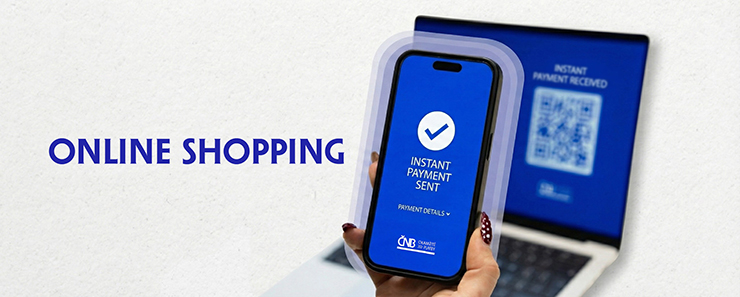
- Online shopping – fast payment for goods in online stores can often shorten delivery times.
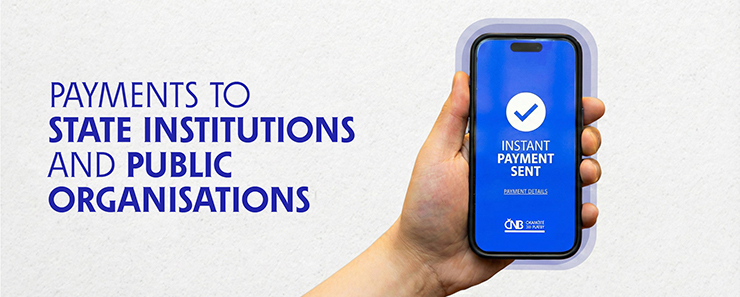
- Payments to state institutions and public organisations – do you need to pay income tax to the tax office or send an advance for health and social insurance contributions? There is no need to worry about whether it is day or night, a working day or a public holiday. Instant payments can also be used for various administrative fees required by public authorities. Funds are credited immediately to the account of the relevant institution at the CNB.
How do businesses use instant payments?
- Payments to suppliers and partners – instant payments enable the timely payment of invoices.
- Receiving deposits – businesses can receive deposits on orders or bookings instantly, helping them to plan production or provide services more efficiently
How does it all work?
- To offer this service to clients, a bank must participate in the CERTIS payment system and join the instant payment scheme.
The Czech National Bank operates both the interbank payment system CERTIS and the instant payments service. This is one of the CNB’s key roles, alongside ensuring price and financial stability and supervising banks and other entities in the domestic financial market. By providing this payment infrastructure, the CNB plays a key role in the modern digital economy.
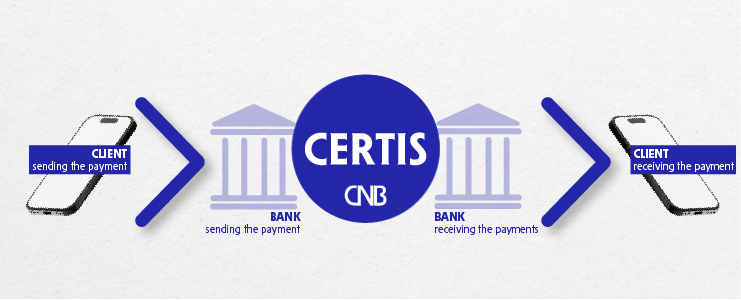
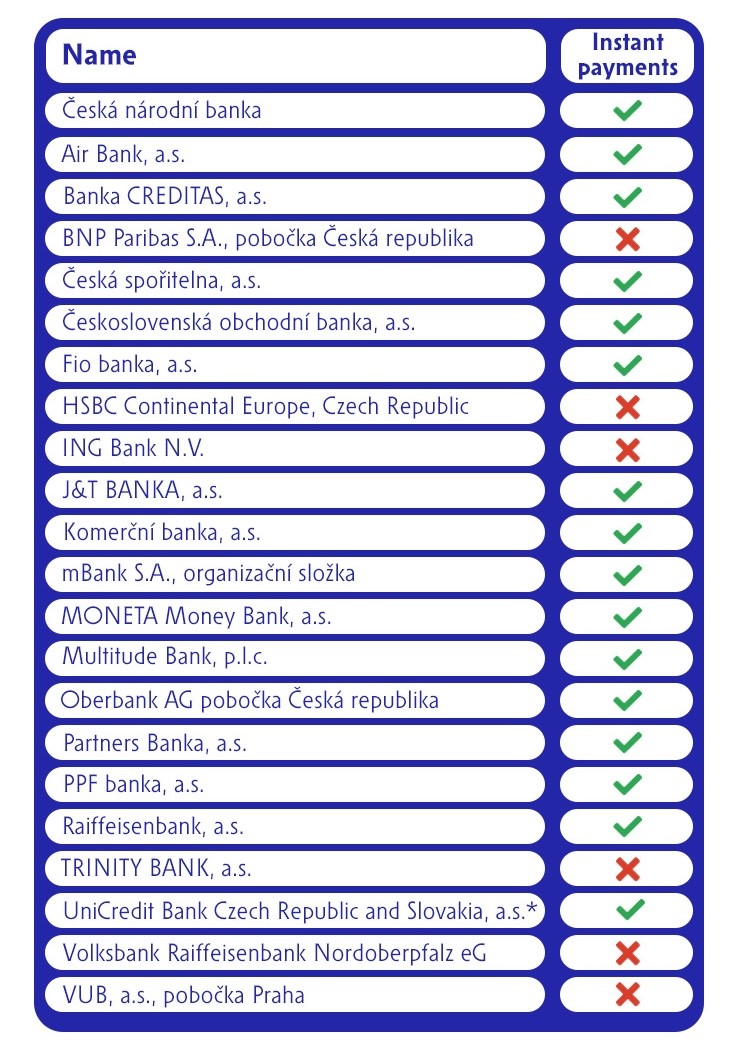
Participation in the instant payments system is voluntary, i.e. not all CERTIS participants offer this service to their clients. Instant payments were introduced at the end of 2018 and have been steadily gaining popularity among bank customers ever since.
Instant payments for the modern digital economy
In the future, the importance of instant payments may extend beyond account-to-account transfers, contributing to innovation and the digital development of the economy. They have the potential to increase competition in a market where payment cards still dominate non-cash payments in both bricks-and-mortar and online stores.
The use of instant payments can also lower retailers’ costs when accepting non-cash payments.
Does your bank also offer instant payments?
What else you should know about instant payments
The CNB operates the instant payments system. Specifically, this is the interbank payment system managed by the Czech National Bank, known as CERTIS (Czech Express Real Time Interbank Gross Settlement System). The CERTIS system comprises several components, one of which handles the processing of instant payments, authorises their execution, and ensures their subsequent settlement in the banks’ accounts.
Instant payments are processed 24/7, including nights and weekends, very quickly and reliably. Instant payments currently do not apply to bulk payments or standing orders.
The maximum limit is set at CZK 2.5 million. Banks may set a lower limit for outgoing payments but must accept incoming payments up to the maximum limit.
The CNB is working on the possibility of introducing bulk instant payments (for example, the payment of salaries) in 2026.
From July 2027, domestic banks will be required to offer instant payments in euro, including cross-border transfers (euro payments from koruna accounts will be available from June 2028). Some domestic financial institutions already offer instant payments in euro to their clients. It is important to note that the euro instant payments system is not operated by the CNB and is separate from banks’ participation in the CERTIS system.
In December 2025, an average of 2.03 million instant payments were made daily. Standard credit transfers amounted to 2.64 million in December. Instant payments thus represented 43% of all interbank credit transfers. The numbers continue to rise – December set a historical record since instant payments were launched in 2018. For comparison, in December 2024 the daily average was 1.57 million (34% of all transfers), while in December 2023 it was just 1.17 million (29%).