MONETARY POLICY REPORT | AUTUMN 2025 (appendix)
(authors: Jan Botka, Filip Novotný, Renata Pašaličová, Matěj Šarboch)
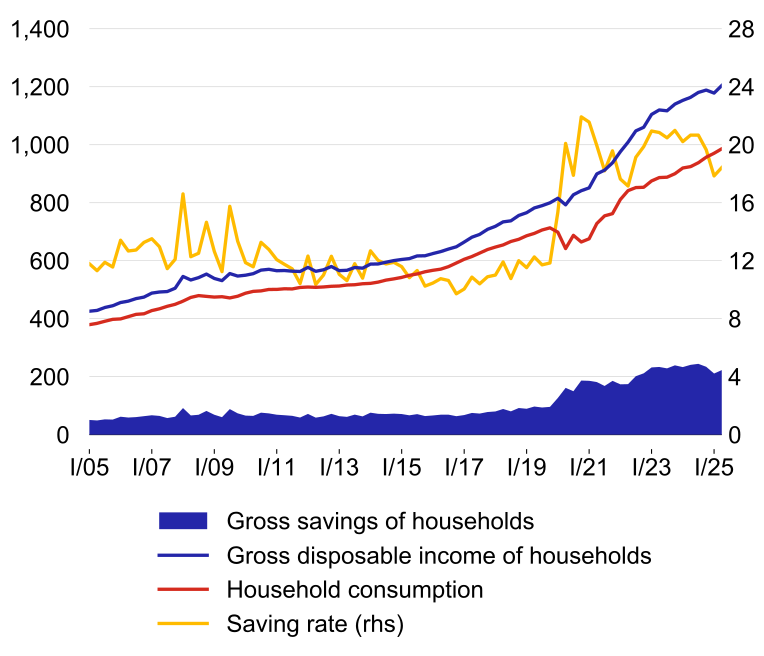
The household saving rate[1] has been above its long-run average for several years. Following an increase during the pandemic, it remained high during the energy crisis and the episode of elevated inflation. The following analysis shows that this was primarily due to the precautionary motive and then gradually also to higher interest rates. However, even after inflation returned to low levels, and with consumption recovering, the household saving rate was still a high 18.4% in 2025 Q2 (see Chart 1), roughly 6 pp above the pre-Covid average. This appendix analyses the causes of the high saving rate and its possible implications for the future.
Chart 1 – The household saving rate has been fluctuating well above its long-run average
CZK billions; saving rate in %; seasonally adjusted
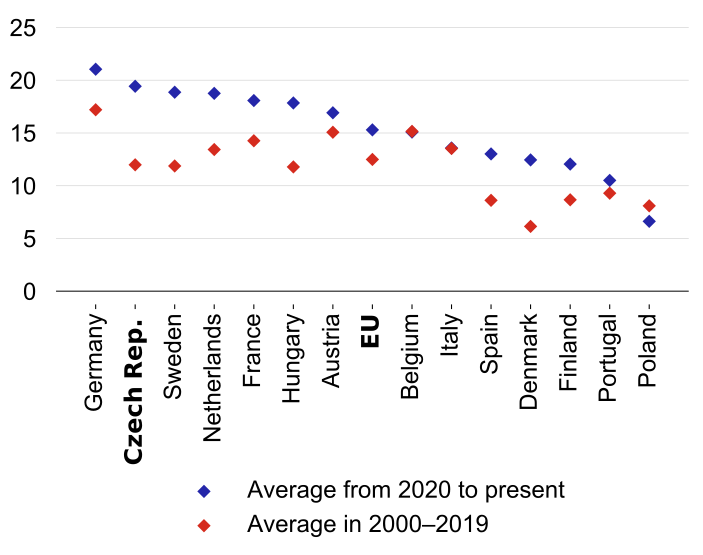
The saving rate[2] in the Czech Republic currently ranks among the highest in Europe. The average saving rate across EU countries has hovered around 15% in recent quarters. Hungary and Germany have similar levels to the Czech Republic, with Germany’s rate even slightly higher. However, German households have historically maintained a high propensity to save, and their saving rate has risen relatively little compared to the pre-Covid period. Other European countries also have higher saving rates than before the pandemic, but the increase in the Czech Republic is substantially larger than in the rest of the EU (see Chart 2).
Chart 2 – The saving rate is higher than in the past in most European countries, but in the Czech Republic it has risen so much that it now ranks just behind Germany
saving rate in %; source: Eurostat, selected countries with available data
The CNB’s estimates (see Chart 3) indicate that the growth in the saving rate in 2020 was driven mainly by pandemic lockdown measures (“forced savings”) and to a small extent also by heightened uncertainty about future economic developments. Consumers were unable to spend their income to the extent they had been accustomed to. In 2021, the anti-pandemic measures began to be relaxed and the saving rate declined. However, this trend later reversed. The first half of 2022 saw the outbreak of war in Ukraine, the related energy crisis and subsequent high inflation, which caused consumers’ sentiment and willingness to spend to deteriorate again. In response to the rapid rise in prices, the central bank began to tighten monetary policy, and interest rates thus also fostered higher household saving due to attractive returns on savings account deposits. Although interest rates on deposit products have come down gradually, they are still significantly higher than they were before 2020. Consumer sentiment is expected to improve gradually. According to the forecast, however, the saving rate will not return to its pre-pandemic level, as other factors that cannot be modelled are contributing to the elevated saving rate. These include demographic change, uncertainty about the sustainability of the current pension system, increased financial literacy among consumers leading to a greater willingness to invest, and a more user-friendly investment environment.[3]
Chart 3 – The elevated saving rate in the recent period has been due primarily to the precautionary motive and a still attractive level of interest rates
difference in saving rate compared to 2019 Q4 in pp; seasonally adjusted
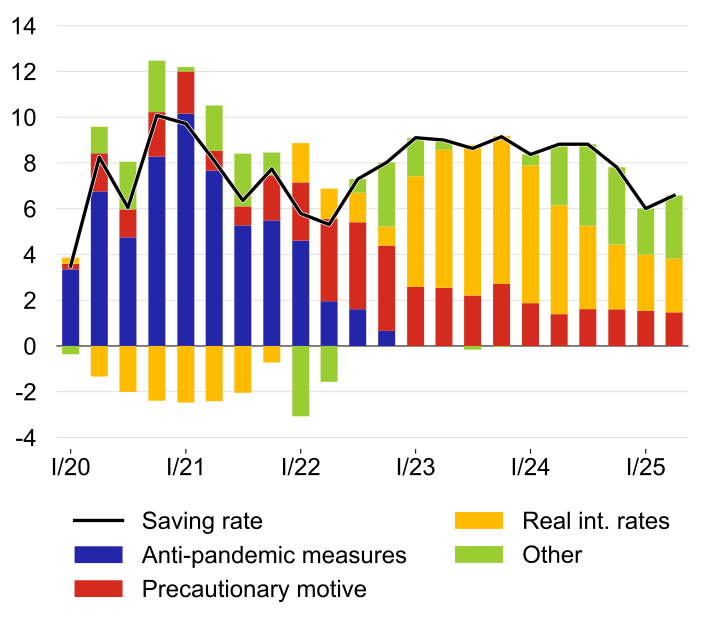
Note: The decomposition of the saving rate into factors is based on a simple regression model. In the model, the saving rate depends on the Stringency Index (anti-pandemic measures), consumer sentiment (precautionary motive) and real interest rates (3M PRIBOR adjusted for inflation expected by financial analysts one year ahead).
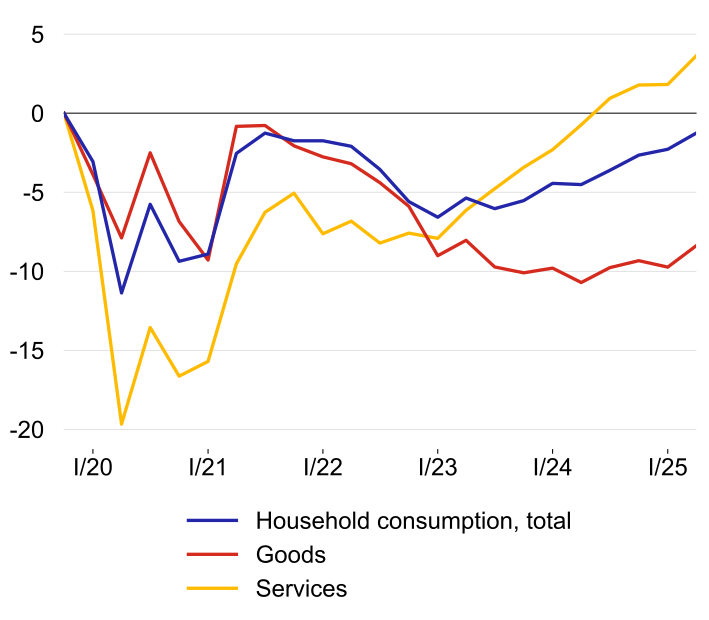
Household consumption declined or remained subdued in previous years despite continued growth in households’ real disposable income. This was reflected in an increase in the saving rate. Real disposable income went up by 7.6% between the end of 2019 and 2025 Q2 (see Chart 4). Only in 2025, however, is real household consumption approaching pre-Covid levels, mainly as a result of higher spending on services (see Chart 5). Total disposable household income includes not only wages, but also net property income representing net interest income, income of the self-employed and other income derived from household property ownership (income outside of employment). Net government transfers – including government support during the Covid pandemic in 2020 and the abolition of the supergross wage in 2021 – have also contributed to the growth of real disposable income in recent years.[4] Households’ real income from employment was declining for almost two years, and only rose above pre-Covid levels at the end of 2024.
Chart 4 – A sharp increase in real gross disposable income during 2020 and 2021 fostered a rise in the household saving rate
changes compared to 2019 Q4 in %; contributions in pp; adjusted by consumption deflator; seasonally adjusted
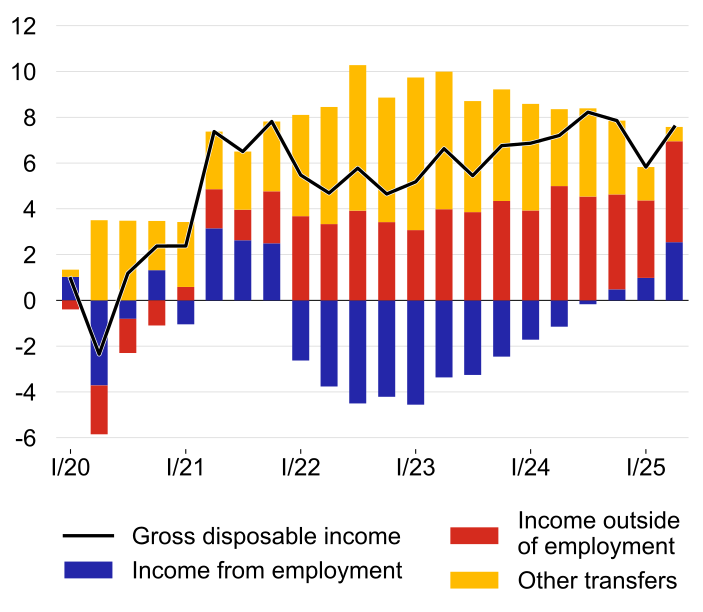
Note: Income from employment comprises compensation of employees. Non-labour income is the sum of property income and income of the self-employed. Other transfers include a link to fiscal policy.
Chart 5 – Real consumption is only now approaching its pre-Covid level
changes compared to 2019 Q4 in %; adjusted by consumption deflator; seasonally adjusted
The change in households’ behaviour that led to increased saving was gradually reflected in households’ net wealth, which primarily comprises assets in the form of housing, deposits, bonds and equities. Net household wealth rose sharply during the pandemic, and this growth continued in nominal terms in the period that followed. This reflects long-term growth in net financial wealth, with the value of housing increasing even more markedly in conditions of high property prices. On the other hand, real net wealth broadly stagnated amid elevated inflation, motivating households to save more.
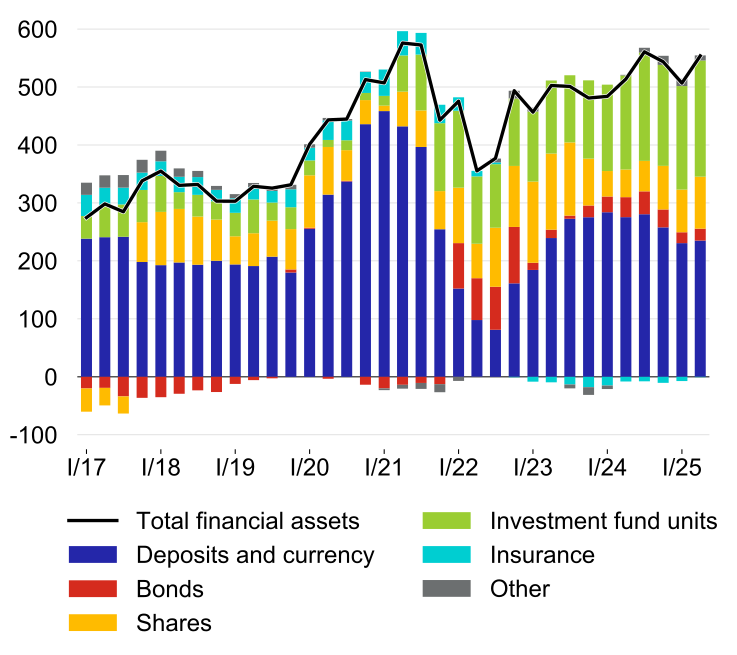
The breakdown of the saving rate shows that prior to 2020, households continuously invested their accumulated savings primarily in deposits (liquid financial assets) and in non-financial assets linked mainly with investments in dwellings. To a lesser extent, however, they used other financial assets such as investment fund units, shares and bonds. During the pandemic, households predominantly accumulated overnight deposits. Subsequently, in the course of 2021, they gradually began to invest more in equity (particularly shares) and investment fund units (see Charts 6 and 7). A large proportion of the accumulated savings continue to be invested in non-financial assets, particularly housing. As a result, the saving rate breakdown is currently dominated by less liquid assets, the potential conversion of which into consumer spending may be gradual.
Chart 6 – The savings breakdown has moved towards less liquid products compared to the past
ratios of flows to gross disposable income in %
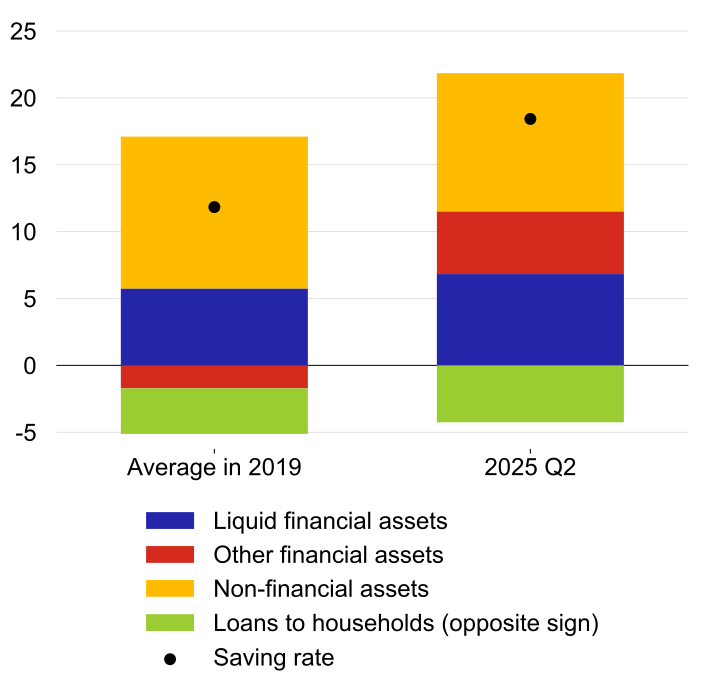
Note: Liquid financial assets comprise cash and deposits. Non-financial assets consist of gross capital formation. Other financial assets are calculated as the difference between savings and the aforesaid items.
Chart 7 – Households are also increasing their savings by investing in investment fund units and shares
annual moving totals of flows in CZK billions
In previous years, the growth in the saving rate was driven primarily by households with higher incomes. According to the latest data, in 2022 the saving rate was elevated mainly among high-income and middle-income households. The share of high-income households in new savings was a substantial 70% in the highest income quintile and 85% in the two highest income quintiles. Conversely, low-income households experienced the greatest deterioration in financial position of all the income groups due to rising living costs, and they saved almost nothing. It can be assumed that the saving rate breakdown in terms of household income groups has not changed significantly since then. According to a European Commission survey on Czech consumer perceptions, savings accumulation in 2025 continues to be concentrated primarily among higher-income households.
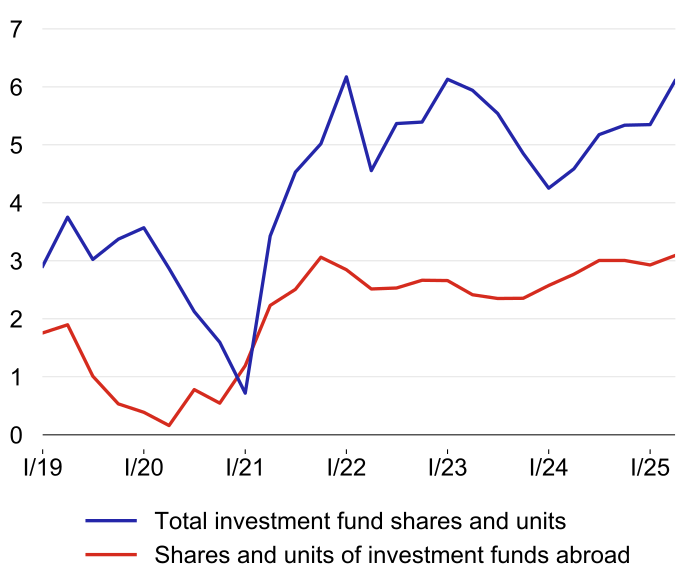
Households invest part of their savings in shares and investment fund units. The share of these investments in disposable income has ranged between 5% and 6% in recent years (see Chart 8), with roughly half invested in foreign markets. The other half is invested in the domestic financial market, primarily as investment fund units. Given the relatively shallow domestic capital market, Czech households are increasingly turning to foreign investments, both directly through investment firms and indirectly via investment funds. The growing interest of domestic investors is focused mainly on foreign equity securities, especially shares and mutual and investment funds.[5]
Chart 8 – A proportion of household savings invested in shares and units are located abroad
ratios of flows to gross disposable income in %; annual moving averages
Since 2021, financial account data have shown a growing outflow of funds from households and businesses into foreign equity securities, reflecting an increased willingness among residents to diversify their savings beyond the domestic market (see Chart 9). Strong investment activity by domestic households and businesses, reflecting growing interest in equity investments, was evident last year and continues into the current year. The annual amount invested in this way was close to CZK 100 billion at the beginning of this year.
Chart 9 – An outflow of private sector funds abroad has recently been visible
annual moving totals of flows in CZK billions
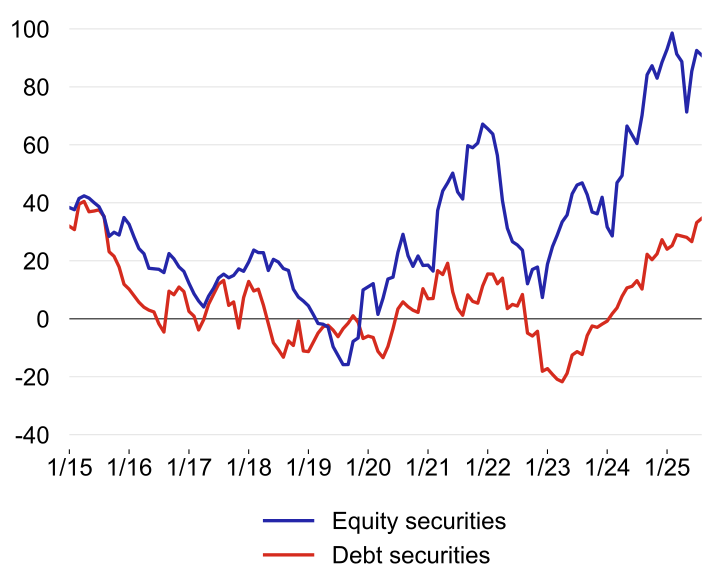
The outflow of capital abroad is reflected in a slowdown in the growth of the quantity of money in the domestic economy below the long-term average. The contribution of the decline in net foreign assets to M3 dynamics is around 2 pp. This is being driven both by increased household investment in equity securities and, in particular, by the expansion of Czech businesses abroad.
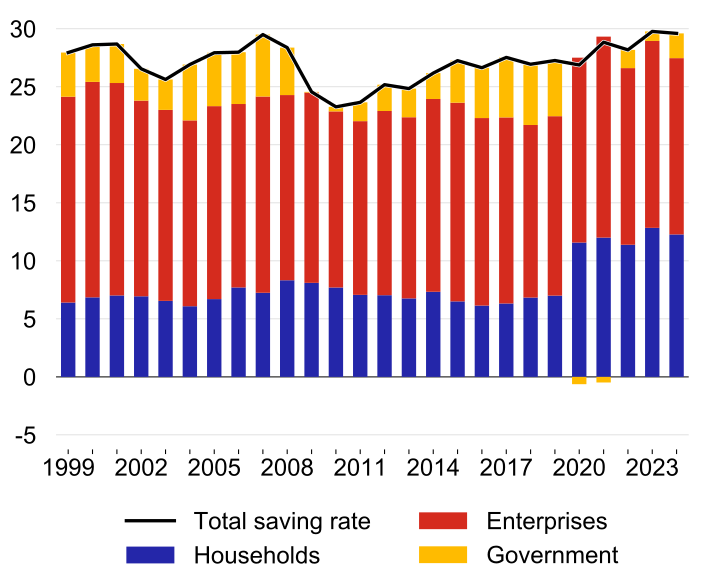
The growth in the household saving rate has also been reflected in a rise in gross savings[6] across the entire economy. However, it has been partially offset – by roughly half – by a decline in gross general government savings. The overall gross saving rate in the economy has risen by 2.3 pp over the past five years, reaching 29.6% in 2024 (see Chart 10). Historically, similar levels were recorded in 2007–2008.
Chart 10 – The increase in the household saving rate has been partially offset – by half – by a decline in general government savings
ratios of gross savings to total disposable income in economy in %
The CNB forecast expects the household saving rate to continue fluctuating around the present level in the period ahead. Over the past five years, households have to some extent changed their behaviour and begun to invest more in financial instruments. Household investment in housing and bank deposits has returned to usual levels. Therefore, it is primarily investment in other financial assets such as shares and funds that is likely to remain elevated. However, a persistently elevated saving rate does not necessarily mean slower household consumption growth. It may represent a “new normal” where growth in consumption expenditure in the future will routinely depend on growth in households’ disposable income.
In light of the above, the CNB’s autumn forecast expects households to set aside approximately 18% of their disposable income as savings over the next two years, amid roughly similar growth in income and consumption. The higher saving rate will be supported by higher interest rates (compared to the pre-Covid period) and households’ efforts to increase their real net wealth by investing in standard financial instruments.
[1] This topic has previously been addressed in several analytical boxes, for example Household savings, net wealth and consumption in the Autumn 2023 MPR and Reasons for households’ current increased propensity to save in the Summer 2023 MPR.
[2] The CZSO defines the household saving rate as the ratio of gross savings to gross disposable income. Savings comprise the unconsumed part of gross disposable income. Gross disposable income is obtained by subtracting households’ current expenditure, such as taxes and social contributions, from their current income, the largest items of which are wages and salaries, entrepreneurs’ profits and social benefits. All of these items, including savings and their breakdown by product and household income group, are flow variables rather than stock variables. They therefore represent nominal household flows within a given quarter. Savings themselves may not correspond to the change in the stock of households’ bank deposits, as they may be converted into physical (tangible, e.g. property purchases) or financial investments.
[3] In recent years, we have witnessed a boom in various investment platforms through which shares can be purchased with just a few taps on a mobile phone and with minimal fees.
[4] By the CNB’s estimation, the abolition of the supergross wage deprived the state budget of roughly CZK 90 billion a year. As a result, households received substantial additional income, with high-income households benefiting most from this tax change.
[5] Investments by Czech households in foreign securities are recorded in the balance of payments on the asset side of the financial account under “portfolio investment”. These transactions represent a capital outflow from the Czech Republic, as residents purchase foreign assets. The mere transfer of household funds from deposits with domestic banks to domestic investment funds does not have a cross-border character and only appears in the balance of payments once the funds or the households themselves purchase foreign securities. According to the balance of payments methodology (BPM6), these are portfolio investments in shares and investment fund units that do not confer a controlling interest in the management of the issuer and are therefore not classified as direct investment.
[6] The saving rate in the national economy is the ratio of total gross savings (of general government, corporations and households) to total gross disposable income in the economy.