MONETARY POLICY REPORT | SUMMER 2025 (appendix 1)
(authors: Jakub Grossmann, Renata Pašaličová, Zdeněk Pikhart)
The housing market plays an important role in the economy. Monetary policy influences house prices primarily through the cost of debt financing,[1] which reflects both the current and expected future levels of the CNB’s key interest rates.
House prices have risen sharply over the past year and are feeding into headline inflation via imputed rent. The residential property price index rose by 10% year on year in 2025 Q1, with prices of new apartments increasing by 13% and older ones by 9.3%. Other price indices are also showing strong growth (see Chart 1). A similar trend is visible across the EU. However, the Czech Republic ranks among the third of countries with the fastest house price growth.[2] The outlook for house prices is subject to considerable uncertainty.
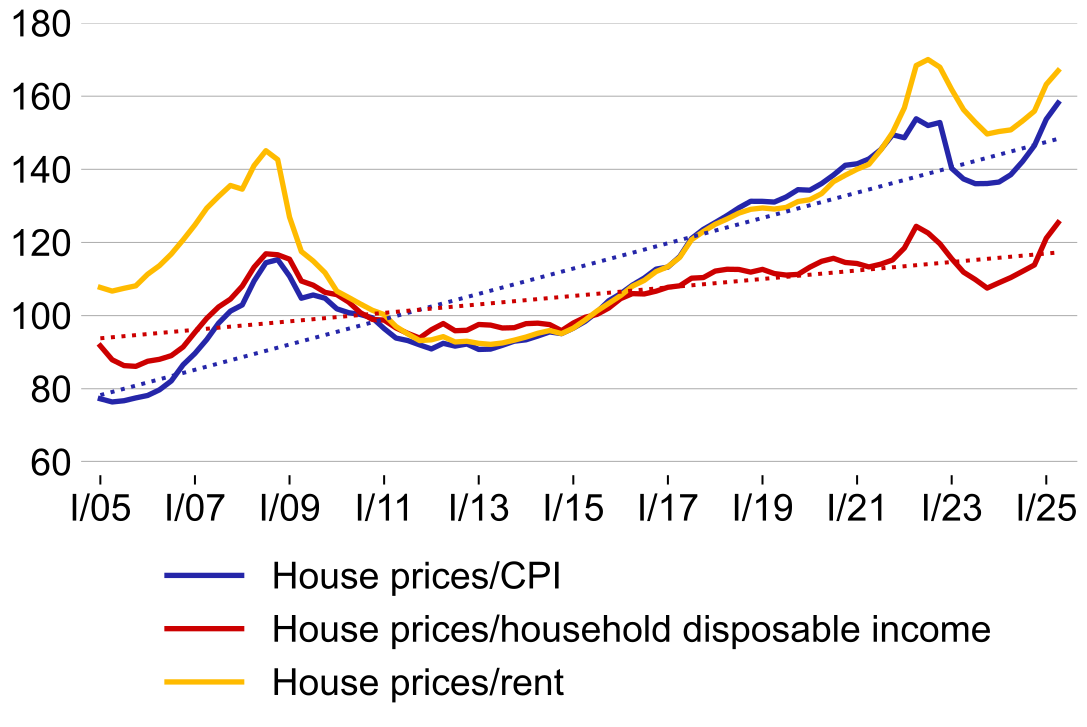
Real apartment prices, which fell in 2023 due in part to high inflation, surged during 2024 and early 2025, surpassing the highs seen in 2022 (see Chart 2). Faster growth in apartment prices than in household income has made housing less affordable. House prices are rising unusually fast in relation to income and price levels, and are visibly above long-term trends. House prices are also outpacing market rents, which recorded year-on-year growth of around 6% in 2025 Q2.
Chart 1 – Residential property prices are surging
y-o-y changes in %; source: CZSO
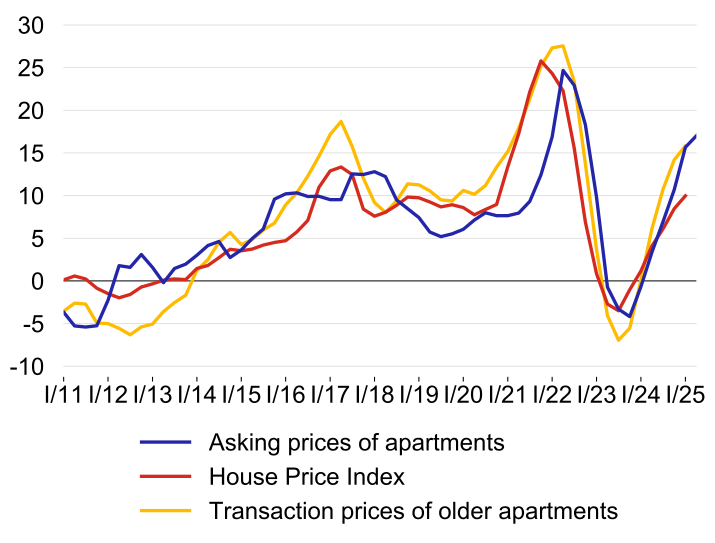
Chart 2 – Real apartment prices have surpassed their 2022 highs; housing affordability has recently deteriorated
indices (2015 = 100); long-term trends shown as dotted lines; source: CZSO
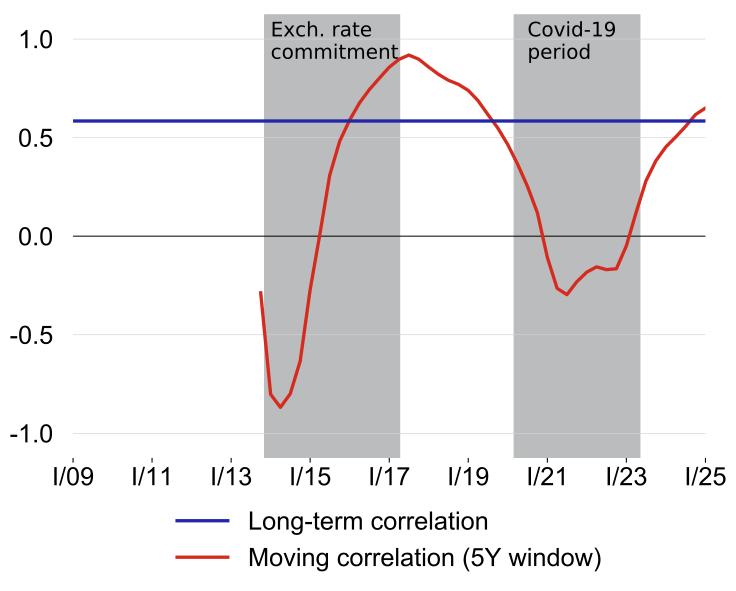
The correlation between the housing market and the economic cycle is assessed using house prices and the output gap. Calculations indicate that house price growth leads the output gap in terms of timing (see Chart 3). The highest correlations, exceeding 0.7, are observed when house price growth precedes growth in economic activity by three quarters. By contrast, consumer price inflation shows the strongest correlation with the output gap with a lag of more than two years. The strength of the correlation between house price growth and the output gap not only differs in terms of timing, but also depends on the prevailing economic environment and is therefore variable over time. Chart 4 shows that the strength of the correlation is lower (and in some cases even negative) following adverse economic shocks, such as the Global Financial Crisis in 2008 and the period associated with the Covid pandemic. A stronger positive correlation, by contrast, can be observed at times of economic expansion.
Analyses of the persistence of house price growth suggest that current growth in prices is strongly correlated with their movement over the previous three quarters. However, this correlation does not differ significantly from the evolution of consumer prices or other price indices.
Chart 3 – House prices respond to the economic cycle with a lead
cross-correlations of apartment price growth and inflation with output gap (reference variable); x-axis: lag and lead in quarters; CNB calculation
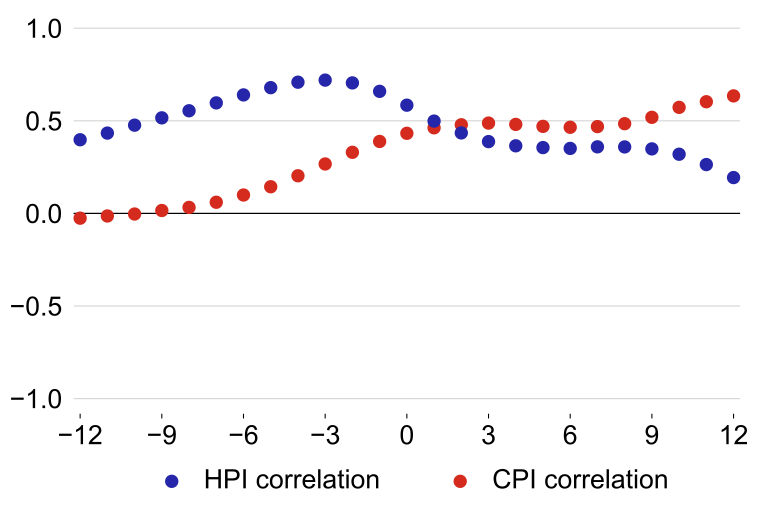
Chart 4 – The positive correlation between house price growth and the output gap strengthens during economic upswings
correlation between house price growth and output gap; CNB calculation
On the demand side, the house price growth reflects increasing transaction activity in the housing market, accompanied by a rigid supply of completed residential properties (see Chart 5). Purchases of new apartments in the primary market (including future contracted sales) are rising sharply both in Prague and in the rest of the Czech Republic. Household investment in housing also increased quarter on quarter in 2025 Q1. Its share in gross disposable income stands at 10%, roughly in line with the pre-Covid average. According to a European Commission survey, the share of households intending to buy a property in the next 12 months has also risen. This points to persisting strong demand-side pressures in the housing market, accompanied by brisk income growth. On the other hand, supply is very rigid; the number of new apartments available on the market is falling, apartment completions are below the long-term average, and a similar trend is evident for building permits – both in Prague and across the Czech Republic. Although new construction starts have begun to pick up gradually following a previous downturn, they remain relatively low from the long-term perspective. Rising demand coupled with rigid supply is thus pushing house prices up.
Chart 5 – Sales of new apartments continue to rise, while the supply of completed apartments is rigid
numbers of transactions involving purchases of new apartments and apartment completions in given period; source: Flat Zone, Dataligence, CZSO
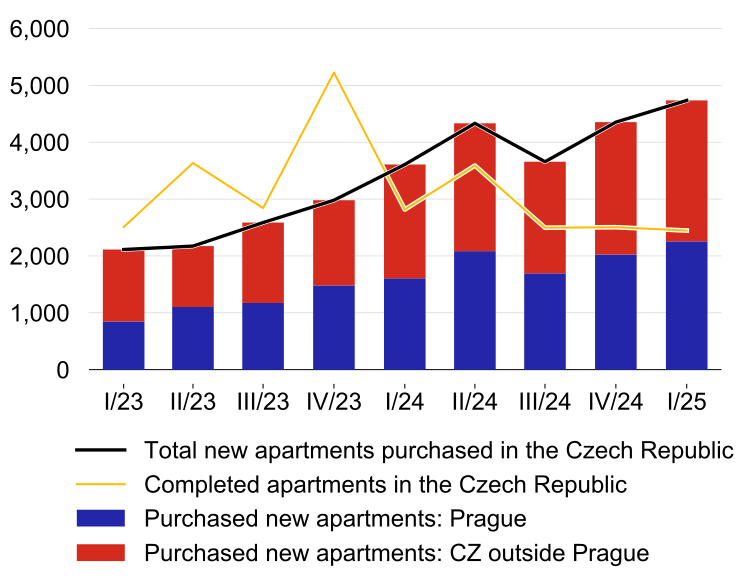
Chart 6 – Demand for mortgages is rising briskly, with volumes the second highest on record this year; relative to income, they are at the pre-Covid level
mortgage loan volumes in CZK billions; ratios to gross disposable income; mortgage interest rate in % (right-hand scale)
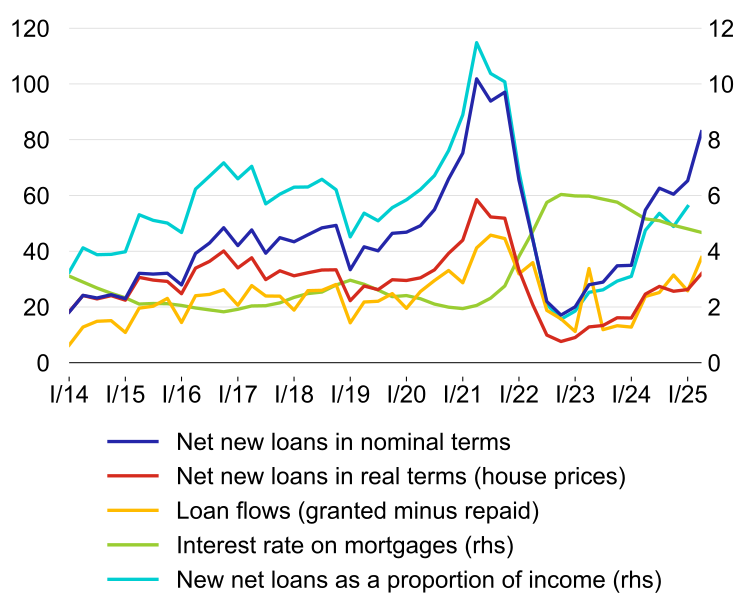
The recovery in housing demand is linked with rising lending activity in the mortgage market (see Chart 6), which can be regarded as a cyclical factor. According to the latest Bank Lending Survey, demand for housing loans has continued to increase. In real terms (adjusted for inflation and house prices) and relative to households’ gross disposable income, mortgage volumes are approaching levels seen in the pre-Covid period, which was characterised by brisk house price growth. The growing demand for mortgages is due to a decline in mortgage interest rates and expectations of a continued recovery in the housing market accompanied by rising house prices.
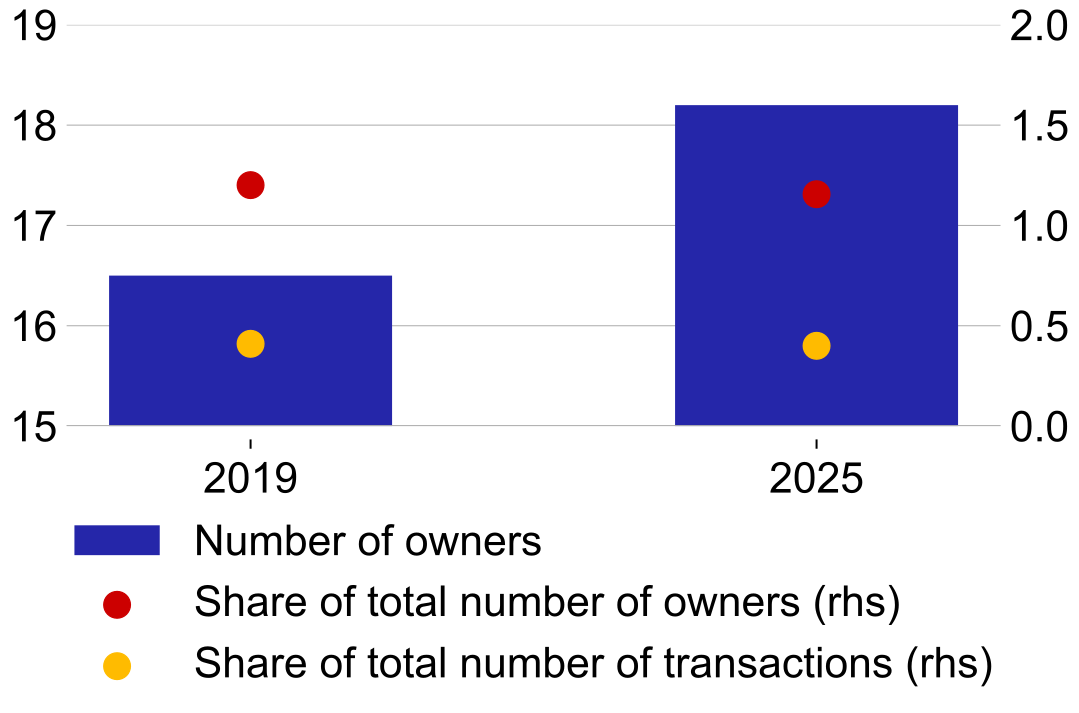
Demographic factors are one of the structural drivers of the growth in demand for residential property. Between 2011 and 2019, average population growth was accompanied by a roughly corresponding number of newly completed apartments, although a mismatch was evident in Prague and its surroundings. Increased migration in recent years has meanwhile contributed to marked growth in the population, which has exceeded apartment completions across the Czech Republic (see Chart 7). In certain circumstances, this trend may drive up demand for housing. The number of apartments owned by persons with permanent residence outside the Czech Republic has gone up, but their share in the housing market remains low and has not changed greatly compared to 2019, as is also evident from the number of house purchase transactions (see Chart 8). However, this is partly because official entries in the Land Register only record the owners’ permanent residence and not their citizenship. According to information from property developers and estate agencies, foreign nationals nonetheless account for roughly 25% of property purchases.[3] Although the current surge in house prices is being driven primarily by domestic demand-side factors in an environment of rigid supply, the increased migration seen in recent years may also be playing a role.
Chart 7 – Population growth has significantly outpaced apartment completions in recent years
numbers of persons and apartments in thousands; source: CZSO
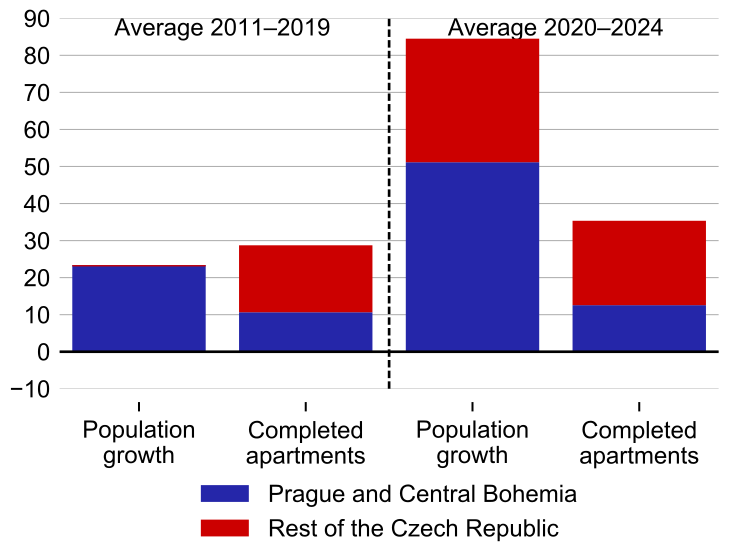
Chart 8 – The number of apartments owned by persons with permanent residence outside the Czech Republic has increased, but their share of the overall market is low
number of apartments (in thousands) in CZ owned by persons with permanent residence outside CZ; shares in %; source: Flat Zone; Dataligence; Czech Office for Surveying, Mapping and Cadastre
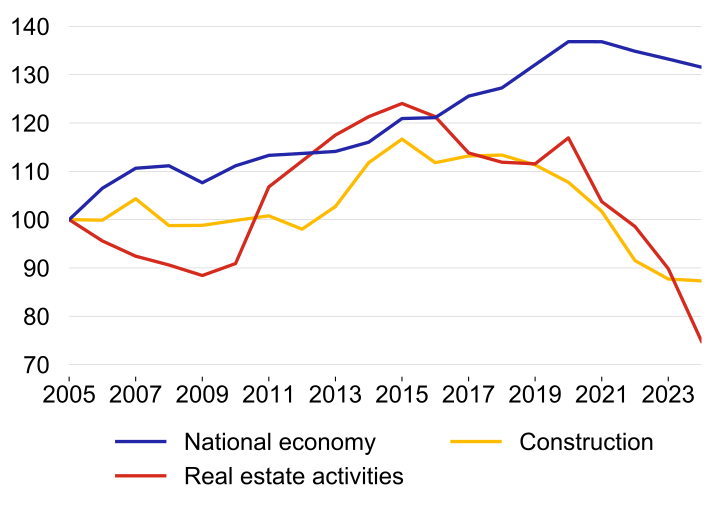
From the supply-side perspective, the construction sector plays quite a significant role in the economy. Its share in gross value added of the Czech economy has hovered just below 6% over the past ten years, while its share in total employment has been around 2 pp higher[4] (see Chart 9). This indicates that the sector is highly labour intensive. One reason for the decline in residential construction may be the adverse level and trend in labour productivity in the construction industry, which has fallen sharply in recent years, lagging behind productivity in the economy as a whole (see Chart 10). Between 2019 and 2024, labour productivity dropped cumulatively by 22% in construction and 33% in real estate activities. The fall in labour productivity reflected an increase in hours worked amid falling real gross value added, accompanied by rising construction work prices. On the other hand, the decline in the average real compensation of employees over the same period was significantly smaller than the drop in productivity. Between 2019 and 2024, the real hourly compensation of employees fell by 4.3% in construction and 9.1% in real estate activities (compared with a 3.5% decline in the economy as a whole). As a result, real unit labour costs rose by 25% in construction and by as much as 39% in real estate activities over the same period.
Chart 9 – Construction is a significant sector of the economy, with relatively high labour intensity
shares in %; source: CZSO national accounts
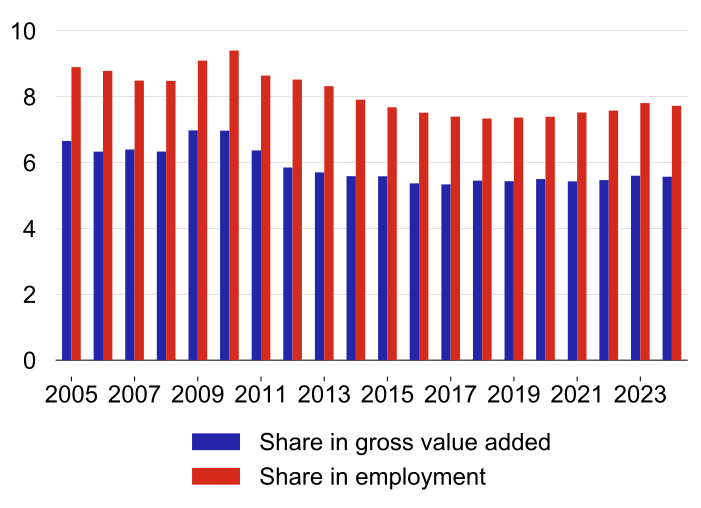
Chart 10 – Labour productivity in construction has long lagged behind that in the national economy and has declined in recent years
indices (2015 = 100); gross value added at constant prices per hour worked; source: CZSO national accounts
The low labour productivity in construction firms, which may reflect, among other things, slow building permit procedures and insufficient consideration of housing needs in land-use planning, is being accompanied by relatively subdued residential construction activity. In 2024, the number of apartment completions per thousand inhabitants in the Czech Republic was close to the European average (see Chart 11). According to an ECB document,[5] however, most countries have recently been facing supply-side issues in the residential property market. Between 2021 and 2024, apartment completions in selected European countries fell by 13% on average. This reflected a range of factors, including rising interest rates and higher construction costs.[6] Poland stands out in within Central Europe, with around one-third more apartments built than the EU average. The Czech Republic is slightly below the average in terms of building permits. In most countries, the number of permits is lower than in 2019.
Chart 11 – Apartment completions in the Czech Republic are close to the international average
apartment completions per thousand inhabitants; data for 2024; source: Euroconstruct, Eurostat
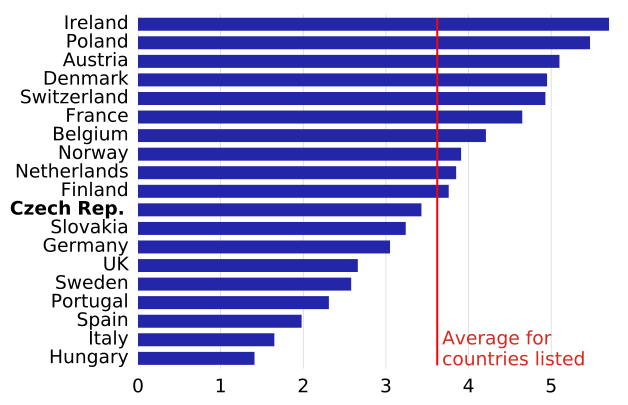
Chart 12 – The share of SMEs in profits is above-average in the housing market
shares in pre-tax profit in given sector and in total in %; averages for 2023 Q1–2025 Q1; sample of 2,000 largest companies in terms of assets; source: CZSO
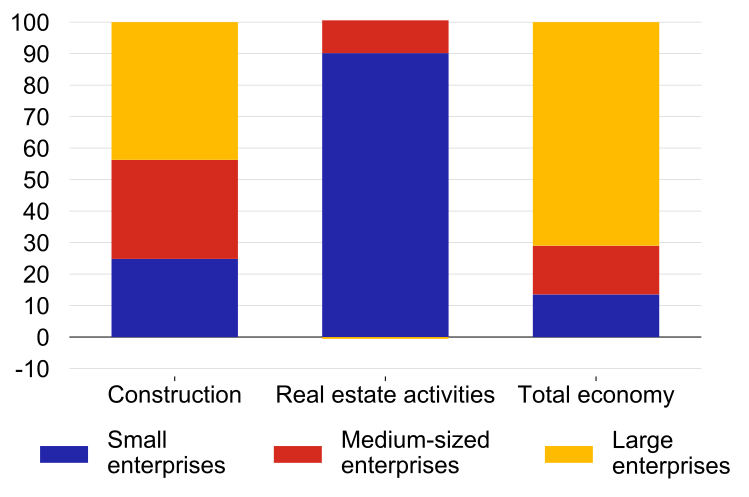
The relatively low labour productivity in construction and real estate activities may also be due to the structure of the firms operating in these sectors.[7] Compared with the economy as a whole, these sectors have a significantly higher proportion of SMEs in terms of both number and share in the sector’s profits (see Chart 12). On the one hand, this may indicate a healthy level of competition, but on the other, it may lead to fragmentation on the supply side, with small firms having limited capacity to realise economies of scale or implement innovations to increase the capital intensity of labour.
Overall, residential property prices are currently in the upward phase of the cycle. Their brisk growth reflects rising demand for housing accompanied by a relatively rigid supply side. In terms of timing, house prices tend to lead the output gap, so to some extent they are now indicating that the economy may be in an expansionary phase. The CNB monitors house prices closely and takes their long-term impact on inflation into account in its monetary policy decisions.
[1] This topic was explored in more detail in the appendix The housing market and house prices in the Czech Republic in the Autumn 2024 Monetary Policy Report.
[2] See also Developments in the recent euro area house price cycle, Economic Bulletin Issue 2, ECB, 2025.
[3] Information from selected property developers and estate agencies (Central Group, Svoboda & Williams). For details, see, for example, Až čtvrtinu klientů tvoří cizinci, hlásí makléři (Up to a quarter of clients are foreigners, brokers report, in Czech only). Demand is focused on smaller apartments (including buy-to-let properties and older housing), primarily in Prague. Increases are also visible in Brno and other regional capitals.
[4] In the real estate activities sector, the share in gross value added in the economy as a whole is around 12%, while the share in employment is just under 3%. In the national accounts, however, this sector also includes imputed rent, which in 2024 amounted to CZK 681 billion, or around 9% of total gross value added. After adjusting for imputed rent, the share of real estate activities in both the economy and employment is therefore approximately 3%.
[5] See Developments in the recent euro area house price cycle, Economic Bulletin Issue 2, ECB, 2025.
[6] For details, see Housing under pressure: How politics, policy, and investment are shaping Europe’s housing future, Euroconstruct, April 2025.
[7] For details, see D’Amico, L., Glaeser, E. L., Gyourko, J., Kerr, W. R., Ponzetto, G. A. M.: Why has construction productivity stagnated? The role of land-use regulation, Working Paper 33188, National Bureau of Economic Research, November 2024.