MONETARY POLICY REPORT | SUMMER 2026 (box 2)
(authors: Jakub Grossmann, Branislav Saxa)
To illustrate the effect of changes in the CNB’s two-week repo rate on client rates, this box examines the distributions of client rates for households and corporations[1] between the end of 2023 and June 2026. Over this period, the CNB lowered its policy rates substantially (by more than 3 pp). The two-week repo rate declined from 7% in December 2023 to 3.5% in May 2025. At the end of the period under review, the rate was increased to 3.75%.
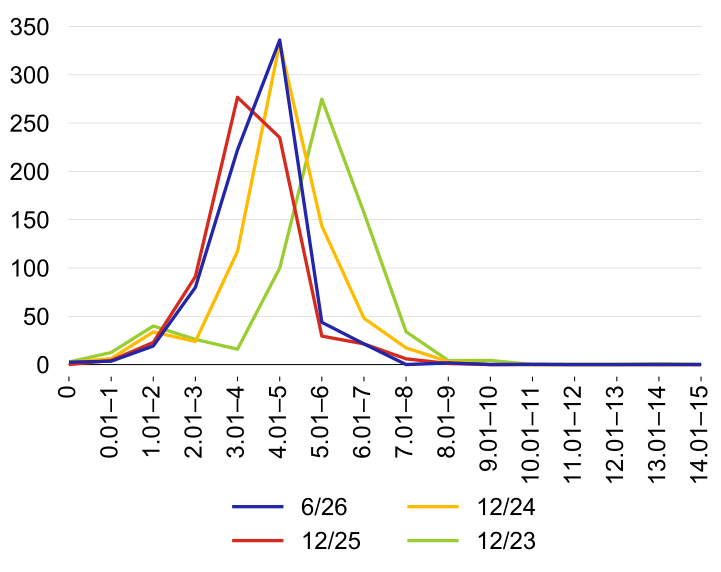
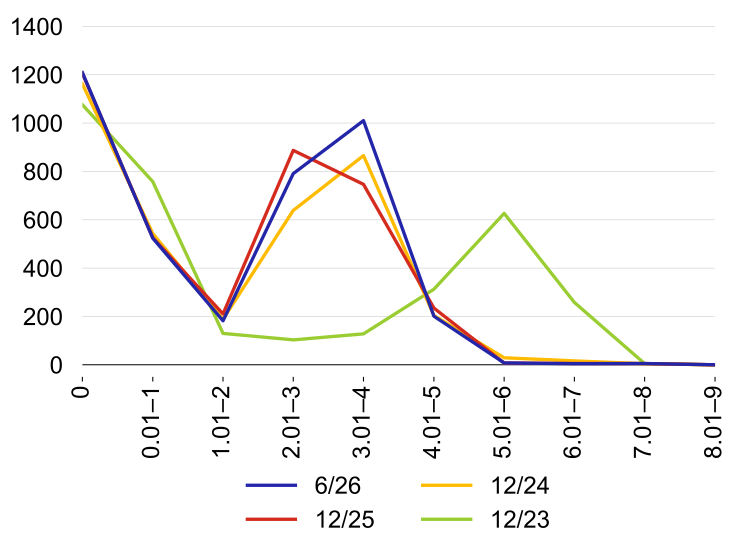
The pass-through of monetary policy and market rates to client rates on koruna-denominated loans to non-financial corporations is traditionally very rapid. Client rates on most koruna-denominated loans to non-financial corporations are contractually linked to the PRIBOR plus a credit margin, meaning that changes in market rates pass through to client rates virtually immediately. The gradual reduction of the two-week repo rate from 7% in December 2023 to 4% in December 2024 was reflected in a pronounced shift in the mode of the distribution towards lower interest rates (see Chart 1). Following the subsequent reduction of the repo rate to 3.5% in May 2025, the largest volumes of koruna-denominated loans were still concentrated in the 5–6% band. However, the volumes of loans drawn at those rates were significantly higher, and loans drawn at lower rates also rose. A similar pattern was observed for euro-denominated loans to non-financial corporations (see Chart 2), reflecting the 2 pp decline in the ECB’s deposit facility rate between December 2023 and June 2025. In recent years, euro loans have accounted for roughly one-half of total loans to corporations.
Chart 1 – Koruna-denominated loans to non-financial corporations
x-axis: interest rate bands in %; y-axis: volumes in CZK billions; stocks of koruna-denominated loans
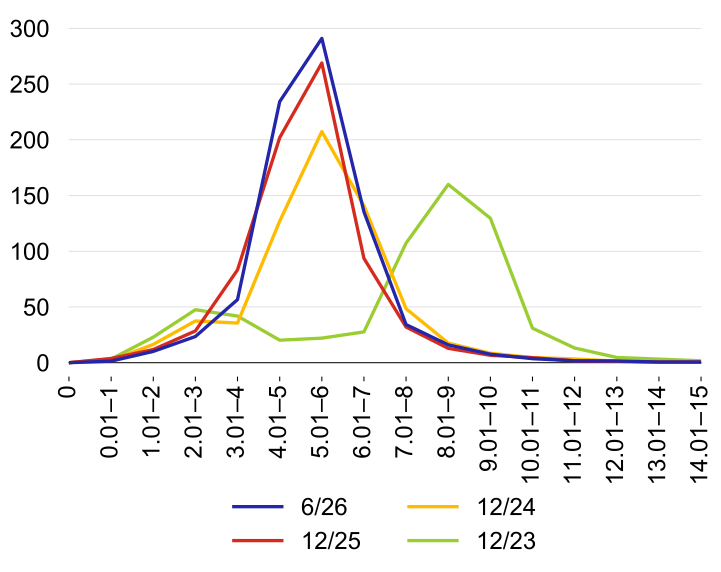
Chart 2 – Euro-denominated loans to non-financial corporations
x-axis: interest rate bands in %; y-axis: volumes in CZK billions; stocks of euro-denominated loans
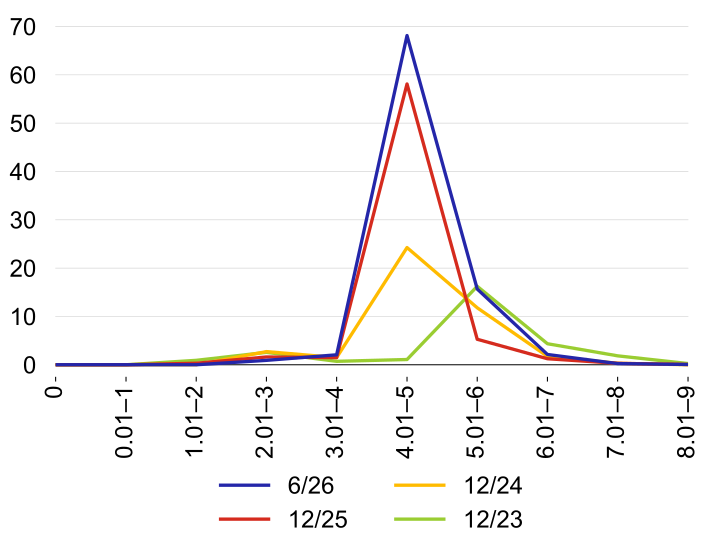
The distribution of client interest rates on housing loans has changed markedly over the past two and a half years. At the end of 2023, households still predominantly held mortgage loans with interest rates in the 2–3% range as a result of the accommodative monetary policy of previous years (see Chart 3), while the volume of new loans drawn at higher interest rates was minimal (see Chart 4). As the two-week repo rate gradually declined and borrowers increasingly needed to refix previously agreed loans, mortgages in the 4–5% band became more common. This was reflected in a change in the distribution of total housing loans. Whereas originally the distribution had a single pronounced peak in the 2–3% range, from 2025 onwards it has exhibited two distinct peaks – on the left, mortgages obtained at lower rates (not yet refinanced or refixed), and on the right, newer mortgages already bearing higher rates (see Chart 3). A change in policy rates therefore passes through more slowly to client rates on mortgages than to those on corporate loans. On the other hand, it affects not only the decisions of prospective new mortgage clients, but also the disposable income of existing borrowers who need to refinance or refix their mortgages.
Chart 3 – Housing loans
x-axis: interest rate bands in %; y-axis: volumes in CZK billions; stocks of loans
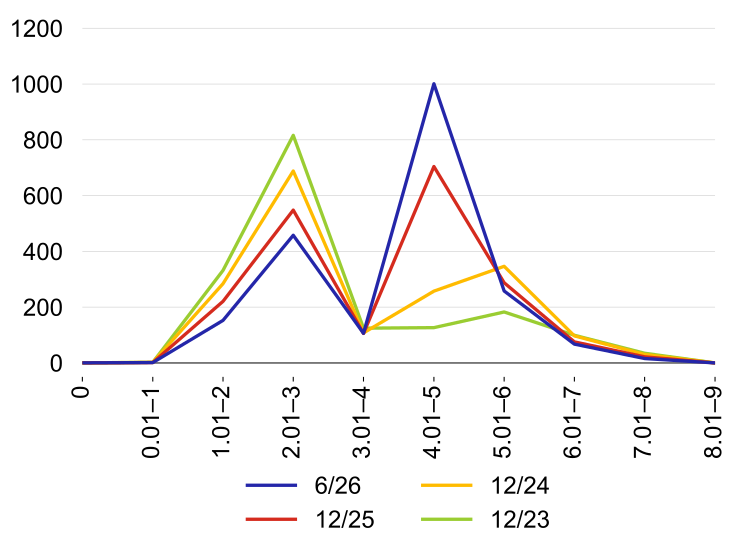
Chart 4 – New housing loans
x-axis: interest rate bands in %; y-axis: volumes in CZK billions; new loans
Given that both corporations and households hold a large proportion of their deposits in non-interest-bearing accounts, the pass-through of monetary policy rates to client deposit rates is very fast. At the end of 2023, corporate deposits were concentrated around rates of 6–7% (see Chart 5), while the mode for rates on household deposits was around 1 pp lower (see Chart 6). This suggests that firms were able to negotiate better rates. As the two-week repo rate came down, the situation became more balanced and the distributions of rates on corporate and household deposits had a similar shape. The latest figures show a renewed increase in rates, reflecting an upward shift in the yield curve.
Chart 5 – Deposits of non-financial corporations
x-axis: interest rate bands in %; y-axis: volumes in CZK billions; stocks of deposits
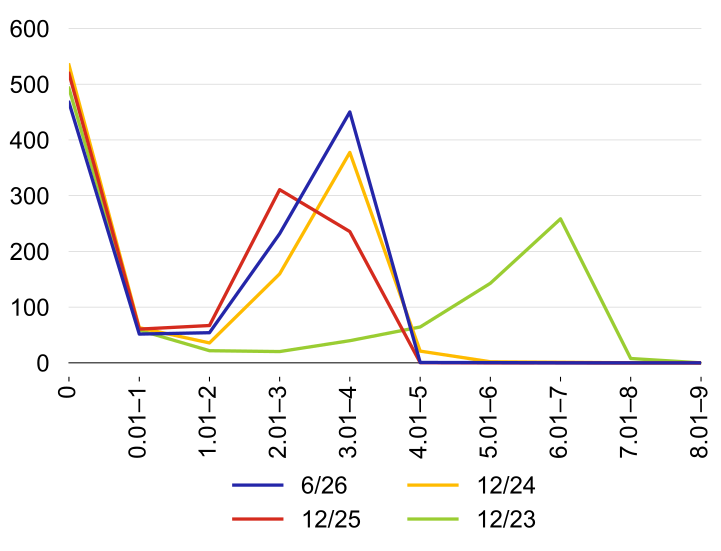
Chart 6 – Household deposits
x-axis: interest rate bands in %; y-axis: volumes in CZK billions; stocks of deposits
[1] This topic was also discussed in the box How client interest rates on loans and deposits have changed over the last two years in the Summer 2023 MPR.