MONETARY POLICY REPORT | SPRING 2026 (appendix)
(authors: Jakub Moučka, Tomáš Pokorný, Tatiana Vivodíková)
Reviewing the fulfilment of past forecasts is part of the CNB’s forecasting and analytical system. This process provides feedback on the use of the g3+ core forecasting model, which is the basic unifying element used in preparing the CNB’s macroeconomic forecasts, and on the appropriateness of making expert interventions outside the model. The conclusions of these analyses form the basis for making any model modifications or expert adjustments to increase the accuracy of future CNB forecasts, as well as providing impulses for the development of new models.
The CNB’s macroeconomic forecast serves as an important guide for the Bank Board when setting interest rates. The unifying element used to create the forecast is the g3+ core forecasting model. The forecast predicts the most probable future evolution of the domestic economy and the domestic interest rate path consistent with this which ensures the achievement of the CNB’s inflation target at the monetary policy horizon.
The accuracy of the CNB’s 2024 forecasts is assessed in four steps. First, we compare the CNB’s forecasts with the outputs of other analytical institutions; this shows whether our view of developments differed markedly from that of others, and if so, in which variables. In the second step, we examine whether the forecast errors in 2024 were below or above the historical average. In the third step, we assess the extent to which the forecasts prepared in 2024 materialised – in terms of both the assumptions prevailing at the time (the exogenous inputs to the forecast) and the projected paths of the main domestic variables. In the fourth step, we show what the forecast in the Autumn 2024 MPR would have looked like had the actual future paths of all the exogenous inputs been known at the time it was prepared. In this way, we disentangle inaccuracies stemming from the assumptions from those attributable to the model itself. It is the latter that indicate scope for improving the model.
The 2024 forecasts compared to the average of the forecasts of other institutions
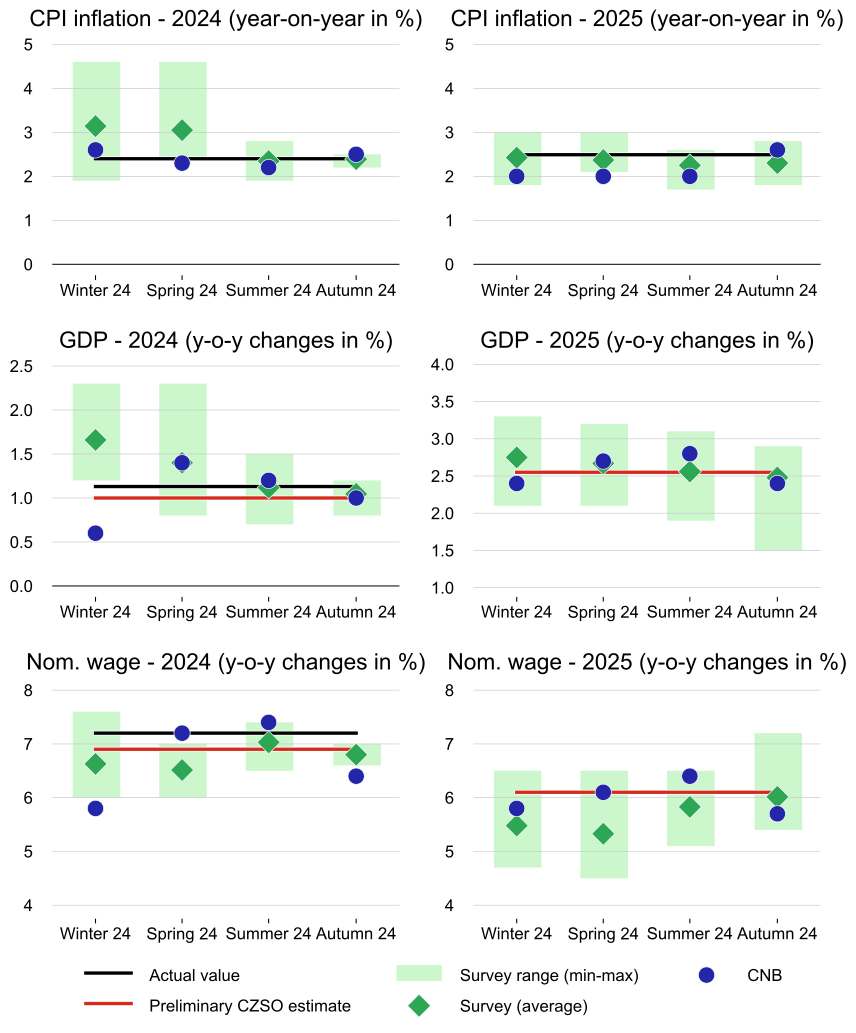
In this section, we compare the CNB’s 2024 forecasts with other analytical institutions’ contemporaneous outputs.[1] Chart 1 compares the CNB’s forecasts of the full-year figures for the main variables under review with the average of the forecasts of other institutions and with the subsequently observed outcomes for 2024 and 2025.
At the start of 2024, inflation returned to close to the 2% target for the first time in quite a while. This was accompanied by gradually recovering economic growth, supported by a revival in domestic demand. The latter was driven by a renewed increase in household consumption, fuelled by strong growth in real wages. Nominal wages were rising rapidly at that time – as a delayed response to the previous wave of inflation – and this growth was reflected increasingly in households’ purchasing power as inflation subsided. In the first half of the year, the CNB distinctly outperformed the average of other institutions in forecasting inflation. In the second half of the year, the forecasts were comparable (see Chart 1, first row). The GDP forecasts were similarly accurate throughout the year. In the case of wages, however, other institutions were somewhat more accurate on average. The accuracy of the forecasts of both the CNB and other institutions was complicated during 2024 by reduced wage nowcast accuracy owing to substantial data revisions made by the Czech Statistical Office.
The inflation forecasts for 2025 were slightly less accurate overall than the survey average (see Chart 1, second row). Inflation remained elevated. The main surprise for the forecasts was a rapid increase in food prices caused by poor harvests and rising prices of food commodities.[2] The CNB predicted GDP growth with comparable accuracy to other institutions. Wage growth in 2025 was higher than the forecasts had foreseen. With the exception of the summer and autumn forecasts, the CNB predicted wage growth more accurately than other institutions.
Overall, the CNB’s forecasts for 2024 and 2025 achieved a similar level of accuracy to those of other analytical institutions.
Chart 1 – Comparison of the CNB’s forecasts with those of other analytical institutions
Comparison of deviations of the 2024 inflation forecasts from the long-term perspective
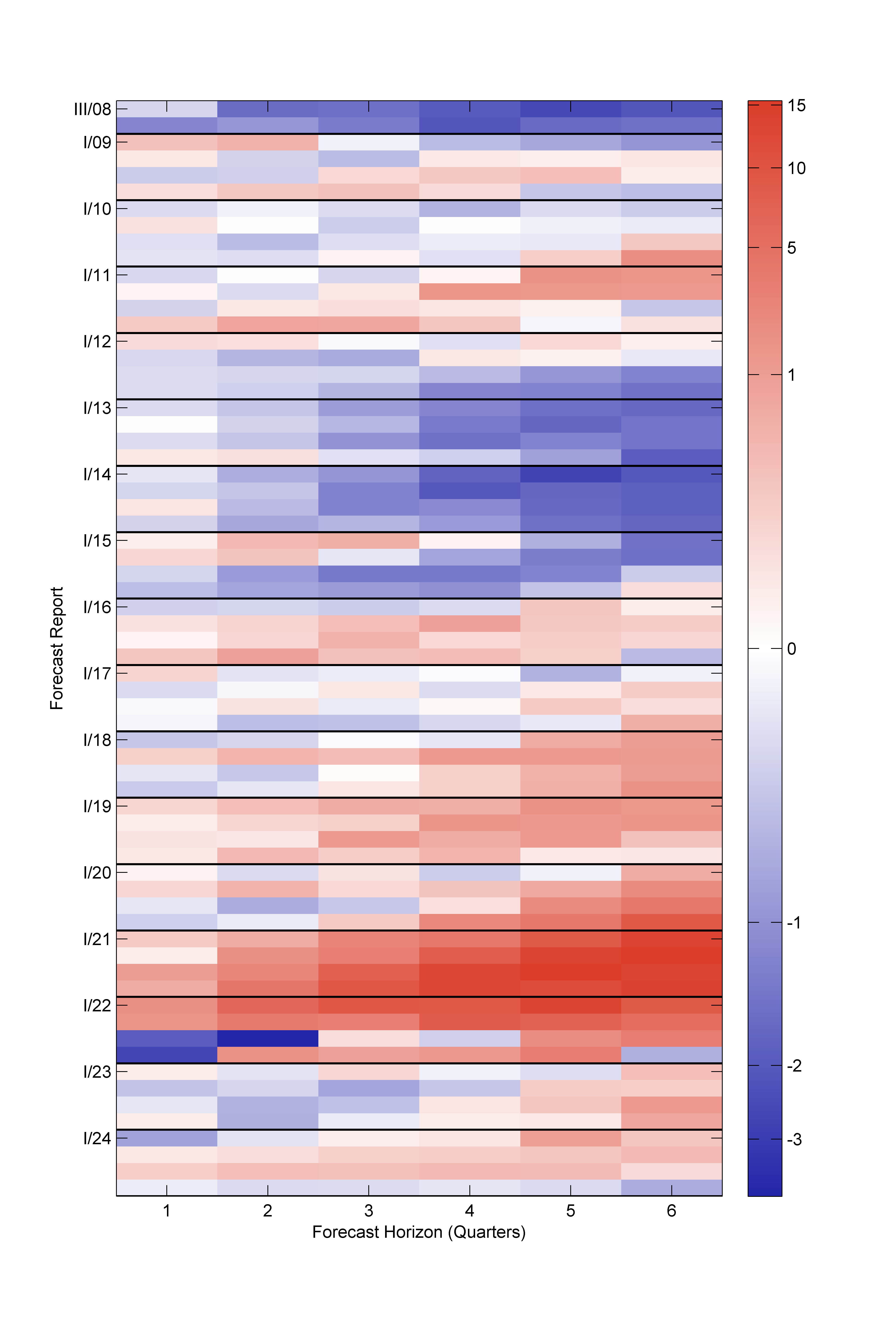
Do the 2024 forecasts deviate from the long-term average in terms of their degree of error? Here we focus on the consumer price inflation forecasts. Chart 2 presents a heat map in which positive deviations from the forecast are shown in red and negative deviations in blue, with increasing intensity in both cases.[3] The forecast errors are visibly affected by external shocks (such as the financial and sovereign debt crises of 2007–2012, the decline in commodity prices in 2012–2017, the Covid-19 pandemic in 2020–2021 and the war in Ukraine and the energy crisis around 2022), which are very difficult to predict in advance. In 2024, the CNB’s forecasts exhibited historically above-average accuracy (light colours) – the forecast errors were small even compared with the period of low and stable inflation in 2016–2018. The low error rates stand out in the context of the preceding years 2020–2022, when the inflation wave had exceeded expectations in terms of both intensity and duration. The heat map shows that, after a period of high inflation, the forecasting system returned in 2023 to historically usual and acceptable error levels, which decreased further in 2024 as the situation stabilised and the models and data sources were upgraded. In 2024, the CNB also succeeded in reducing forecast errors over a longer horizon compared with the past. The systematic development of forecasting tools may have contributed to this improvement.[4] With the exception of the autumn forecast, the forecast errors in 2024 were mostly positive (observed inflation was higher than forecasted), as the forecasts had not anticipated such a pronounced increase in food prices.
Chart 2 – Comparison of errors in the 2024 inflation forecasts with historical CNB forecasts
differences relative to observed outcomes in pp; red indicates a positive deviation and blue a negative deviation; the colour scale is unevenly distributed in order to capture extreme observations
Assessment of the fulfilment of the 2024 forecasts – assumptions entering the core model
Part of the core model diagnostics involves answering whether the prediction errors originated in the model itself or in its input assumptions, which are derived in a different way (often, for example, from forward prices and interest rates). These assumptions relate to the foreign outlook (foreign economic activity, prices and interest rates), domestic fiscal policy and administered prices.
Chart 3 – Selected forecast assumptions
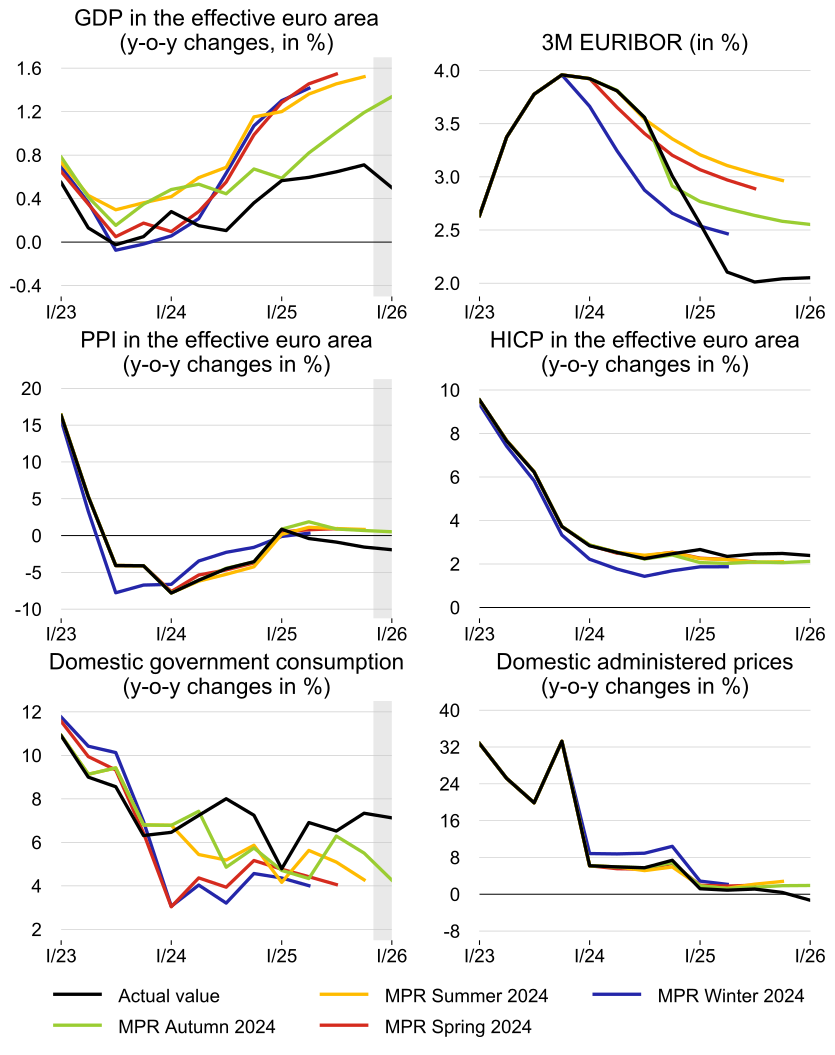
External developments had a more anti-inflationary overall effect on the Czech economy than assumed by the forecasts at the time (see Chart 3). The economies of the Czech Republic’s main trading partners recovered more slowly than expected from the energy crisis, so their GDP growth was markedly weaker, especially in late 2024 and early 2025.[5] Owing to the weak economic performance, the 3M EURIBOR fell to lower levels in 2025, as the ECB cut rates more aggressively. By contrast, the forecasts estimated the path of interest rates in 2024 relatively well, with the exception of the first, winter forecast. The market outlook at the time had assumed that the ECB would soon begin reducing rates. Inflation, however, proved more persistent, and the ECB therefore postponed the start of the easing cycle.[6] Overall price developments abroad were nevertheless forecasted relatively accurately, even though the forecasts slightly overestimated producer price inflation and, conversely, slightly underestimated consumer price inflation.
By contrast, domestic general government consumption had a more inflationary effect than assumed in the forecast. In both 2024 and 2025, the consolidation of public finances was milder than originally announced by the government. This was partly due to unplanned flood-related expenditure in 2024, as well as an increase in defence spending in 2025. Growth in domestic administered prices broadly materialised as forecasted. Only the winter forecast for 2024 had expected a higher pace of growth, with a sharp decline in electricity generation prices coming as a surprise. Conversely, the autumn forecast had not anticipated that the new government would fully transfer the supported energy sources fee to the state budget at the beginning of 2026. This reduced administered prices.
Assessment of the fulfilment of the 2024 forecasts – key domestic variables
The deviations of the forecasts from the actual path of consumer price inflation are described in detail in the second part of this document.
Chart 4 – Forecasts of key domestic variables
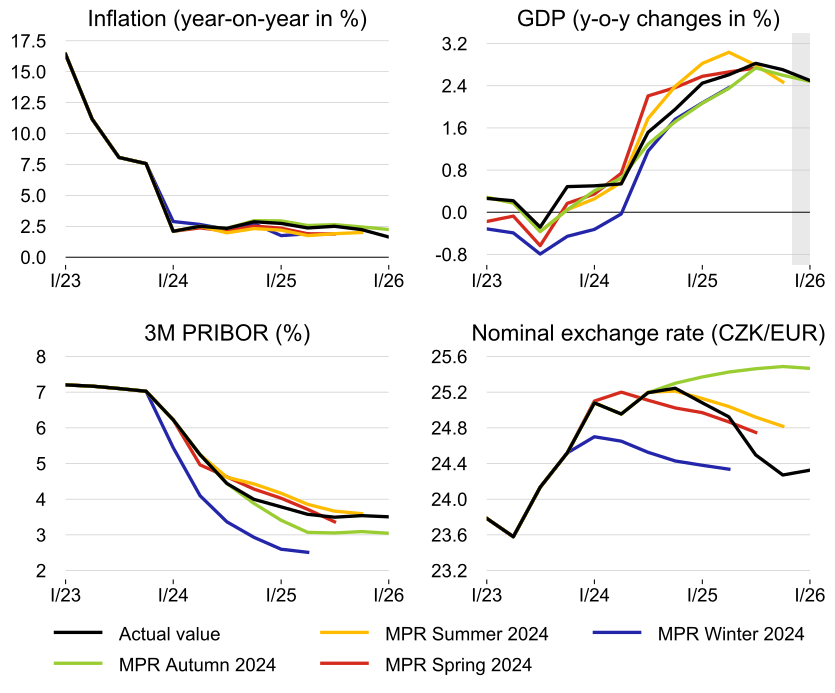
Domestic economic activity evolved broadly in line with the forecasts at the time (see Chart 4). The winter forecast had assumed that the recovery would be more gradual. Household consumption in particular was surprisingly robust, supported by stronger real wage growth. By contrast, the spring and summer forecasts had predicted rather faster growth in the second half of 2024 and the first half of 2025, due to recovering foreign demand. In reality, however, it remained subdued. This was reflected in lower exports and gross fixed capital formation. The accuracy of the forecasts was also adversely affected by GDP revisions made by the Czech Statistical Office, which also revised the 2023 growth figure.
The winter forecast had indicated a need for faster interest rate cuts, as it had assumed that the ECB would begin an easing cycle and that the koruna would gradually appreciate. However, the CNB decided to lower rates more cautiously to take account of upside risks to inflation, which subsequently materialised as higher wage growth and stronger economic activity. Later forecasts already reflected this, and interest rates therefore evolved in line with the forecasts. The autumn forecast had assumed that rates could be reduced in 2025 to close to their monetary policy-neutral level of 3%. However, risks of stronger growth in property prices and services prices led the CNB to cut rates only to 3.5%.
The forecasts under assessment correctly predicted that the koruna would depreciate slightly in 2024 due to a narrowing interest rate differential vis-à-vis the euro area. The winter forecast underestimated the depreciation at the beginning of 2024, which was caused by the postponement of ECB rate cuts. The spring and summer exchange rate forecasts were close to the actual outcome. The autumn forecast, however, had expected a further depreciation of the koruna, which did not materialise, as it had assumed that the ECB would cut interest rates only slightly. In reality, the ECB reduced rates more sharply, and the koruna instead appreciated. The exchange rate was also supported by strong export performance of the Czech economy despite the stagnation in key trading partner countries, especially Germany.
Hypothetical Autumn 2024 MPR forecast incorporating knowledge of the actual evolution of the assumptions (factors-known simulation)
The factors-known simulation is a hypothetical version of the macroeconomic forecast in the Autumn 2024 Monetary Policy Report. The simulation tells us what the forecast would have looked like if the observed evolution of its assumptions had been used instead of the assumptions made at the time. However, the hypothetical simulation is not a fully fledged forecast, as it does not contain additional expert adjustments.
Comparison of the hypothetical forecast with the Autumn 2024 MPR forecast
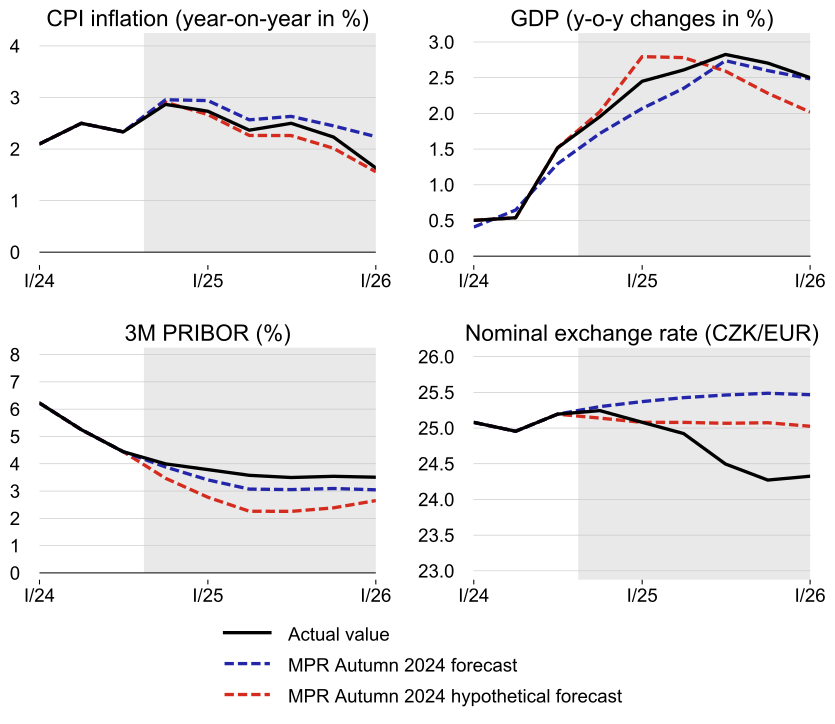
With knowledge of the actual evolution of exogenous factors, the autumn 2024 forecast would have been more anti-inflationary (see Chart 5). This hypothetical forecast would have predicted slightly lower consumer price inflation than the original forecast over the entire forecast horizon. The difference is due to lower foreign producer price inflation and a slightly lower outlook for administered prices. In the hypothetical forecast, the central bank responds to the outlook for persistently lower inflationary pressures, as well as to lower 3M EURIBOR rates, by cutting domestic interest rates more rapidly so that inflation does not fall markedly below the 2% target at the end of the period under assessment. The koruna exchange rate is stronger despite a somewhat narrower interest rate differential, as higher foreign core producer prices make domestic firms more competitive. Lower foreign energy producer prices have the same effect, with domestic firms benefiting even more given the higher energy intensity of the Czech economy. At the same time, a less pronounced consolidation of public finances causes slightly higher GDP growth in the hypothetical factors-known simulation in late 2024 and in the first half of 2025. Subsequently, however, weaker economic performance abroad prevails. It leads to lower demand for domestic exports and investment activity, which slows the growth of the Czech economy compared with the original forecast.
Comparison of the hypothetical forecast with the actual outcome
Comparing the hypothetical factors-known simulation with the actual outcome, observed inflation differs in particular during 2025, when it was pushed up by pronounced growth in property prices, reflected in a continued rise in imputed rent. The fact that the difference in consumer price inflation over the whole of last year is only modest reflects a tighter monetary policy stance in reality. It took into account additional domestic inflationary risks[7] outside the forecast, risks which subsequently materialised and which the hypothetical scenario does not capture. As a result of the higher interest rates, the koruna exchange rate was stronger than implied by the hypothetical forecast. The appreciation was also supported by the success of domestic exporters in markets outside the Czech Republic’s main trading partners, whose economies were struggling. As the hypothetical forecast does not capture this trend (it was incorporated through expert judgement only in the 2025 forecasts), actual GDP growth is also somewhat higher.
Overall, the hypothetical factors-known forecast is closer to the actual outcomes for inflation and the koruna exchange rate than the autumn 2024 forecast. However, it does not help capture the need for tighter monetary policy stemming from tight property and labour markets. The slower decline in interest rates that the CNB chose appears – with the benefit of hindsight – to have been appropriate. This reveals scope for improving the models used by the CNB. When modelling external demand, it is also necessary to take into account the growing importance of export destinations outside the euro area.
Chart 5 – Comparison of the forecast and the factors-known simulation (hypothetical forecast) in the Autumn 2024 MPR with the observed data
[1] The data sources are the CNB’s forecasts and the Ministry of Finance (MoF) survey published in the 2024 Macroeconomic Forecast of the Czech Republic. The MoF survey is based on the publicly available forecasts of ten institutions – domestic (CNB, Czech Banking Association, MLSA and domestic commercial banks) and foreign (e.g. European Commission, OECD, IMF). For the purposes of this document, the CNB’s forecasts are excluded from the survey and the MoF’s forecasts are included.
[2] In 2024 and 2025, exceptionally poor cocoa and coffee harvests led to an unprecedented surge in prices of these commodities and related food products.
[3] This representation was chosen to make it easy to grasp the magnitude of the forecast errors. However, the colour scale used in this visual is unevenly distributed (non-equidistant) in order to reflect the differently sized extreme observed error values while preserving the same colour indication for more frequent errors. The forecast horizon under comparison always comprises the first six quarters covered by the forecast. This corresponds to the CNB’s monetary policy horizon.
[4] Following the energy crisis, for example, the core forecasting model was extended to include a more detailed treatment of energy prices (Upgrading the Czech National Bank’s core forecasting model g3+, CNB WP 7/2025). To reflect the exceptionally turbulent past few years and the repeatedly overly pessimistic estimates of the impacts of adverse events on domestic economic activity, the CNB further expanded its toolkit to include new nowcasting models (cnBlog Když se pár chytrých modelů dalo dohromady, aneb ČNB posílila krátkodobý prognostický arzenál (A few clever models put together, or the CNB strengthens its near-term forecasting toolkit), September 2023, in Czech only), web scraping and the analysis of high-frequency data (The Rushin Index: A weekly indicator of Czech economic activity, CNB WP 4/2021).
[5] The weak growth of the Czech Republic’s main trading partners was, in hindsight, partly structural in nature. This was taken into account through a model adjustment lowering the steady-state rate of GDP growth abroad (see Box 1 in this Report for more details).
[6] The difference between the outlook of the winter forecast and the actual outcome and the other 2024 forecasts is due in part to the fact that the winter forecast used the broader EA17 aggregate to capture developments in the external environment, while from the spring forecast onwards the narrower EA6 aggregate was employed. This change was presented in more detail in the appendix to the Winter 2024 Monetary Policy Report The updated g3+ core forecasting model and the shadow forecast and was later also described in Upgrading the Czech National Bank’s core forecasting model g3+, CNB WP 7/2025.
[7] The possibility of higher growth in wages, property prices and services prices than assumed in the CNB’s forecast was taken into account in the CNB’s analyses in 2024 in the form of risks; from the summer 2025 forecast onwards, it was incorporated directly into the forecast through expert judgement.