The growth of NBFI and households’ financial assets: trends and risks
Over the past couple of years, the Czech non-bank financial intermediation (NBFI) segment has grown substantially and accumulated a large proportion of Czech households’ savings in its assets. What macroeconomic risks are associated with the allocation structure of household financial wealth, and how would the materialisation of these risks affect the real economy and the financial system? Empirical evidence from financialised economies suggests that price fluctuations in financial markets can significantly impact household consumption behaviour and macroeconomic dynamics. However, the level of financialisation in the Czech Republic is not yet high enough for these risks to materialise on a large scale.
I. Introduction
The NBFI sector, specifically the investment funds segment, has demonstrated consistent growth over the past few years, largely driven by the allocation of households’ excess savings (a portion of their wealth) (see Figure 1). This trend gives rise to several new questions regarding the role of households allocating their wealth and the associated risks to the real economy and the state of financial markets. In previous blog posts, we focused on standard financial channels through which investment funds can pose a threat to financial stability. The aforementioned risks are associated with financial leverage, maturity mismatches (liquidity risk) and market footprint (concentration). These factors can have a detrimental effect on financial stability and the real economy through both direct and indirect linkages (IMF, 2025).
Figure 1 – Households’ exposure to selected sectors
(CZK billions; right-hand scale: % of households’ total financial assets)
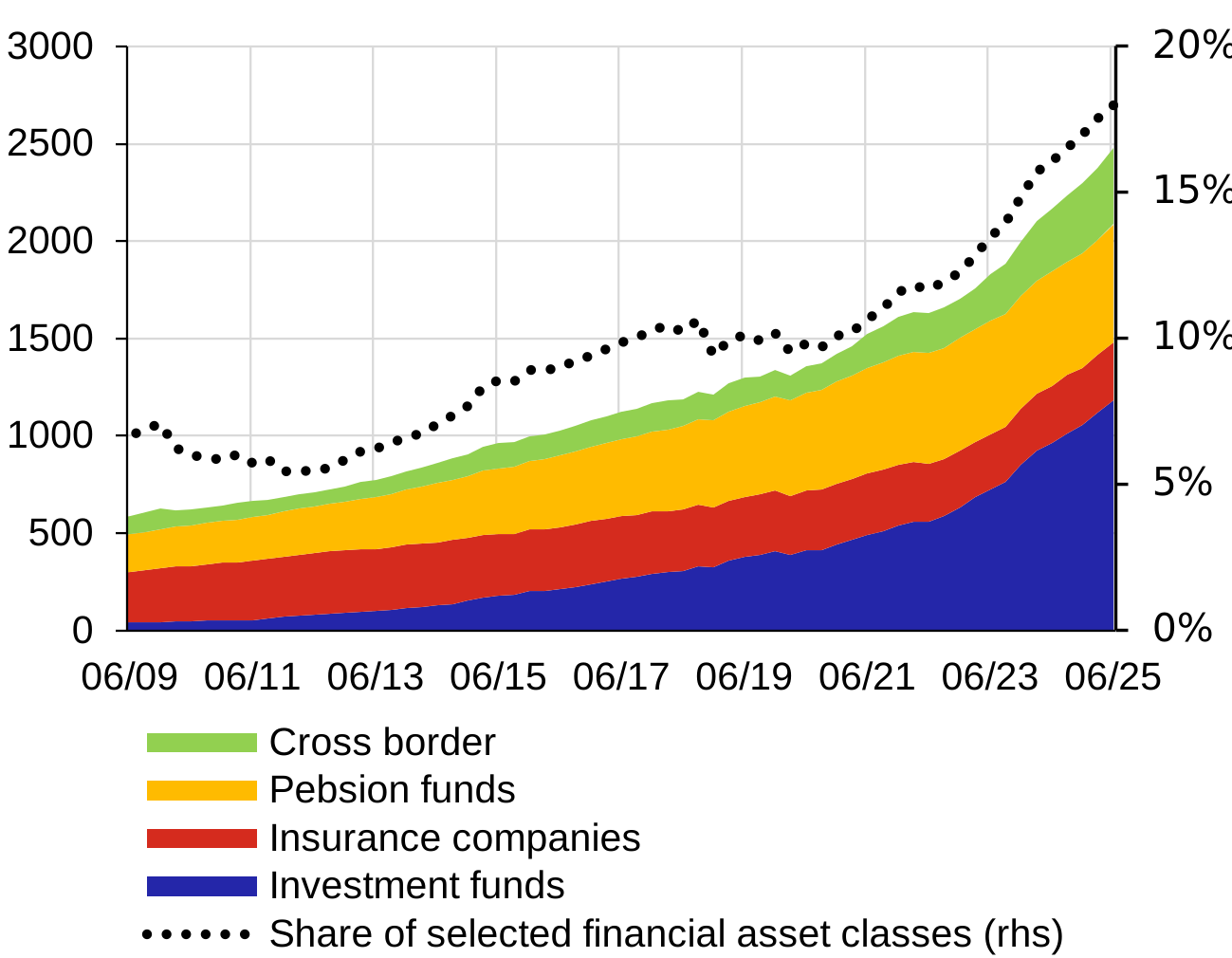
Note: The selected financial asset classes include the following financial accounts items – domestic risky assets: participation certificates and shares or units of investment funds domiciled in the Czech Republic; insurance companies, pension funds; foreign risky assets: shares or units of investment funds domiciled abroad.[1]
Source: CNB
In addition to the financial channels mentioned above, another pertinent issue is the impact of price volatility of financial assets on their ultimate holders, in this case households. With investment funds being intermediaries, households are the ultimate recipients of losses arising from materialised risks. What are the potential macroeconomic implications of a decline in the value of households’ savings due to unfavourable developments in domestic or international financial markets? This issue has been a subject of study in various contemporary research projects (e.g. Auclert, 2019; Slacalek et al., 2020), all of which stress the heterogeneity of outcomes among groups with different levels of wealth and income. Let’s analyse the situation of the Czech Republic through the lens of these variables.
II. Financial assets as a stabiliser and a source of risk
From an individual standpoint, financial investment is predominantly beneficial. Financial buffers help households to sustain short-term losses of income and can be a substantial source of pension provision. Financial investment enables households to smooth consumption in both the short and long run. The fact that households are not solely dependent on regular wages also reduces the sensitivity of consumption to changes in employment. In developed economies, the real returns on stocks or real estate investments are generally higher than the rate of growth of real wages.
Heterogeneity in asset allocation among households means that they are exposed to different sources of risk. Due to the size of the domestic capital market (see Figure 2), a large proportion of households’ financial investments are cross-border ones (see Figure 3), which increases their exposure to global shocks. Historical data show that asset prices can drop dramatically overnight (at the long ends of yield distributions) in times of sudden stress. Therefore, households’ risks shift from purely unemployment-related channels towards channels related to asset prices. With increasing financialisation, these factors can become systemically relevant.[2]
Figure 2 – Size of the domestic capital market
(%)
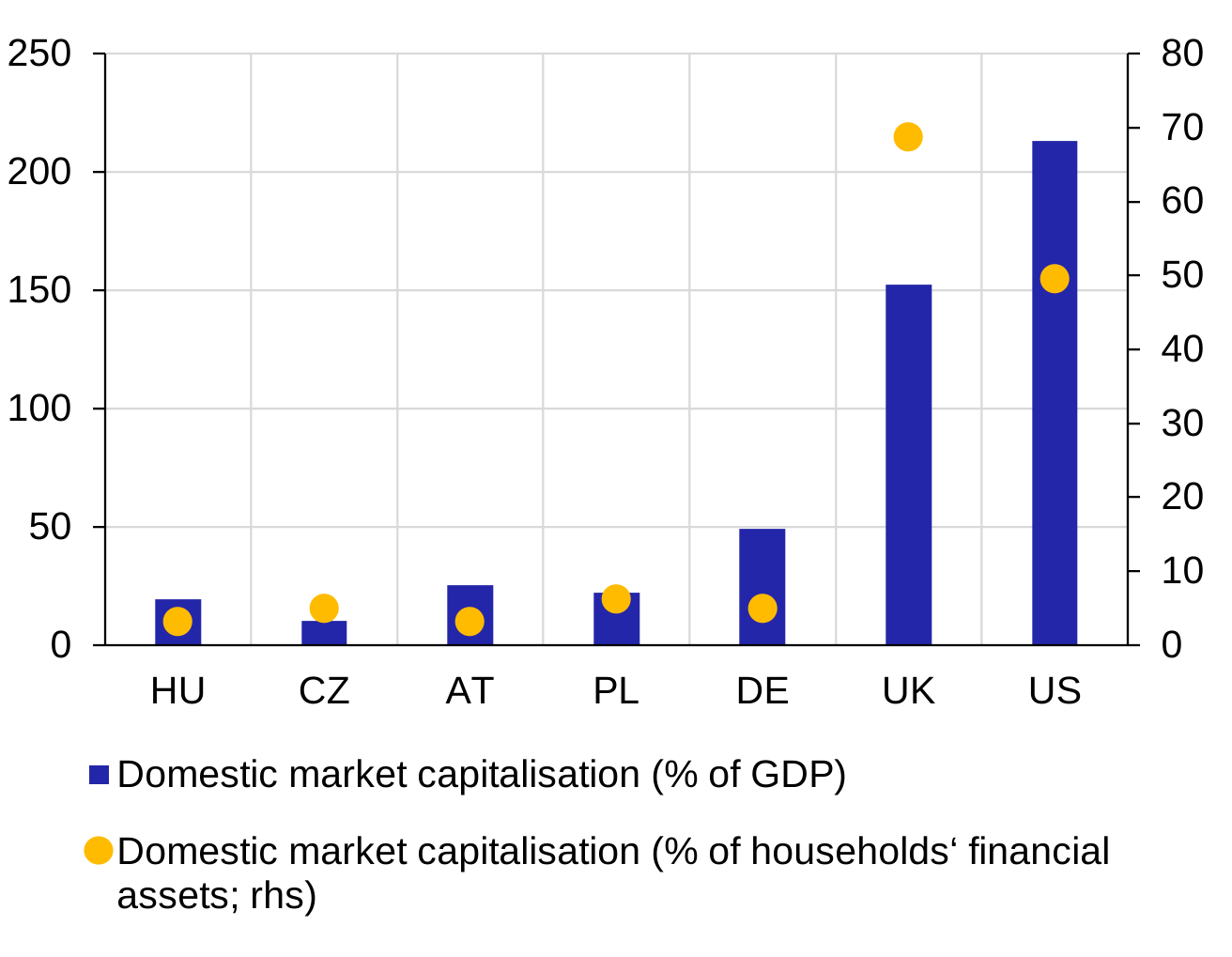
Note: The chart shows the relative size of domestic stock exchanges in relation to household financial assets and gross domestic product.
Source: World Federation of Exchanges, Eurostat, FRED, Office for National Statistics
Figure 3 – Selected investment assets of domestic non-bank institutional investors by country of issuer
(CZK billions; as of 30 June 2025)
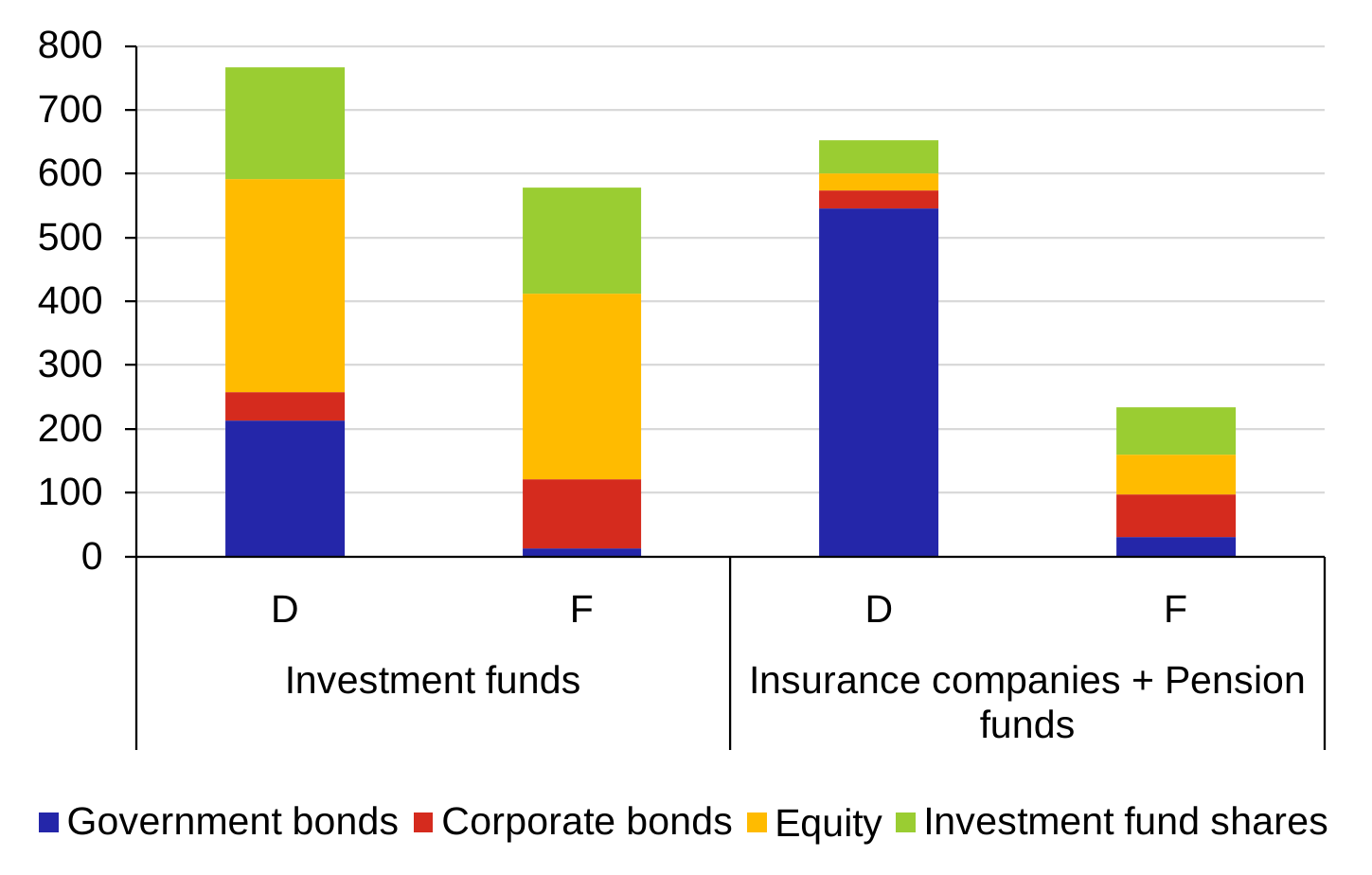
Note: D = domestic assets, F = foreign assets
Source: CNB
The extent to which risk leaks from increasing financialisation to macroeconomic developments depends on several factors. The most important of these are the distribution of wealth and income across households, the composition of portfolios and the scope of adverse events faced by the home economy and the economies to which assets are directed. While mild and short-term fluctuations in income and asset prices are integral to the standard business cycle, extreme and long-term financial crises have the potential to erase a significant proportion of household wealth. Such scenarios can have negative second-round effects at the macroeconomic level through households’ aggregate consumption. This phenomenon is called the wealth effect (e.g. Cooper and Dynan, 2016; Davis and Palumbo, 2001) and describes a situation in which the household sector loses a significant proportion of its wealth (in liquid and illiquid forms) due to a negative financial shock, subsequently sharply reducing its consumption. The presence of such a mechanism implies that the real economy is connected to domestic and foreign financial markets not only via firms’ activity, but also via changes in household consumption.
International comparison of the position of Czech households
To assess the level of financialisation among Czech households, we compare the situation across countries. The ratio of financial assets held by Czech households to GDP (see Figure 4) is similar to that in Hungary, Poland, Finland and the Baltic countries. Therefore, the Czech Republic is comparable to Central and Eastern European countries, mainly due to these countries having similar institutional setups for their pension schemes and a similar accumulation horizon for financial wealth following the collapse of the Eastern bloc and the subsequent establishment of democratic regimes and market-based economies. However, the dominance of the pay-as-you-go pension scheme means that a large proportion of future pension entitlements are not reflected in current financial assets. In the Czech Republic, the voluntary pillars of pension provision have had a significantly shorter duration than in other Western countries and have mostly targeted low-risk assets. By contrast, countries such as the Netherlands, Denmark and Sweden show significantly higher levels of financialisation precisely because of their extensive, mandatory and capital-funded employee pension schemes, which accumulate financial assets over the long term. Similar principles can also help to explain the high financial-assets-to-GDP ratio in the USA, where employee pension plans and funds, as well as individual pension accounts, play a significant role.
Figure 4 – Ratio of households’ financial assets to GDP
(%)
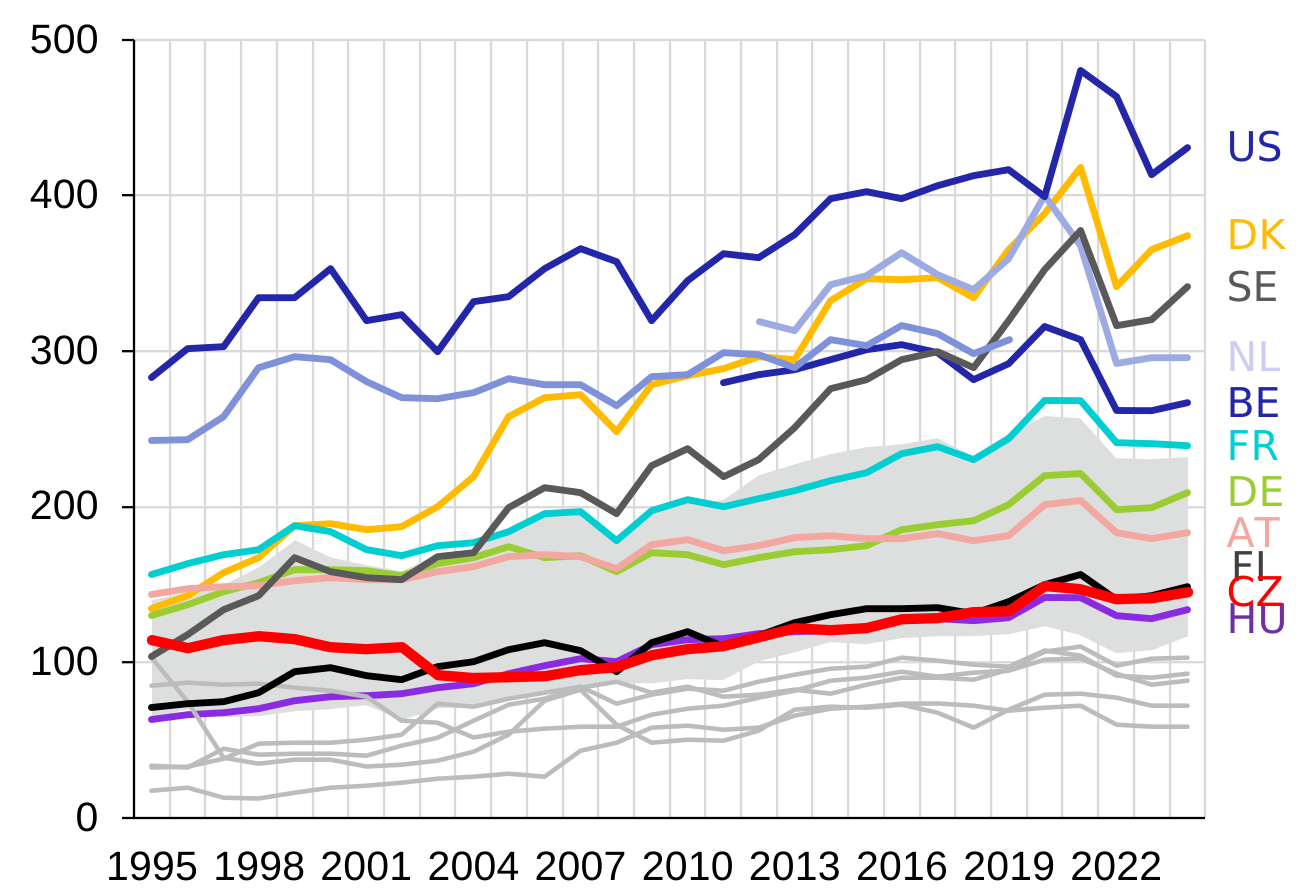
Note: The grey area denotes the interquartile range. The grey lines represent LT, PL, SK, RO and BG.
Source: Eurostat, FRED
In addition to the degree of financialisation itself, institutional settings have a significant impact on the distribution of financial assets across society and on the allocation of financial assets in terms of their riskiness. It is precisely the heterogeneity in the risk composition of household assets that is one of the key elements amplifying the impact of the wealth effect on consumption.
III. Modelling “Black Swans”: what happens when markets freeze?
To analyse the mechanisms described above and approximate their impact, we used a dynamic structural model in the style of Aiyagari, Bewley and Huggett, which is a standard tool in the literature (Achdou et al., 2022). In our model, households maximise consumption utility while combining income from work and income from yields on risky financial assets. Both sources of income fluctuate over time, and the model also allows for “catastrophic risk”, i.e. the probability of an extreme drop in asset prices. Due to a lack of domestic (Czech) data, the model is calibrated on the behaviour of advanced financialised economies, to which the Czech economy is slowly converging.[3]
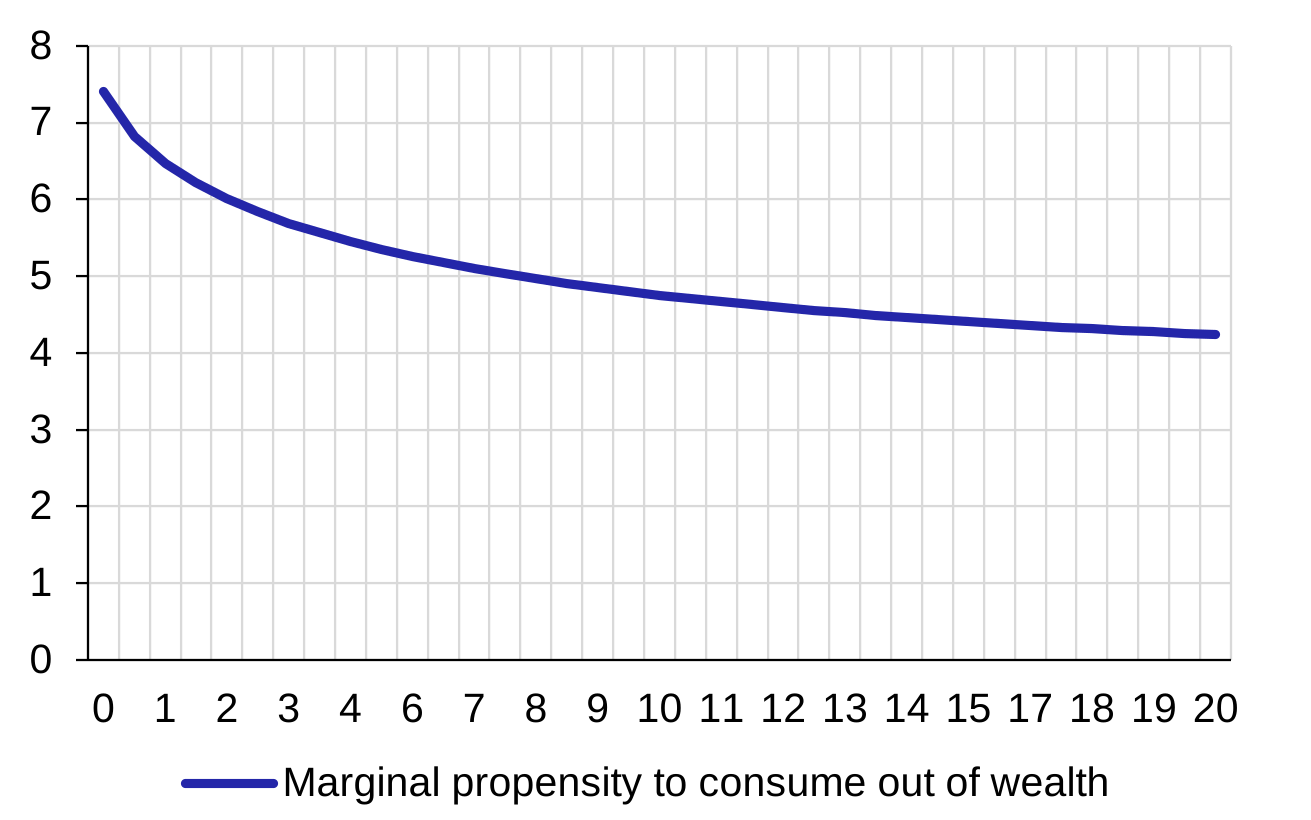
The key result of the model for assessing the transmission of financial market turbulence to the real economy is the marginal propensity to consume (MPC) out of financial wealth. This measure shows the proportion of an additional unit of financial wealth that households spend and the proportion that they reinvest. Knowing this parameter enables us to calculate analytically how households will react to changes in the value of their financial assets.
In our model, households display a relatively high propensity to save, while the MPC out of financial wealth is around 4–8% (with a mean of 4.5%), which is consistent with empirical estimates for advanced economies (see Figure 5).[4] Another observation that aligns with empirical findings is a decreasing MPC out of financial wealth with respect to financial wealth.
Figure 5 – Marginal propensity to consume of individual households – calibrated model
(%; x-axis: wealth-to-income ratio)
Source: authors
In general, estimates range between 3% and 5% (with high variance), while European countries display a lower MPC out of financial wealth than the USA.[5] Nevertheless, the MPC out of total wealth (including real estate, especially for the USA via mechanisms such as HELOC) is typically higher. On the contrary, the MPC out of total wealth is generally lower in Europe, with estimates often close to zero (de Bondt et al., 2020).
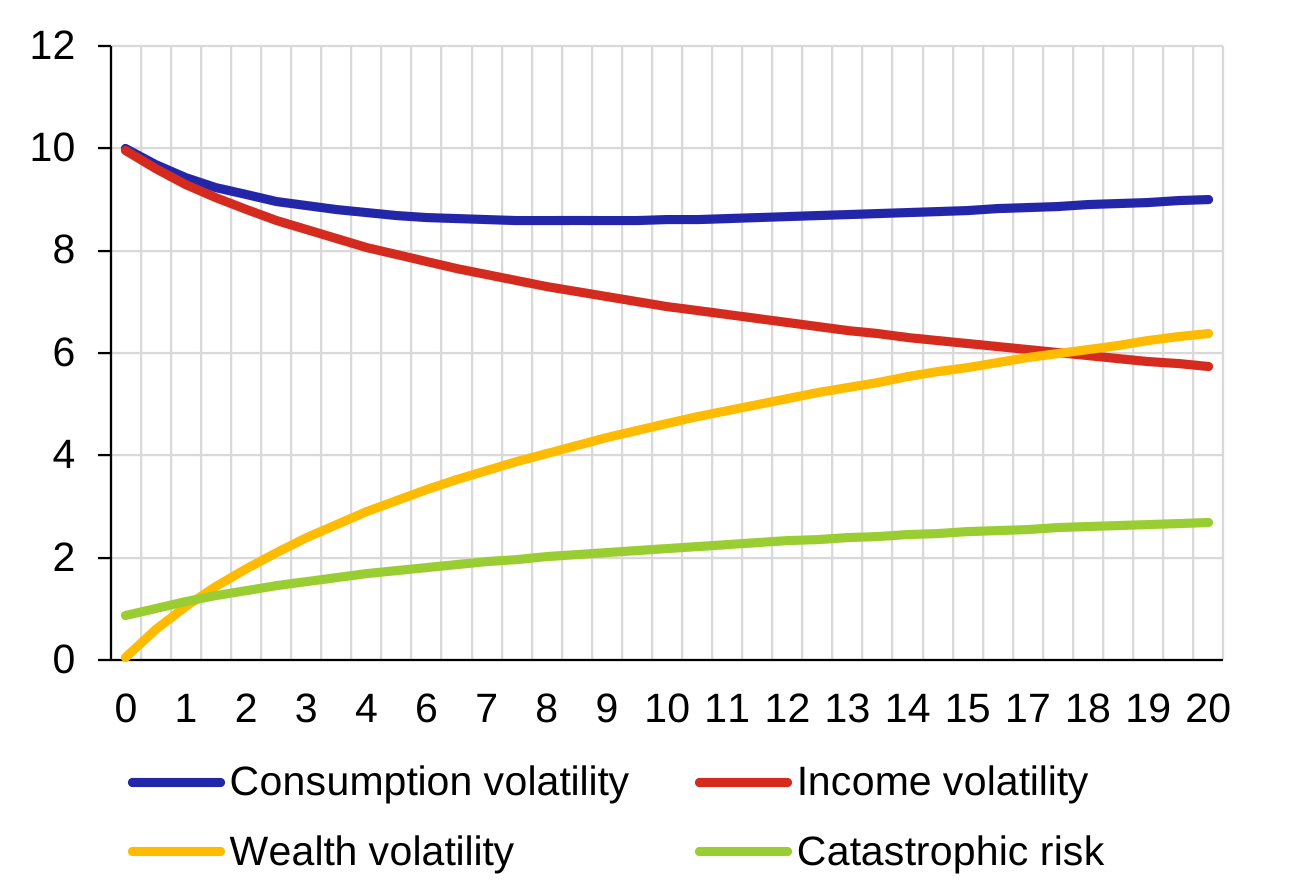
Another outcome of the model describes the relationship between the individual volatility of consumption and the ratio of financial wealth to total income. The results show that, as wealth increases, the total volatility of households’ consumption changes (see Figure 6). The relative contribution and volatility of work income (i.e. the share of work income in total income) decreases, while the contribution of price volatility of financial assets (i.e. the share of yields on financial assets in total income) increases. This reflects the gradual exchange of individual risk factors affecting the final value of financial wealth. At the same time, households with greater financial exposure are more vulnerable to catastrophic risk, such as a sudden drop in asset prices and a decline in total income.
Figure 6 – Decomposition of individual households’ consumption volatility – calibrated model
(%; x axis: wealth-to-income ratio)
Source: authors
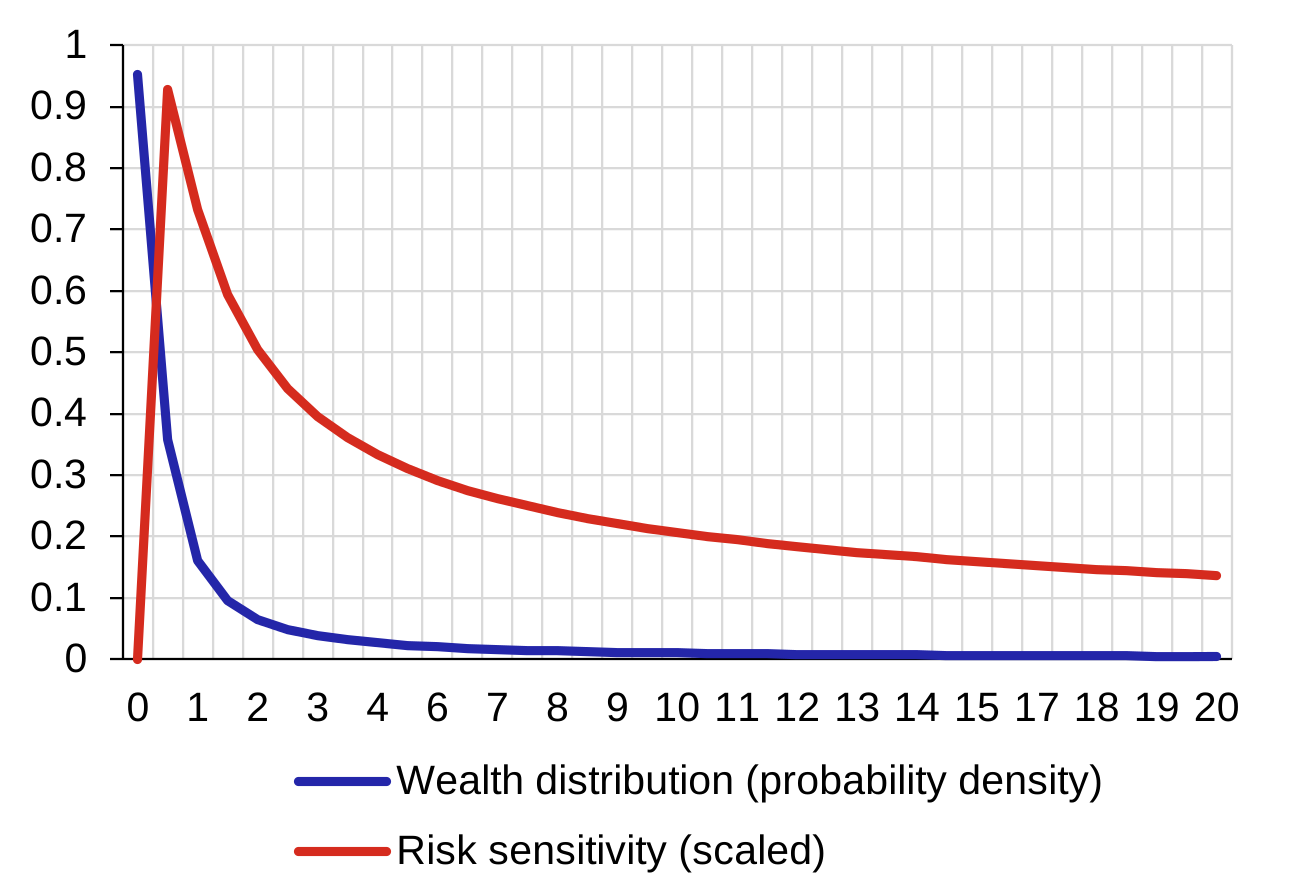
These outputs can be used to run simulations of the final wealth distribution across different types of households and to identify the groups most exposed to the risk of a drop in prices of financial assets (see Figure 7). The simulated distribution resembles a Pareto distribution, which is typical of advanced economies: a small proportion of the population owns a large amount of wealth, while most households have limited reserves. In general, we can distinguish three categories of households that differ in terms of their vulnerability (risk sensitivity): low-income households, who are primarily exposed to work income risks (e.g. due to unemployment); middle-income households, who are more vulnerable to asset price risk due to insufficient financial buffers to absorb potential losses from financial market turbulence; and high-income households, who are highly exposed to financial shocks but have the ability to absorb them without significant negative spillovers to their consumption behaviour.[6]
Figure 7 – Theoretical distribution of wealth and risk sensitivity
(%; x axis: wealth-to-income ratio)
Source: authors
Effects on final consumption
What can we learn from the model about the impact on final consumption? As we have already explained, asset price drops affect not only the balance sheets of investment funds, but also aggregate demand and GDP dynamics through the marginal propensity to consume (MPC) out of financial assets and the distribution of wealth. The wealth effect is largely determined by the proportion of middle-income households, which own financial assets but have limited capacity to absorb losses from price drops.
The model simulation suggests that a 30% drop in portfolio value leads to approximately a 6% decline in consumption. The elasticity of consumption, which is the actual quantifier of the wealth effect, is then equal to 0.2 (6%/30%). Depending on the calibration for individual economies, realistic values span from 0.1 to 0.3. This result is in line with the findings of Barro and Ursúa (2008), who show on historical data that sudden drops in asset prices in crisis periods (30–40%) were usually associated with decreases in consumption of 5–10%.
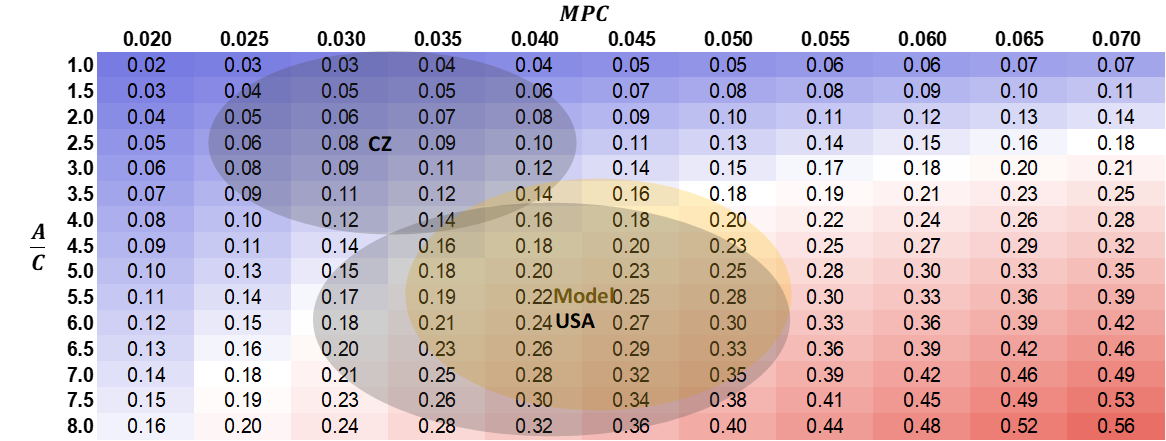
To estimate the quantitative impact of the wealth effect at the current level of financialisation in the Czech Republic, we use data from the national accounts and the concept of the elasticity of consumption with respect to financial wealth.[7] Once we have estimated the MPC out of financial wealth, we can calculate the final wealth effect (i.e. the elasticity of consumption with respect to financial wealth) analytically using the ratio of net financial assets to consumption. In the case of the USA, the net financial assets to consumption ratio takes a value of 8. If we leave out non-financial assets from the calculation, the ratio decreases to around 5. Table 1 combines possible MPC estimates (based on expert judgement) with realistic financial wealth-to-consumption ratios to show the resulting aggregate elasticities. For the Czech Republic, the majority of realistic calibrations take values close to or below 0.1. Such low values are mainly a consequence of the current distribution of wealth across Czech households (see below). These findings demonstrate the relative robustness of the Czech economy to negative financial shocks via the wealth effect transmission channel.
Table 1 – Aggregate elasticity of consumption with respect to various assumptions
Source: authors
IV. A view through data
Financial situation of households survey
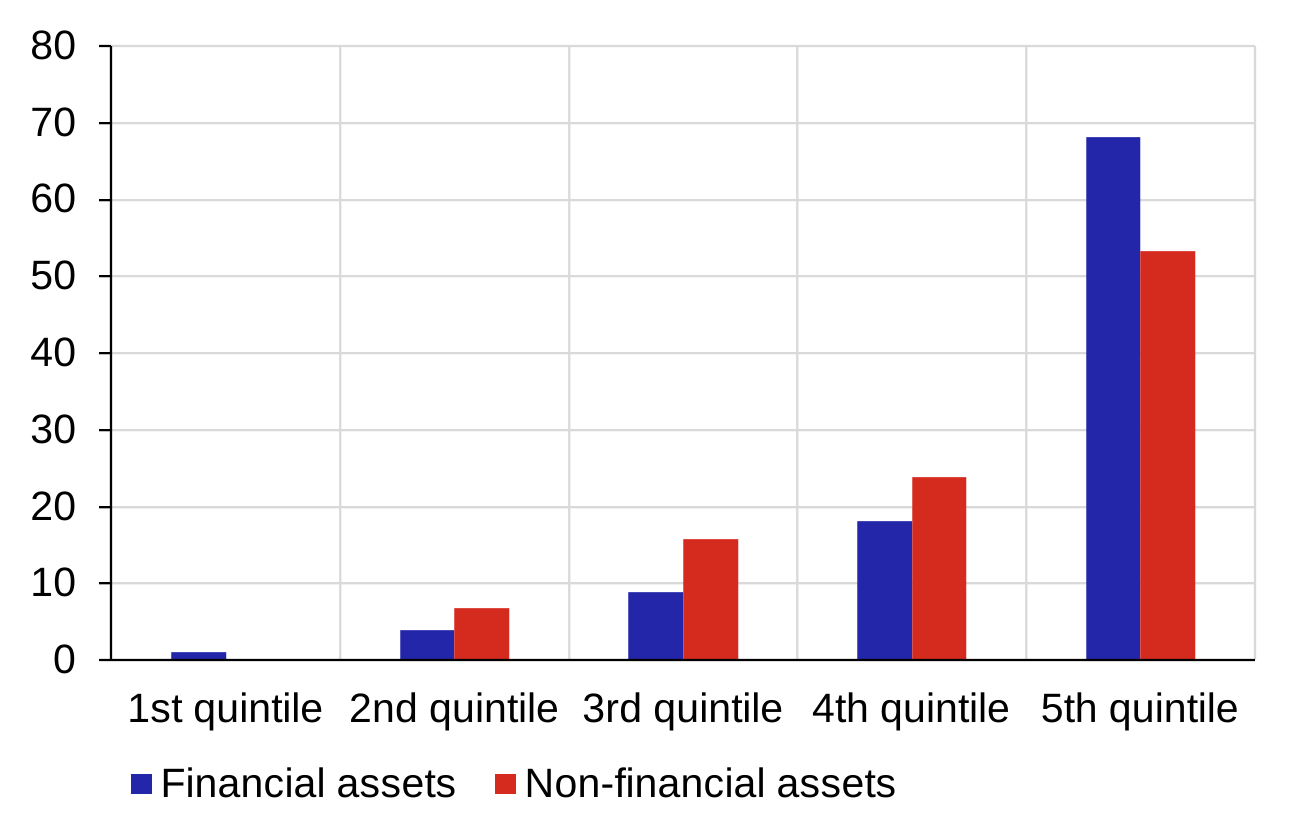
Let’s take a closer look at the current situation of Czech households using the “Financial situation of households” data. This allows us to examine the structure of households’ wealth in more detail. While it is clear that real assets (housing) dominate the wealth of most households, the financial investment position of high-income households has grown steadily in recent years. The data shows that there is a large concentration of wealth: the wealthiest 20% of households own almost 70% of all financial assets (see Figure 8). Due to the underrepresentation of top-income households, this share is very likely to be even higher (Münich and Šoltés, 2026).
Figure 8 – Quintile shares of financial and non-financial wealth
(%)
Source: Financial situation of households 2024
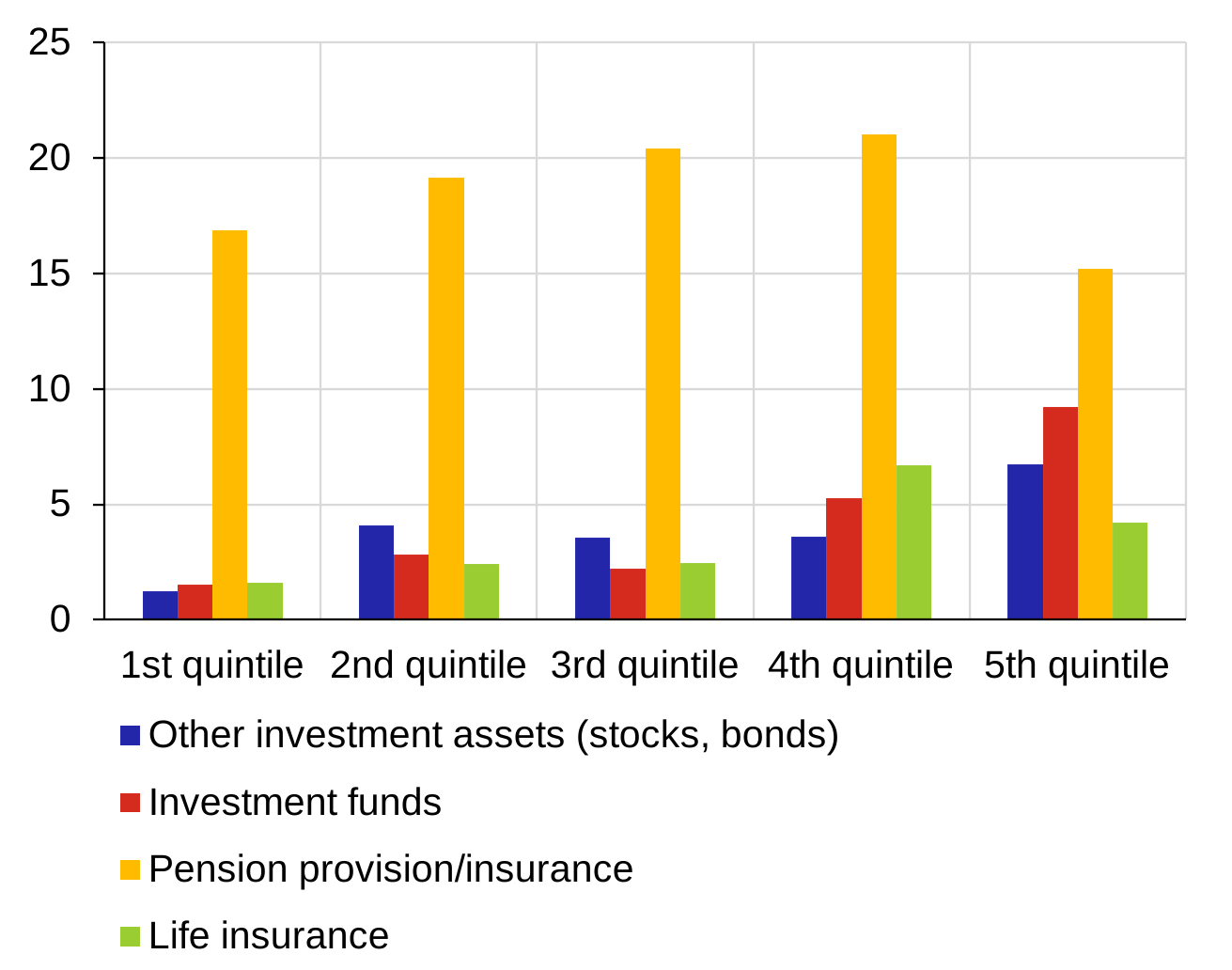
It is the highest-income households that invest in investment funds. Based on theory and empirical analysis, it is assumed that this group has the greatest capacity for consumption smoothing (i.e. a lower MPC). Therefore, a negative financial shock does not result in a sudden, significant change in their consumption behaviour. It is also important to consider the extent to which Czech households participate in capital markets, where investments in Czech funds account for only 7.2% of assets (compared to 12.9% in the Eurozone and 54% in the USA). This means that market volatility has a limited impact on total wealth in the Czech context (see Figure 9). Even these potentially riskier investments are concentrated among high-income households (see Figure 10). Another significant asset class in the Czech context is pension insurance, which has a participation rate of 60% of the population. However, a dominant share of these investments is directed to transformed funds, which mostly invest in government bonds and have a risk profile resembling that of term deposits rather than other, riskier financial investments.
Figure 9 – Households’ investments in selected asset classes
(%)
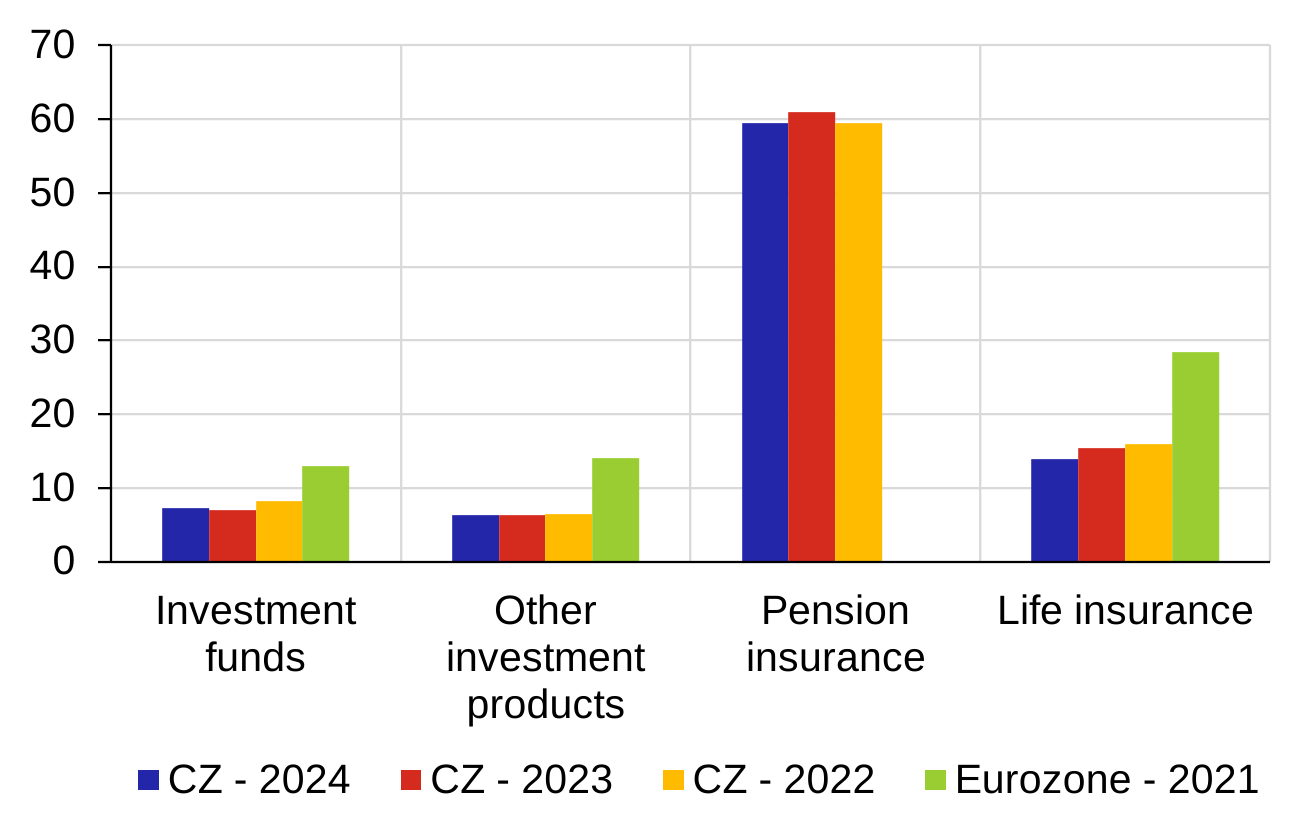
Note: In case of the Eurozone, the data are combined data on participation in pension insurance and life insurance.
Source: Financial situation of households
Figure 10 – Households’ investments in selected asset classes according to income quintiles
(%)
Source: Financial situation of households 2024
Although the scenario we model shows a possible future direction, the numbers suggest that the present state of the Czech economy does not allow for significant propagation of negative financial shocks to the real economy via the household channel. As the Czech economy continues to converge with Western markets, its sensitivity to financial shocks will, however, inevitably increase. Currently, the effects are mitigated by the size and structure of household financial investments.
V. Conclusion
As the Czech economy becomes increasingly financialised, its households are starting to face different kinds of risks. The traditional risk of losing or seeing a decrease in work income is being supplemented by an increasing risk associated with holding risky financial assets and with their price volatility. These risks will become more significant over time and may eventually threaten the stability of the real economy and financial stability. Therefore, the CNB pays close attention to monitoring the structure of households’ financial wealth, how it is allocated and concentrated, and how sensitive it is to negative market shocks. As well as traditional measures such as household indebtedness, it is important to analyse the allocation of wealth to foreign markets and its global interconnections. In the event of market turbulence, the wealth effect may cause the declining financial condition of households to transmit to their consumption behaviour. This may amplify cyclical fluctuations. Currently, the level of financial wealth held by Czech households relative to the size of the economy (financialisation) remains low compared to the USA and the Eurozone. This mitigates the impact of financial shocks on the real economy via the wealth effect. However, it also has a negative aspect, in that households do not benefit from the long-term performance of financial markets.
The content of this document reflects the authors’ analysis and should not be interpreted as the official position of the Czech National Bank.
Martin Časta, Financial Stability and Resolution Department, Czech National Bank, martin.casta@cnb.cz
Patrik Maňas, Financial Stability and Resolution Department, Czech National Bank, patrik.manas@cnb.cz
VI. Literature
Achdou, Y., Han, J., Lasry, J. M., Lions, P. L., & Moll, B. (2022). Income and wealth distribution in macroeconomics: A continuous-time approach. Review of Economic Studies, 89(1), 45–86.
Aladangady, A., & Feiveson, L. (2018). A not-so-great recovery in consumption: What is holding back household spending? FEDS Notes 2018-03-08, Board of Governors of the Federal Reserve System (U.S.).
Arrondel, L., Lamarche, P., & Savignac, F. (2015). Wealth effects on consumption across the wealth distribution: Empirical evidence. ECB Working Paper 1817.
Auclert, A. (2019). Monetary policy and the redistribution channel. American Economic Review, 109(6), 2333–2367.
Barro, R. J., & Ursúa, J. F. (2008). Macroeconomic crises since 1870. NBER Working Papers 13940, National Bureau of Economic Research.
Beach, S., Gamber, W., & Moran, P. (2025). Wealth heterogeneity and consumer spending. FEDS Notes 2025-08-05-2, Board of Governors of the Federal Reserve System (U.S.).
Brewer, M., Cominetti, N., & Jenkins, S. P. (2025). What do we know about income and earnings volatility? Review of Income and Wealth, 71(2), e70013.
Caceres, C. (2019). Analyzing the effects of financial and housing wealth on consumption using micro data. IMF Working Papers 2019/115, International Monetary Fund.
Carroll, C. D. (2009). Precautionary saving and the marginal propensity to consume out of permanent income. Journal of Monetary Economics, 56(6), 780–790.
Carroll, C. D., Hall, R. E., & Zeldes, S. P. (1992). The buffer-stock theory of saving: Some macroeconomic evidence. Brookings Papers on Economic Activity, 1992(2), 61–156.
Carroll, C. D., Otsuka, M., & Slacalek, J. (2011). How large are housing and financial wealth effects? A new approach. Journal of Money, Credit and Banking, 43(1), 55–79.
Case, K. E., Quigley, J. M., & Shiller, R. J. (2013). Wealth effects revisited 1975–2012. Critical Finance Review, 2(1), 101–128.
Chodorow-Reich, G., Nenov, P. T., & Simsek, A. (2021). Stock market wealth and the real economy: A local labor market approach. American Economic Review, 111(5), 1613–1657.
Cooper, D., & Dynan, K. (2016). Wealth effects and macroeconomic dynamics. Journal of Economic Surveys, 30(1), 34–55.
Davis, M. A., & Palumbo, M. G. (2001). A primer on the economics and time series econometrics of wealth effects. Finance and Economics Discussion Series 2001-09, Board of Governors of the Federal Reserve System (U.S.).
de Bondt, G., Gieseck, A., & Tujula, M. (2020). Household wealth and consumption in the euro area. Economic Bulletin Articles, 1, European Central Bank.
Di Maggio, M., Kermani, A., & Majlesi, K. (2020). Stock market returns and consumption. Journal of Finance, 75(6), 3175–3219.
Garbinti, B., Lamarche, P., & Savignac, F. (2025). Wealth heterogeneity and the marginal propensity to consume out of wealth. Working Papers hal-05045379, HAL.
International Monetary Fund (2025). Global Financial Stability Report: Shifting Ground beneath the Calm. Washington, DC, October.
Kaplan, G., & Violante, G. L. (2022). The marginal propensity to consume in heterogeneous agent models. Annual Review of Economics, 14(1), 747–775.
Kontana, D., & Siokis, F. (2018). Revisiting the relationship between financial wealth, housing wealth, and consumption: A panel analysis for the US. J, 1(1), 159–173.
Maxted, P., Laibson, D., & Moll, B. (2025). A simple framework for MPCs and MPXs. Journal of Finance: Insights and Perspectives.
Mian, A., Rao, K., & Sufi, A. (2013). Household balance sheets, consumption, and the economic slump. Quarterly Journal of Economics, 128(4), 1687–1726.
Münich, D. & Šoltés, M. (2026). Struktura a hodnota majetku českých domácností: mezinárodní srovnání. Study published by IDEA, CERGE-EI.
Slacalek, J. (2009). What drives personal consumption? The role of housing and financial wealth. The B.E. Journal of Macroeconomics, 9(1), 1–37.
Slacalek, J., Tristani, O., & Violante, G. L. (2020). Household balance sheet channels of monetary policy: A back of the envelope calculation for the euro area. Journal of Economic Dynamics and Control, 115, 103879.
VII. Appendix
To analyse the dynamics of households’ wealth and to quantify the impact of financial shocks we use a structural model in the Aiyagari–Bewley–Huggett style (a continuous-time portfolio choice model). In this framework, households decide on consumption and portfolio allocation to maximise their discounted expected utility of lifetime consumption:
E ∫t∞ eρ(s-t) (Cs1-γ)(1-γ)-1 ds
where C is consumption, ρ is the subjective discount factor and γ is the risk aversion parameter. Total wealth is then composed of financial wealth and human capital (the current value of future work income). Work income and financial wealth both follow a (geometric) Brownian motion (dZY,t,dZA,t) complemented with a joint Poisson jump process (dNt), which models the catastrophic risks, while also respecting the budget constraint:
dYt=μYtdt+σYYtdZY,t+(e-ϕ-1)Yt-dNt
dAt=(rAt-Yt-Ct)dt+σAAtdZA,t+(e-ζ-1)At-dNt
where At represents total wealth and Yt is work income, while σY a σA are income and asset price volatility respectively. The household’s decision problem can be formulated with a Hamilton–Jacobi–Bellman (HJB) equation in the following form:
ρV=maxC {(Cs(1-γ))/(1-γ)+VA (rA+Y-C)+VY (μY)+1/2 VAAσA2A2+1/2 VYYσY2Y2
+λ[V(Ae-ζ,Ye-ϕ)-(A,Y)]}
Due to the presence of jump processes and non-linearities, we solved the HJB equation using numerical methods.[8] The final wealth distribution is then obtained using the Fokker–Planck (Kolmogorov Forward) equation. The baseline calibration of the model is σA=0.15 , which roughly reflects the volatility of equity markets. σY=0.1 (Carroll et al., 1992), ζ=0.35 , λ=0.03 (Barro and Ursúa, 2008), γ=2 , ρ=0.041 , r=0.04 (conservative estimate) and μ=0.01, which is derived from average real income growth in OECD countries.
[1] Total household financial assets amounted to almost CZK 12,000 billion in 2025, with almost 40% held in cash and deposits. Another significant proportion was in directly held participations and shares (35%).
[2] Fluctuations in the financial wealth of individual households do not manifest themselves on a macroeconomic scale. However, a growing degree of financialisation indirectly implies that many households hold assets that face similar risks and whose prices are highly correlated. In such a situation, a downturn in the financial markets can affect all these households, which will simultaneously change their investment and consumption behaviour in response, having a quantitatively significant impact on the economy as a whole.
[3] Technical details of the model are given in the appendix.
[4] The MPC out of income, or the total MPC, is then significantly higher.
[5] Empirical estimates of the MPC (out of wealth) are available in Carroll (2009), Slacalek (2009), Carroll, Otsuka & Slacalek (2011), Case, Quigley & Shiller (2013), Mian, Rao & Sufi (2013), Arrondel & Savignac (2015), Aladangady & Feiveson (2018), Caceres (2019), Beach, Gamber & Moran (2025), Garbinti, Lamarche & Savignac (2025), Di Maggio, Kermani & Majlesi (2020), Chodorow-Reich, Nenov & Simsek (2021), Maxted, Laibson & Moll (2025), Garbinti, Lamarche & Savignac (2025) and many more. Estimates often differ depending on the type of wealth in question: financial (liquid/illiquid), non-financial (real-estate), net (of debt), total etc.
[6] Risk sensitivity is defined as the product of individual elasticity and the probability density.
[7] A simplified way to derive the relationship (the elasticity of consumption with respect to financial wealth), which enables the analytical calculation, is εC,W=(ΔC/C)/(ΔA/A)=[(MPCwΔA)/C)]/(ΔA/A)=MPCwA/C. Another important relationship is that ΔC/ΔA=MPCw, which denotes the marginal propensity to consume (MPC) out of financial wealth.
[8] We follow the results presented on the websites of Benjamin Moll.