MONETARY POLICY REPORT | WINTER 2026 (box 2)
(authors: Jakub Moučka, Tatiana Vivodíková)
With the arrival of chatbots such as ChatGPT and Gemini, artificial intelligence (AI) has become more accessible than ever before. People use it as an assistant to facilitate work in both their private and professional lives. In the corporate sector, the arrival of AI is reshaping the organisation of production and influencing decisions and the direction of innovation. The extent and manner of AI use differ according to firms’ size and the sector in which they operate.
The aim of this analysis is to assess the extent and structure of AI adoption in businesses across Europe and to identify its potential impacts on productivity growth and competitiveness. The analysis draws on data from Eurostat’s survey[1] on ICT usage and e-commerce in enterprises. The survey is conducted on a yearly basis[2] and covers enterprises with ten or more employees (and self-employed persons) across the main NACE categories of economic activity.
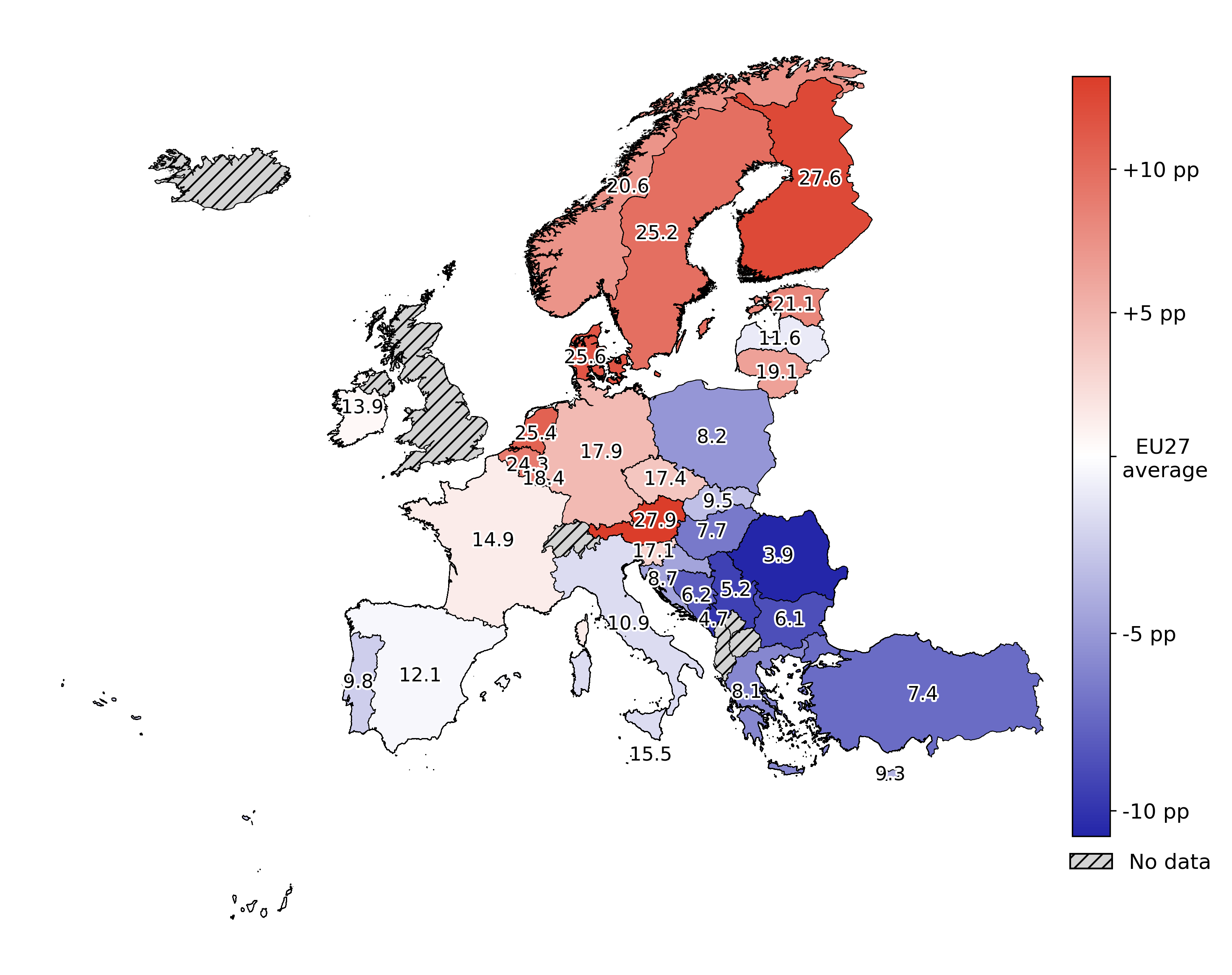
European companies are gradually starting to adopt AI in their processes (see Chart 1). Countries of central and northern Europe – such as Finland, Sweden, Denmark and Austria – lead in the use of AI. These economies are investing heavily in software[3] relative both to GDP and to gross fixed capital formation. The Czech Republic is above the EU average (14.6%) in terms of AI use. By contrast, countries in the south of Europe and most eastern EU Member States remain below the EU average. The data analysed indicate that AI is used predominantly by large companies. In 2025, more than 50% of the large enterprises surveyed in the EU used AI. Among medium-sized companies, the share was around 30%, while fewer than 20% of small firms used AI. The lower usage among small and medium-sized enterprises likely reflects acquisition costs and the complexity of implementing AI into existing processes.[4]
Chart 1 – Countries of central and northern Europe record the greatest use of AI
the figures on the map indicate the share of AI use across enterprises in each country; the colour scale shows differences in AI use in pp from the EU27 average (blue = below average, red = above average); hatched areas indicate missing observations; data for 2025; source: Eurostat
Growing heterogeneity in the use of AI can be observed not only across countries, but also across economic activities[5] (see Chart 2). The highest levels of AI adoption are found in information and communication and in professional, scientific, and technical activities, where companies typically have more highly qualified workforces. These sectors have also seen a sharp increase in AI use since 2023. By contrast, manufacturing and wholesale and retail trade[6] exhibit lower AI uptake, although a gradual increase can be observed even in these sectors. One explanation may be that the lower adoption in these sectors is linked to higher implementation costs. According to data from the Czech Statistical Office (CZSO), these firms have recently recorded lower profitability and have therefore had more limited resources for investing heavily in AI and integrating it into existing processes. Another possible reason is a shortage of qualified workers in the field of AI.
Chart 2 – AI use is most prevalent in information and communication technologies
AI use in EU Member States; % in given sector; source: Eurostat
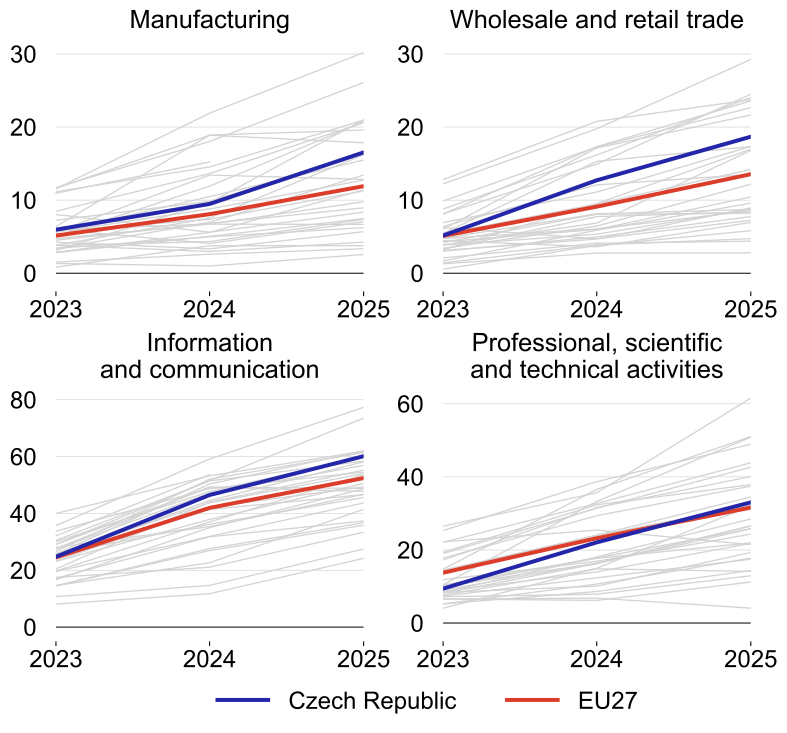
Austria is the frontrunner among the Czech Republic’s neighbours. It has also long been characterised by a high share of software investment. At the opposite end of the regional spectrum are Slovakia and Hungary, where AI adoption in business processes is progressing much more slowly than in other countries, remaining well below the EU average. The Czech Republic is above the average in the key activity of manufacturing. There is also a strong basis for AI use in wholesale and retail trade in the Czech Republic, as firms in this sector face wage pressures in a tight labour market. This in turn may increase the incentive for them to invest in technologies that boost productivity and optimise logistics and pricing.
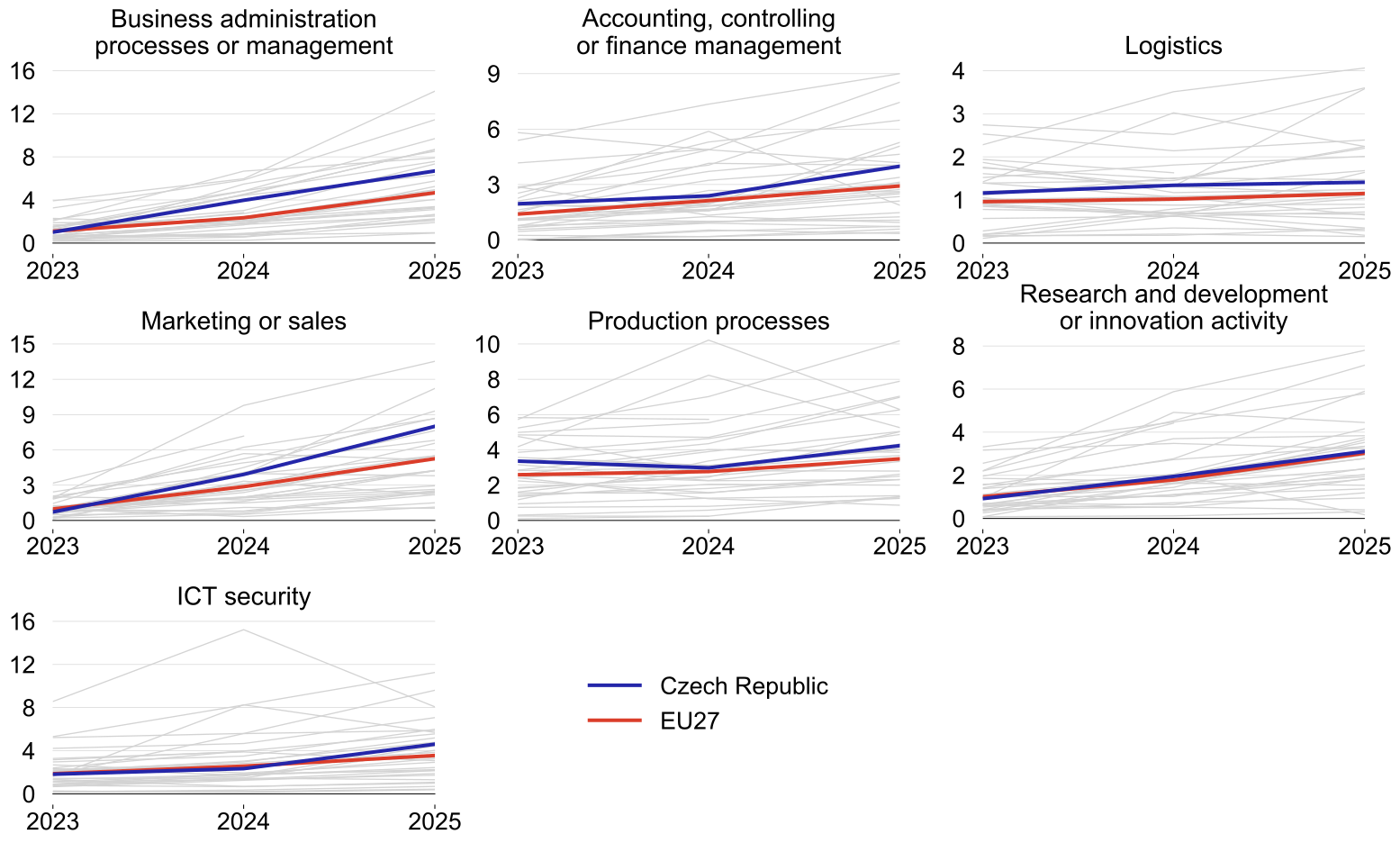
A closer look at AI use in manufacturing (see Chart 3) indicates the activities for which firms most commonly use AI. The highest use is in business administration and management, marketing and sales, and accounting. By contrast, logistics, ICT security and production processes show lower – albeit gradually rising – levels of AI use, possibly reflecting the higher technological and capital demands of implementing AI in these areas. Notably, there was a marked increase in AI use in marketing and in administration and management activities in 2024 and 2025. This may indicate that firms are seeking to make more efficient use of their existing resources and reduce costs in response to the higher competitive pressures and lower profitability in this sector. It is reasonable to assume that firms prefer tools that are easily accessible and inexpensive to deploy to more complex solutions aimed at optimising production processes.
Chart 3 – In manufacturing, AI is used mainly in administration processes and marketing
AI use in EU Member States in manufacturing; in % by activity; source: Eurostat
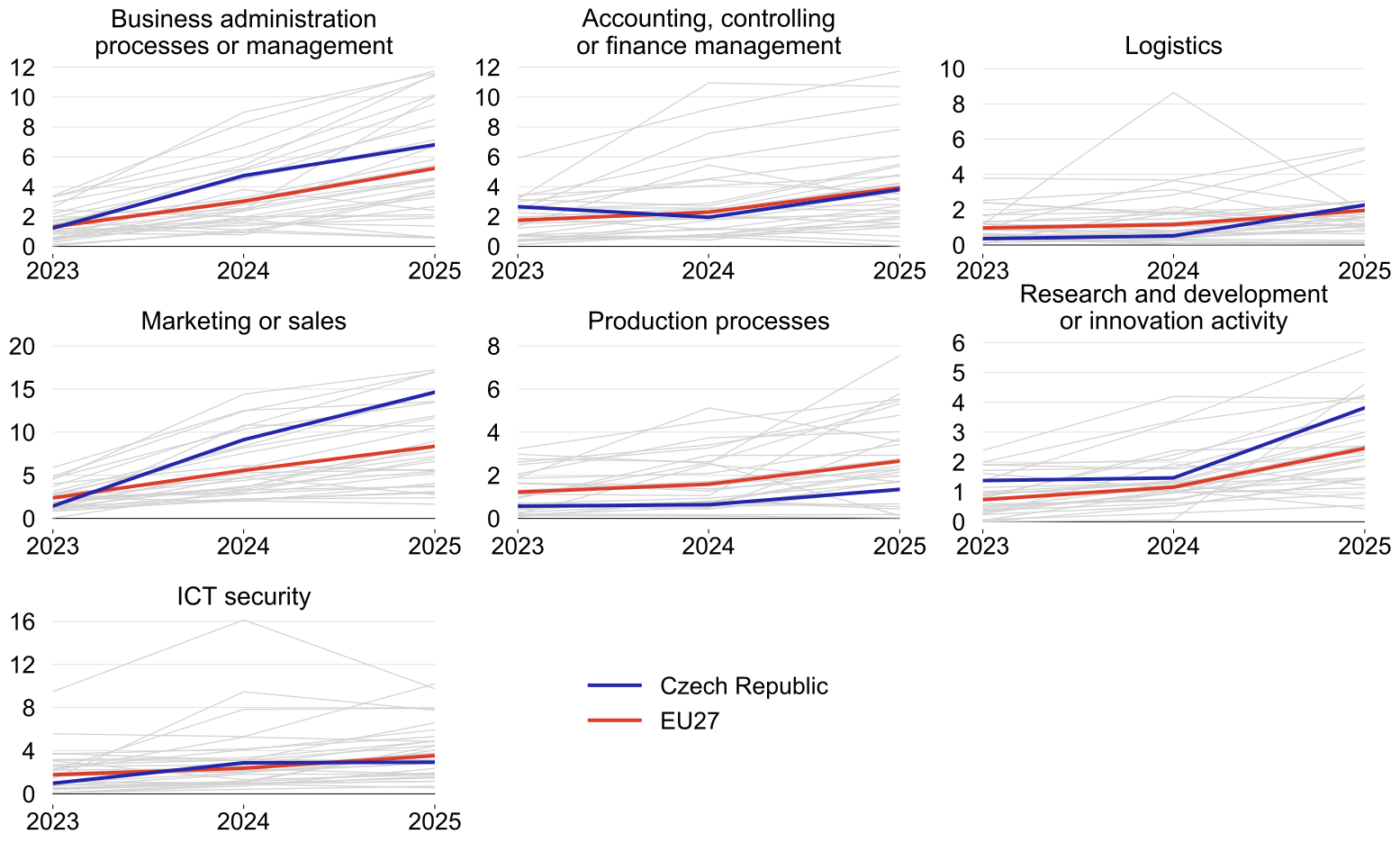
Czech firms also make above-average use of AI in trade across most processes (see Chart 4). The biggest lead is observed in marketing and sales, where AI use has been rising rapidly, reaching 15% in 2025. These figures place Czech firms among the leaders in Europe.
Overall, the adoption of AI in Czech firms is increasing across the economy. AI use is above the EU average, particularly in the past year, which saw AI technologies developing rapidly and expanding into all areas of everyday life and business processes. However, a more detailed look reveals that there is still scope for more intensive use of AI in all sectors – particularly manufacturing – and across all business processes. In recent years, manufacturing has faced major challenges, including the energy crisis and competition from low-cost economies. One way to boost competitiveness may be through greater investment, including the implementation of AI in business processes.[7] Investment in AI has the potential to further increase productivity in the future. For this reason, the current Winter 2026 MPR forecast includes an expert-based slight upward revision to labour productivity growth both for last year and for the period ahead. This could support higher potential growth of the economy as a whole in the medium term. This trend is also being encouraged by the government through subsidy programmes.
Chart 4 – In trade, AI is used most in marketing and sales
AI use in EU Member States in wholesale and retail trade; in % by activity; source: Eurostat
[1] More detailed information on the survey is available on the Eurostat website. In 2024, 157,000 of the roughly 1.54 million relevant European firms were surveyed, i.e. around 10%. In the Czech Republic, roughly 8,000 firms out of more than 40,000 (around 20%) were surveyed each year, with a response rate of around 90%.
[2] A pilot survey on AI use was conducted in 2021. It has been a standard part of the questionnaire since 2023. The analysis therefore uses data from that year onwards.
[3] Total software investment covers a broader set of areas – such as invoicing, accounting and customer services – than AI-related software alone. In 2024, Austria ranked fourth in a selected sample of countries in terms of software investment relative to gross fixed capital formation, accounting for 14% of such investment that year. The figure for the Czech Republic was 13%.
[4] See also Use of artificial intelligence in enterprises, European Commission, 2025.
[5] The analysis focuses on manufacturing and wholesale and retail trade, i.e. the largest sectors of the Czech economy and key activities in terms of GDP generation. Information and communication and professional, scientific and technical activities are crucial for future growth in economic potential due to their role in software development and research.
[6] For simplicity, the term “wholesale and retail trade” in this box refers to the entire Section G of the NACE Rev. 2 classification, whose full title is “Wholesale and retail trade; maintenance and repair of motor vehicles”.
[7] For details see the survey České firmy berou AI vážně. Celkem 9 z 10 s ní už v roce 2026 počítá (Czech firms take AI seriously. Nine out of ten already count on using it in 2026 – in Czech only), Czech Association for Artificial Intelligence, January 2026. The survey shows that AI implementation is rapidly becoming a standard feature of investment strategies in Czech companies. Most firms view AI as a tool for increasing productivity, improving process efficiency and maintaining competitiveness. Around 90% of the companies surveyed plan to use AI in 2026.