





100th anniversary of the establishment of the National Bank of Czechoslovakia

1926 was one of the most important milestones in the history of the Czech and Czechoslovak currency. On 1 April that year, the National Bank of Czechoslovakia was established. Almost eight years after the establishment of an independent state and seven years after the introduction of its own currency – the Czechoslovak koruna – Czechoslovakia also gained a strong and independent central bank, taking its place within the international community of central banks.

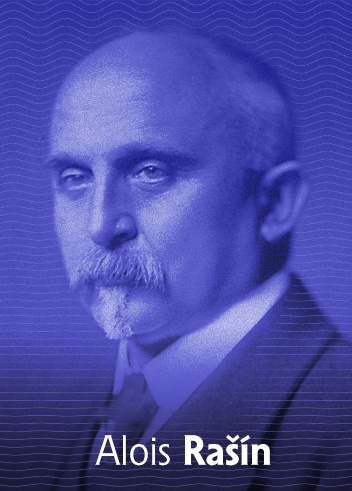
From its earliest days, the National Bank of Czechoslovakia sought to safeguard the stability of the currency in the spirit of the ideas of the country’s first minister of finance, Alois Rašín. This commitment remains as relevant today as it was a century ago and continues to be one of the fundamental pillars of the Czech National Bank’s work.

Establishment of the National Bank of Czechoslovakia

Key milestones, figures and ideas associated with the establishment of the National Bank of Czechoslovakia in 1926

1915–1918

Alois Rašín and the concept of a bank of issue

The idea of establishing an independent bank of issue for Czechoslovakia was conceived during the Austria-Hungarian period by Alois Rašín, a prominent politician and economist, and one of the “Men of 28 October”, who declared Czechoslovakia an independent state in 1918 and was later the first Czechoslovak minister of finance. According to his vision, the bank of issue was to be a cornerstone of the plan to create a stable currency for the independent state. Read more...

September 1918

Legislative efforts to establish a bank of issue

Although the National Bank of Czechoslovakia was not established until almost eight years after the establishment of Czechoslovakia and seven years after the introduction of the Czechoslovak currency, discussions about its establishment date back to the time of the Austro-Hungarian monarchy. In September 1918, Jaroslav Preiss, Managing Director of Živnostenská Banka, summarised the ideas of Czech economists and politicians, including Alois Rašín, in a draft text known as the Economic Act. Read more...

21 May 1920

Act on the Joint-Stock Bank of Issue

The Czechoslovak currency was introduced in February 1919. To ensure its functioning, it was necessary to take over part of the Austro-Hungarian banknotes, which resulted in a treasury note debt. In simple terms, this debt was a claim by Czechoslovak citizens and companies on the state, originally on the Austro-Hungarian Bank. However, due to insufficient coverage (in gold and foreign exchange), the Czechoslovak state assumed liability for this currency in circulation. Read more...

1918–1926

Building the gold reserve

The key prerequisite for introducing a gold–standard currency – that is, a currency with a defined gold content and backed by gold (or gold-backed foreign currencies) – was the creation of sufficient foreign exchange reserves in gold. At its inception, Czechoslovakia had no valuable reserves and therefore had to build them up gradually. Read more...

27 May 1924

International impetus for the creation of a bank of issue

When the law on a joint-stock bank of issue was announced, it seemed that the koruna’s value had stabilised and its sharpest decline, recorded in January 1920, had been averted. However, this period of stability was very short-lived and the koruna soon began to depreciate again. Paradoxically, the fall in the exchange rate boosted industrial production and exports, and the koruna eventually strengthened again. Read more...

23 April 1925

Amendment to the Act on the Bank of Issue

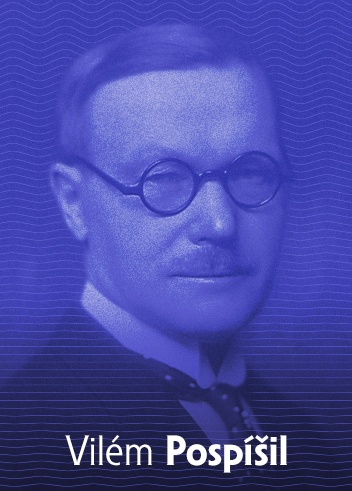
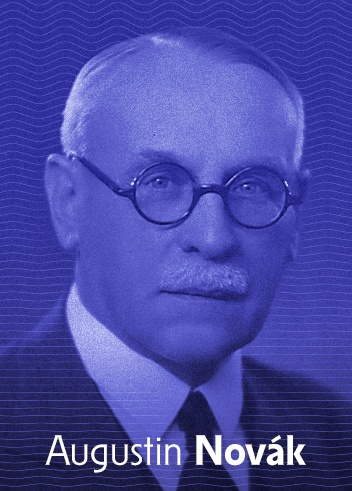
Upon his return from London in May 1924, Vilém Pospíšil and Augustin Novák began working on the requirement for the immediate establishment of a national bank. Even so, it took another year before an amendment to the Act on the Bank of Issue was adopted, enabling work on its establishment to begin. Read more...

2–7 November 1925

Subscription of shares in the bank of issue

On 24 April 1925, the Banking Committee received authorisation from Finance Minister Bohdan Bečka to establish the bank of issue, and in October a preparatory committee was set up with the main task of organising the issuance of the bank’s shares. Read more...

23 January 1926

Appointment of the governor

At the start of January 1926, the leading Czechoslovak newspapers began to carry reports on the progress of work to establish the National Bank of Czechoslovakia. The most crucial and, from the public’s perspective, perhaps the most visible act was the appointment of the governor of the future bank of issue, who was to preside over the bank’s inaugural general meeting and subsequently chair the Bank Board. Read more...

21 March 1926

Inaugural general meeting

The inaugural general meeting was held on Sunday, 21 March 1926, in the Smetana Hall of the Municipal House in Prague. On entering, authorised shareholders – those holding at least ten shares – received a ballot paper and two envelopes, one for voting for members of the Bank Board and the Audit Committee and the other for any subsequent ballots. Read more...

End of March 1926

Balance of power in the first Bank Board

By law, the Bank Board of the National Bank of Czechoslovakia consisted of the governor and nine or ten other members. Six were elected by the general meeting (one of whom was appointed by the president as deputy governor), three were appointed by the president on the government’s recommendation as representatives of the state, and one could be co-opted by the Bank Board. Read more...

1 April 1926

Commencement of operations of the NBC

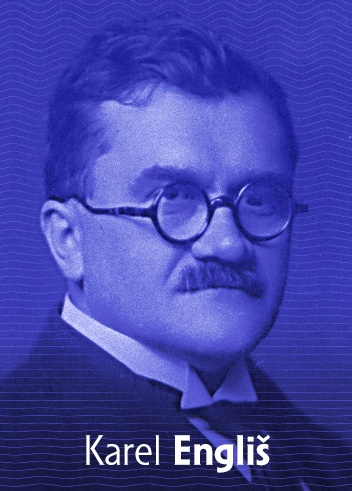
The Bank Board of the National Bank of Czechoslovakia held its first meeting on 1 April 1926. Its main task was to set the date for the commencement of operations of the independent Czechoslovak bank of issue. Finance Minister Karel Engliš proposed 1 April 1926, and all members present agreed. Read more...

December 1926

Issue of the first NBC share certificates

Although the subscription of shares in the National Bank of Czechoslovakia took place in the autumn of 1925, shareholders did not receive their certificates until a year later, at the end of December 1926. Read more...