
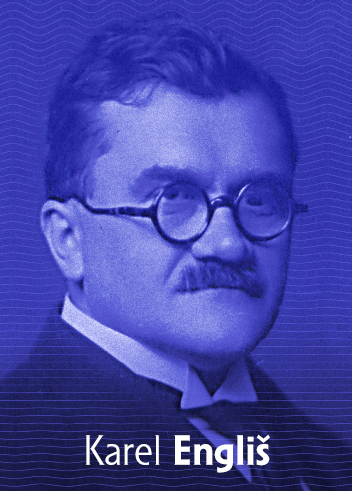
Karel Engliš
(17 August 1880 – 15 June 1961)
Czechoslovak economist, politician, served as minister of finance of the Czechoslovak Republic for several terms and governor of the National Bank of Czechoslovakia 1934–1939
Karel Engliš graduated from the Faculty of Law at the Czech Charles-Ferdinand University in Prague. After graduation, he worked at the Provincial Statistical Office and later the Ministry of Trade. In 1917, he was appointed Professor of Economics at the Czech Technical University in Brno. Following the establishment of the Czechoslovak Republic, he became the first rector of Masaryk University in Brno in 1919. In the period after the 1918 coup, Engliš specialised in legislative issues relating to the future Czechoslovak currency. On his initiative, a law was also adopted on the introduction of trade notes issued by Zemská banka království českého.
Engliš, who served several terms as minister of finance, played a key role in stabilising public finances. As finance minister in 1920–1921 and 1925–1926, he chaired the Banking Office of the Ministry of Finance. He opposed the deflationary policy pursued by the National Bank of Czechoslovakia and, after the devaluation of the koruna in 1934, became its second governor. After his term ended in 1939, he continued his research and served as rector of Charles University in 1947–1948. He was forced to resign after the Communist coup in 1948 and was subsequently persecuted by the Communist regime.