
Dear Sir or Madam,
On behalf of the Czech National Bank, I would like to wish you a happy and prosperous 2026.
The year 2026 will mark 100 years since the establishment of the National Bank of Czechoslovakia. The bank’s creation brought to life one of the economic visions of Alois Rašín, a Czech economist and politician whose legacy of a strong currency and a balanced government budget continues to inspire many economists to this day. His ideas, which the Czech National Bank espouses, helped to lay the groundwork for Czech and Czechoslovak economic thought and success. We hope you find this New Year’s greeting, honouring the work of another prominent personality of Czech economic thought, as inspiring for your work as we do.
Aleš Michl,
CNB Governor
Alois Rašín
(18 October 1867 Nechanice – 18 February 1923 Prague)
Rašín graduated from the Faculty of Law at the Czech Charles-Ferdinand University in Prague. He was active in politics while still at university and became one of the leaders of the student progressivist movement. In 1894, he was arrested and sentenced to two years’ imprisonment in a show trial against the Omladina youth movement. In 1899, he co-founded the Czech Constitutional Party and later, in 1907, he joined the National Liberal Party (also known as the Young Czech Party) and was elected to the Imperial Council in 1911 as its representative. After the outbreak of World War I, he joined the Maffie organisation and, as one of the leading figures of the anti-Austrian resistance, he was arrested and, in June 1916, sentenced to death for treason and espionage. In January 1917, the sentence was commuted to ten years’ imprisonment and he was later granted an amnesty. After his release, he became involved in Czech politics again, helped establish the Czech Constitutional Democratic Party (later the Czechoslovak National Democratic Party) and, most importantly, as a member of the National Committee took part in the preparations for the establishment of the new nation.
As a member of the presidium of the National Committee, Rašín was among the organisers of the anti-Austrian coup d’état on 28 October 1918 and prepared the first law of the Czechoslovak state. He served as Minister of Finance in the first Czechoslovak government. In this post, he initiated the creation of the Czechoslovak currency, to which he gave a sound and solid foundation through his deflationary policy. On 5 January 1923, during his second mandate as minister, an attempt was made on his life and he died from his injuries a month later.
Alois Rašín started to engage actively in national economic affairs during his time in the Imperial Council, where he gained recognition for his fiscal analyses. Before World War I, he also wrote articles on the national economy for the Národní Listy newspaper. Shortly after his arrest in 1915, he began writing his major economic treatise Národní hospodářství (“The National Economy”), which he published in 1922. In it, he explained economic principles – especially those related to money and finance – to the general public in an accessible way, drawing on the ideas of the Austrian school of economics. During his term as minister, he advocated a radical deflationary policy, a balanced budget and government austerity measures. He later developed these ideas into several economic writings, which, together with Národní hospodářství, formed the basis of economic thinking for his intellectual successors.
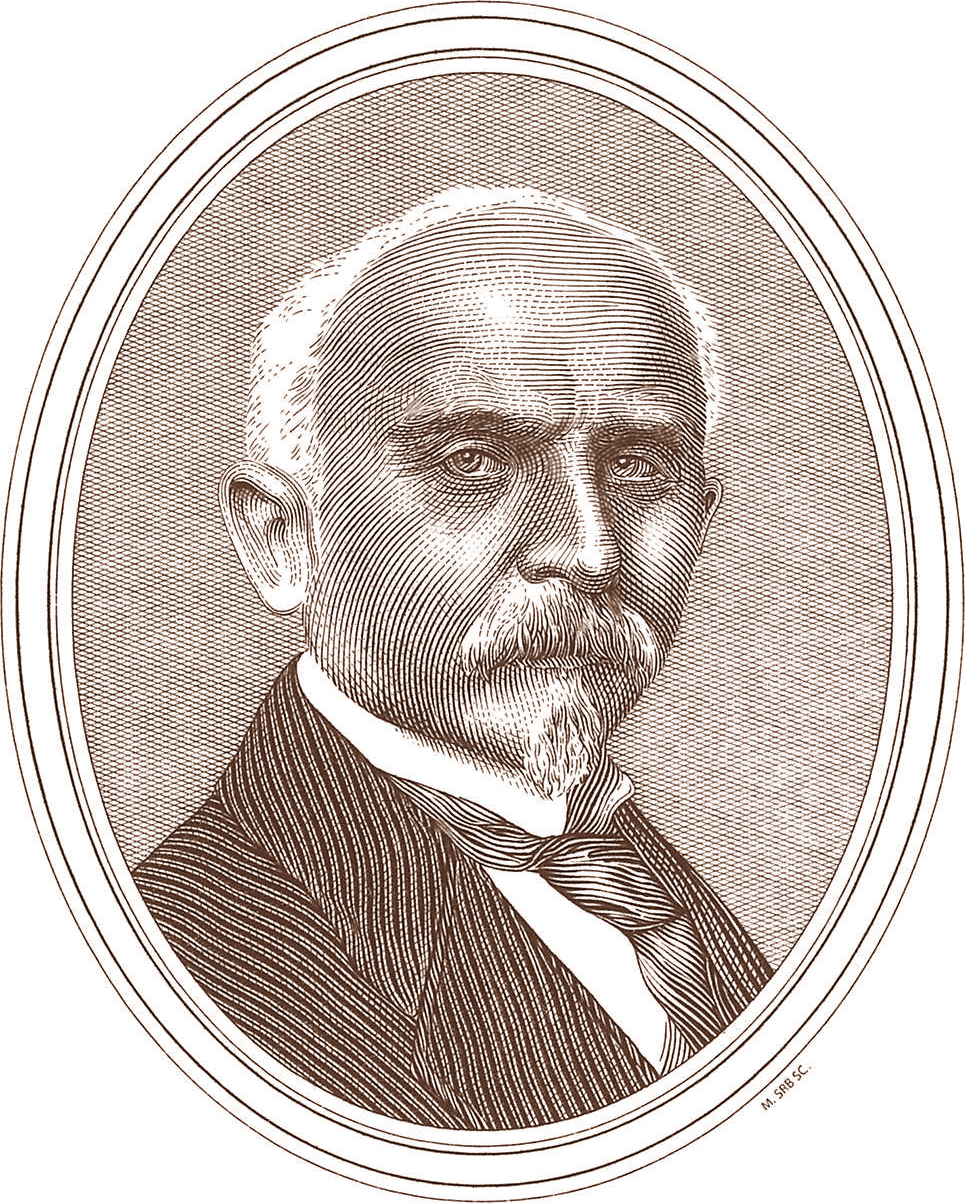
Alois Rašín in a 2025 engraving by Martin Srb (*1954).
Prepared by the State Printing Works of Securities in Prague.
Currency in the age of Alois Rašín
Although the currencies of the Habsburg monarchy were used for most of Rašín’s life, Rašín is regarded as the principal architect of the Czechoslovak currency and the monetary and economic policy of the Czechoslovak state. Under an authorising act of 25 February 1919, prepared by Rašín himself, high-denomination banknotes issued by the Austro-Hungarian Bank were stamped and the Czechoslovak currency was separated from the Austro-Hungarian currency as of 9 March 1919. Under an act of 10 April 1919, the Czechoslovak koruna, made up of 100 hellers, was established as the monetary unit at a ratio of 1:1 to the former Austro-Hungarian crown. Alois Rašín subsequently advocated deflationary principles in his monetary policy, with the aim of achieving a strong and stable koruna.
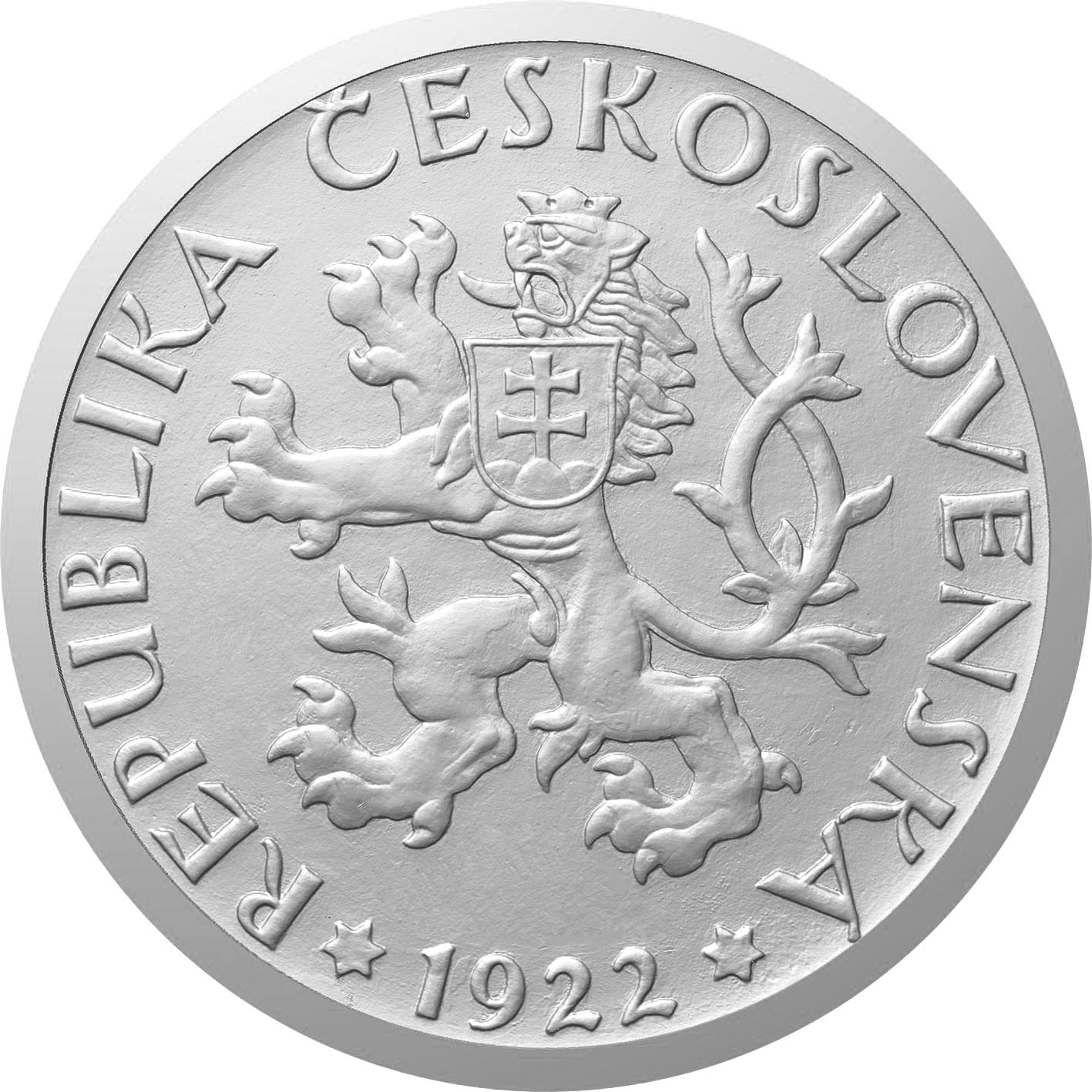
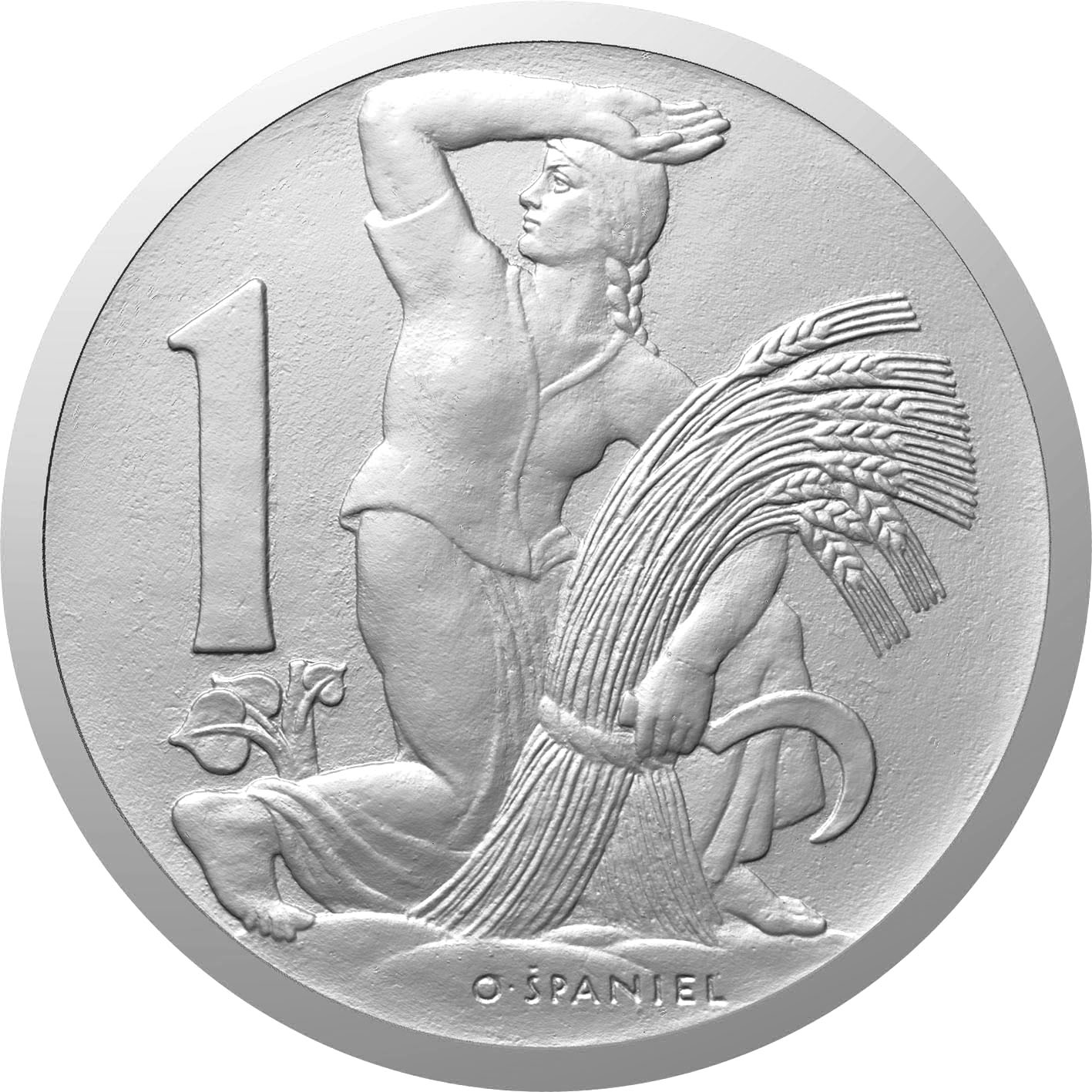
Czechoslovak koruna, dated 1922. Minted from 80/20 copper-nickel, 25 mm in diameter, 6.67 g in weight. The face side features the lesser national coat of arms, the name of the state, and the year. The reverse side features a kneeling woman holding a sheaf of grain and a sickle in her left hand and mopping her brow with her right hand, along with a sprig of linden, the denomination and the author’s signature. The edge is milled. Designed by Otakar Španiel and minted by Mincovňa Republiky československej, Kremnica. The one-koruna coin was the third Czechoslovak coin to be issued, after the twenty-heller and fifty-heller coins, but it became a symbol of both the inter-war and post-war Czechoslovak currency. It was also the last new coin Alois Rašín was able to use.
Through the currency separation, currency administration in Czechoslovakia was taken over from the Austro-Hungarian Bank by the Banking Office of the Ministry of Finance headquartered in Prague. The Banking Office was a government institution which, as Rašín had envisaged, was to perform the functions of the bank of issue for a transitional period. The Banking Office issued two series of treasury notes in nine denominations during its existence. Its remit was taken over by the newly established National Bank of Czechoslovakia in 1926.
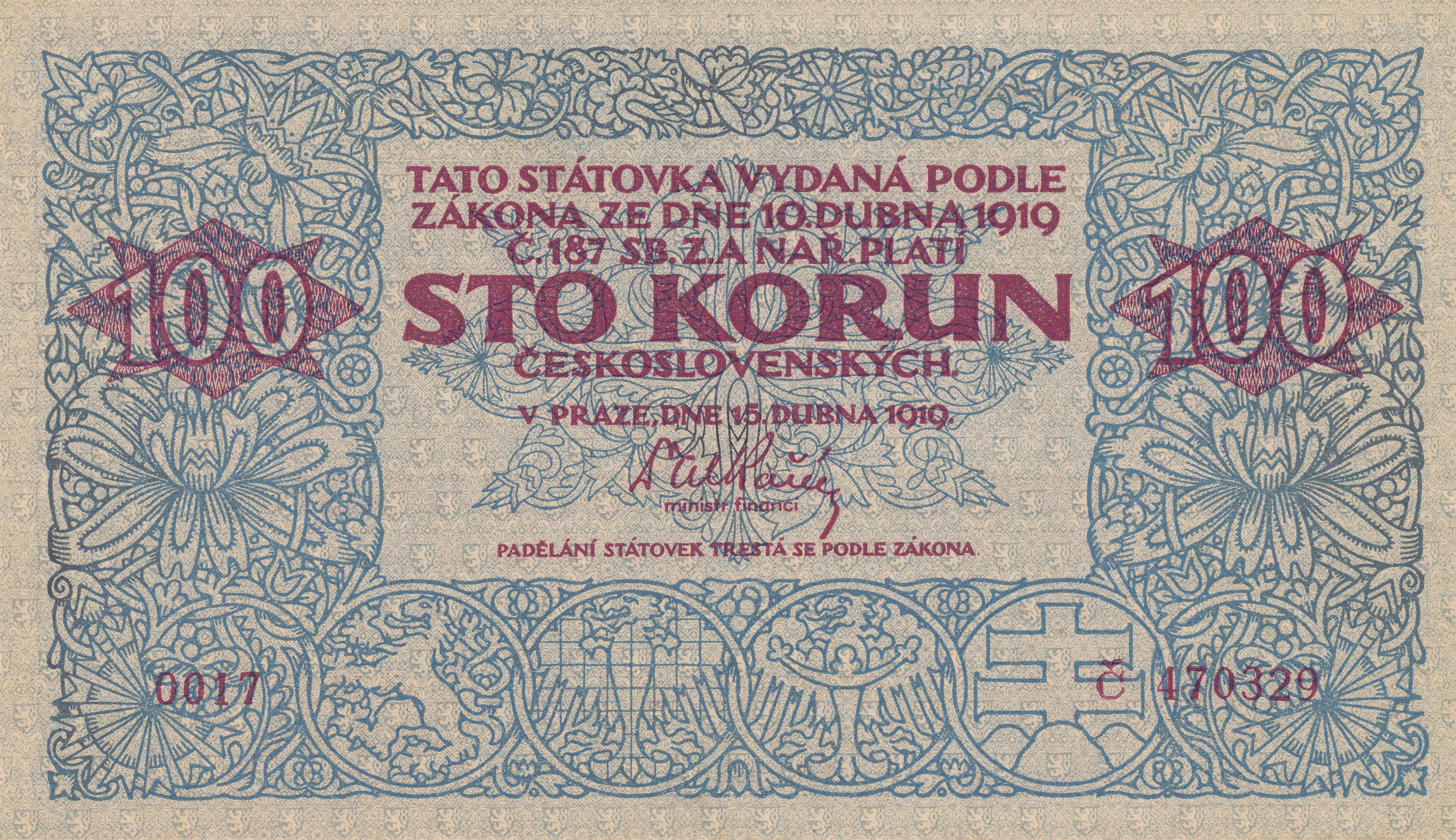
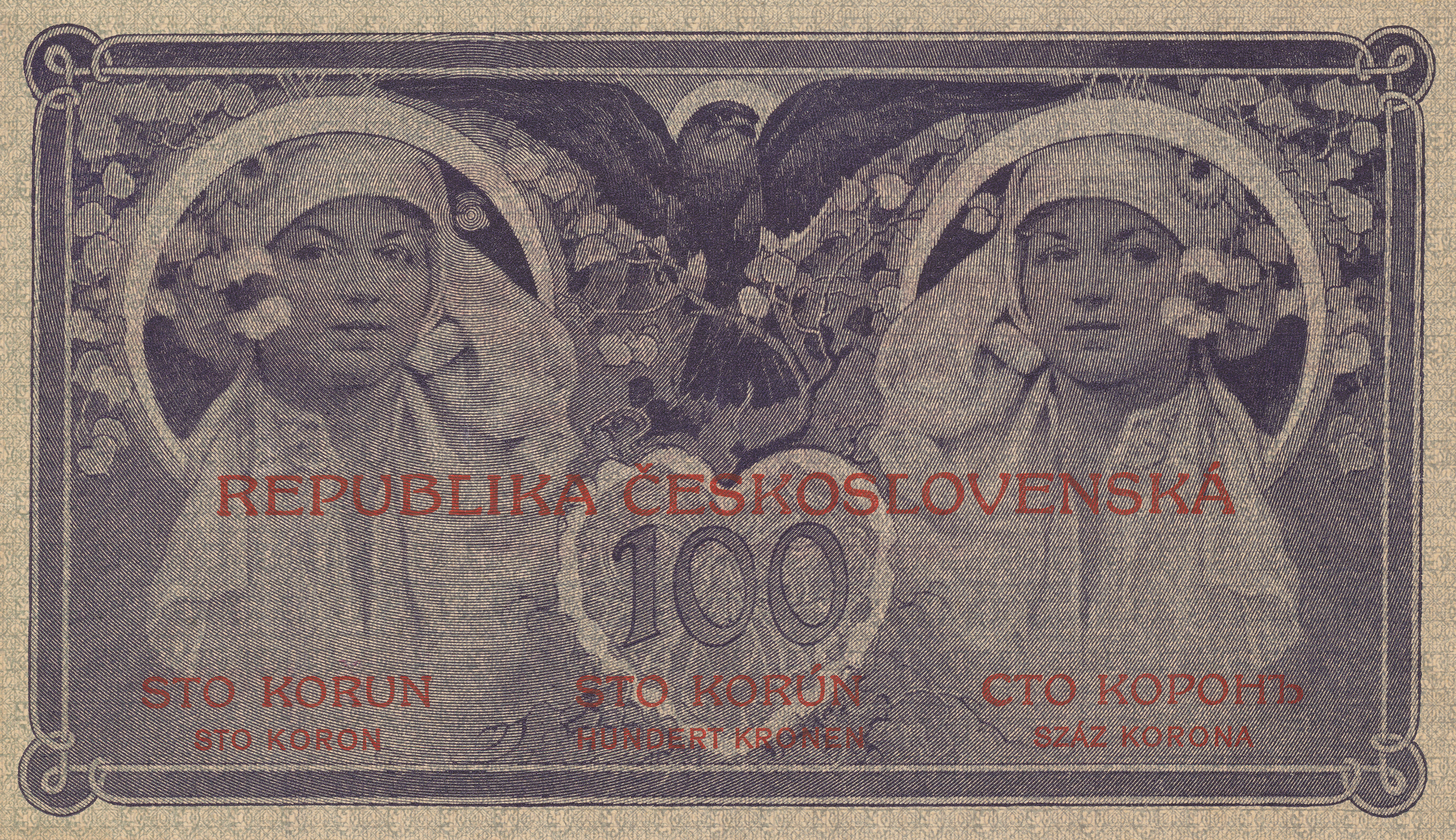
First definitive Czechoslovak 100-koruna treasury note, first issue dated 15 April 1919. Paper with a continuous positive watermark of a lattice pattern, size 165×95 mm, letterpress. The face side features the land coats of arms of Bohemia, Moravia, Silesia and Slovakia, texts, and the denomination inside a frame of plant motifs. The reverse side features two idealised female heads covered with scarves (a portrait of the artist’s wife Marie Muchová) inside incomplete circles containing sprigs of linden, along with a heart-shaped escutcheon bearing the denomination, roots and a linden branch on which a falcon is perched, texts, and the denomination in Czech, Slovak, Russian, Polish, German and Hungarian. Designed by Alfons Mucha. Printing plates by Jan Štenc, Prague for the face side and Österreichisch-ungarische Bank, Druckerei für Wertpapiere, Vienna for the reverse side. Printed by Knihtiskárna Politiky, Prague. Valid from 7 July 1919 to 31 January 1921, exchangeable until 31 January 1923. The note was of high artistic value but technically simple and was thus replaced as early as 1920 by a new, artistically mediocre but technically refined design, printed in the United States. It was equivalent in value to approximately the three-day wage of a worker or the one-day pay of a university graduate. It would buy about 2.5 tonnes of coal, more than 40 loaves of bread, 200 kilogrammes of potatoes or 5 litres of rum. 18 notes were required to buy a radio, 50 to buy a motorcycle and 220 to buy the cheapest car.
Happy New Year 2026
Czech National Bank
Concept and copy: Jaroslav Moravec, Jakub Kunert
Translation: Kateřina Koudelková, Simon James Vollam
Made by grammage s.r.o. for the Czech National Bank
Print version
Graphic design: Martin Srb
Production: Katarína Tvrdá
Print: TISKÁRNA IMPÉRIA s.r.o.
Digital version
Videographer: Antonín Žovinec
© CNB 2026 Disclaimer Processing of personal data